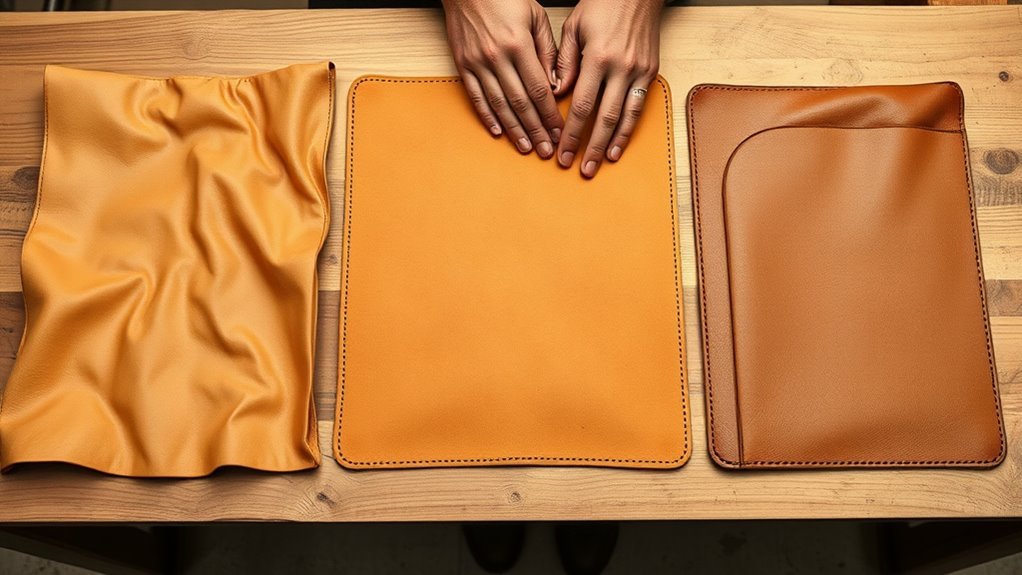
Leather temper is how firm or soft a leather is, and how easily it bends. A soft-temper leather drapes and slouches. A firm-temper leather holds crisp lines and stands up by itself. Temper depends on the tanning method, the oils added during finishing and the thickness of the hide. Knowing it helps you predict how a handbag will look, feel and age.
What Is Leather Temper in Handbags?
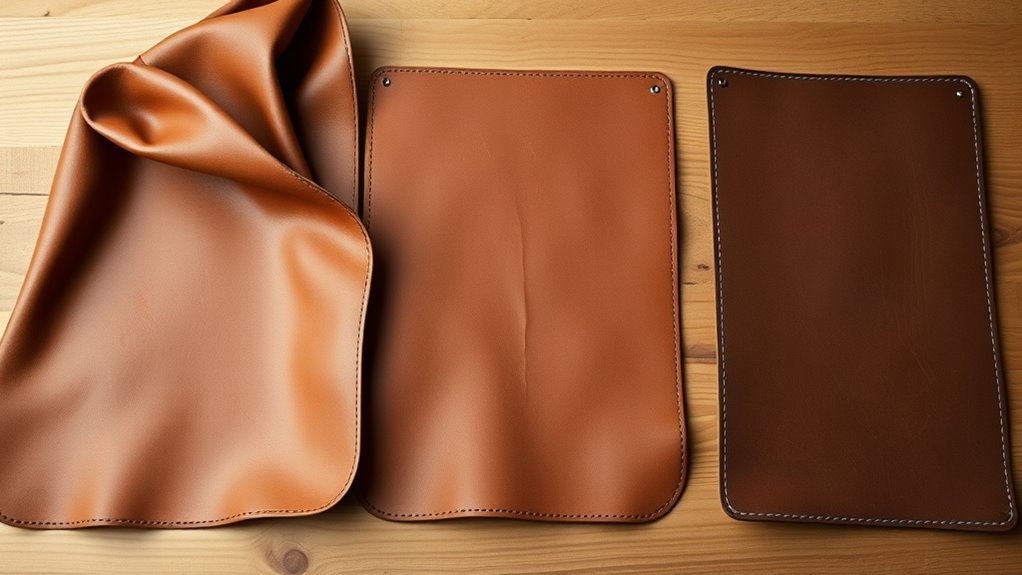
Temper describes the pliability of leather. Tanneries and leather sellers usually grade it as soft, medium or firm.
It is not the same as thickness or quality. A thin leather can be stiff and a thick one can be soft. Temper comes mainly from how the hide is tanned and how much oil and wax is worked into it afterward. Chrome-tanned leather is usually softer. Vegetable-tanned leather is usually firmer.
For a bag, temper decides the character. Soft lambskin or a milled cowhide gives a relaxed, slouchy bag. A firm leather gives a boxy, tailored one.
Medium temper sits between the two. It bends without collapsing, which is why it is used for many everyday totes, satchels and crossbody bags.
How Temper Affects Shape, Drape, and Slouch
Temper predicts how a bag will hold its shape. Firm leather resists folding, keeps clean edges and lets a bag stand upright when empty.
Soft leather follows gravity and movement. It drapes against the body, folds at the top and develops a slouch as it is used.
Thickness works together with temper. A thick, firm leather is very rigid. A thin, soft leather is almost like fabric. Bag makers choose both to suit the design.
Construction matters too. Many structured bags get part of their shape from hidden reinforcement, linings and painted edges, not from the leather alone. A soft leather can be made into a firm bag this way, though it will still feel softer to the touch.
For a sharp, architectural look, choose a firm temper. For ease and a relaxed outline, choose a soft one.
Neither is better. They simply suit different bags and different habits.
Soft, Semi-Rigid, or Structured Leather?
In handbags, temper shows up as three broad types: soft, semi-rigid and structured. Each balances flexibility and support in a different way.
Soft leather molds to its contents and to your body. It is light and comfortable, but it shows the outline of bulky items and can stretch if overpacked.
Semi-rigid leather has some give but returns to its shape. It suits bags that go from work to weekend.
Structured leather has a firm temper and sharp edges. It protects its contents and looks formal, but it is heavier and can crease or dent if crushed. In short:
- Soft leather drapes and adapts
- Semi-rigid leather balances give and hold
- Structured leather keeps crisp lines
- Thickness and tanning affect temper
- Care practices protect long-term shape
You can judge temper in a shop with three quick tests. Press a side panel and see whether it springs back. Stand the empty bag on a table and see whether it stays upright. Bend a strap or flap and feel how much it resists.
Pick the temper that fits how you carry. If you fill your bag to the top, a firmer leather will keep it tidy. If you carry little and like a relaxed look, soft leather is more comfortable.
Best Leather Temper for Each Bag Style
Different bag styles call for different tempers. Here is how they usually pair up.
Hobo bags, slouchy totes and bucket bags use soft leather, because the design depends on drape.
Crossbody bags and satchels often use semi-rigid leather. It keeps a neat shape but stays comfortable against the body.
Top-handle bags, box bags and briefcases use firm leather. It holds a sharp outline and protects papers and devices.
Lambskin is among the softest handbag leathers. It feels luxurious, but it scratches and marks more easily, so it is better for occasional use.
Cowhide is thicker and tougher, and it can be finished soft, medium or firm. It is the most common leather for everyday bags.
When you compare two bags, look at temper along with the leather type. The same hide can feel very different depending on how it was finished.
How to Care for Leather Bags by Temper
Temper also affects care. The goal is to keep soft leather from sagging and stretching, and firm leather from creasing and cracking. Follow these basics:
- Soft leather: condition every 3 to 6 months.
- Soft leather: stuff with acid-free tissue paper to prevent creasing.
- Semi-rigid leather: clean spills immediately.
- Semi-rigid leather: store upright and use protectant spray.
- Structured leather: keep it in a dust bag. Never fold or crush it.
Temper changes with time. Most leather softens with use as its fibers loosen. Water and heat work the other way. Leather that gets soaked and dries fast can turn stiff and brittle.
Conditioner keeps leather supple, but too much will soften a firm leather. On structured bags, use thin coats and avoid heavy oils.
For every temper, avoid overpacking. Extra weight stretches soft leather and bends firm leather out of shape, and it stresses the seams.
Store structured bags upright and lightly stuffed so they keep their lines. Store soft bags flat or lightly stuffed, never hung by their handles.
Frequently Asked Questions
What Are the Types of Leather Best to Worst?
There is no official ranking, but a common guide is full-grain, top-grain, split or corrected leather, then bonded leather. Full-grain keeps the whole outer surface and is the most durable. Bonded leather is made of leather fibers glued together and wears out fastest. The label genuine leather only means the product contains real leather.
How Thick Is 7 to 8 Oz Leather?
About 2.8 to 3.2 mm. One ounce of leather thickness equals 1/64 inch, or about 0.4 mm. Leather this thick is used for belts and straps more than for bag bodies, which are usually thinner.
Is Leather Handbag Waterproof?
No. Leather is naturally absorbent, and most handbag leather is only water-resistant. A protector spray helps light rain bead off, but you should not soak a leather bag. If it gets wet, blot it and let it dry slowly at room temperature.
Does Leather Get Softer Over Time?
Usually, yes. Bending and handling loosen the fibers, so most leather softens with use. Firm vegetable-tanned leather softens the most slowly and keeps its shape longest.
Conclusion
Leather temper explains why one bag slouches and another stands at attention. Soft temper gives drape and comfort, firm temper gives structure and protection, and medium temper gives a bit of both. Match the temper to the style you like and the load you carry, then care for it in a way that keeps it soft or firm as intended.

