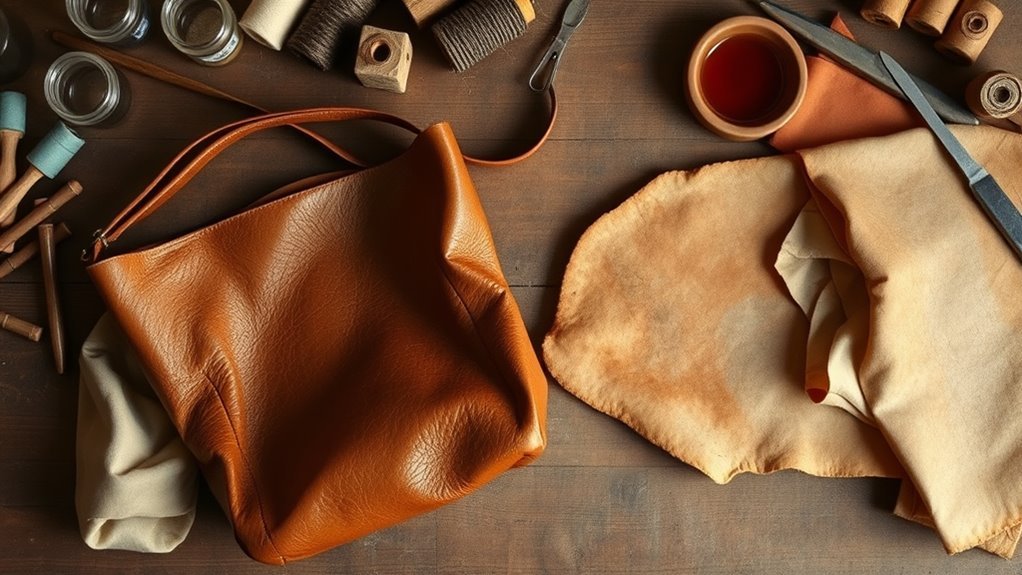
Vegetable-tanned leather for bags is made with plant tannins from bark, leaves, and roots that bind the hide’s fibers into a firm, durable material. You’d see curing, liming, de-liming, tanning, then drying, oiling, and trimming, and the process can take 30 to 60 days. Compared with chrome-tanned leather, it’s denser, safer for skin contact, and it develops a rich patina. Keep going, and you’ll see how to spot and care for it.
What Is Vegetable-Tanned Leather?
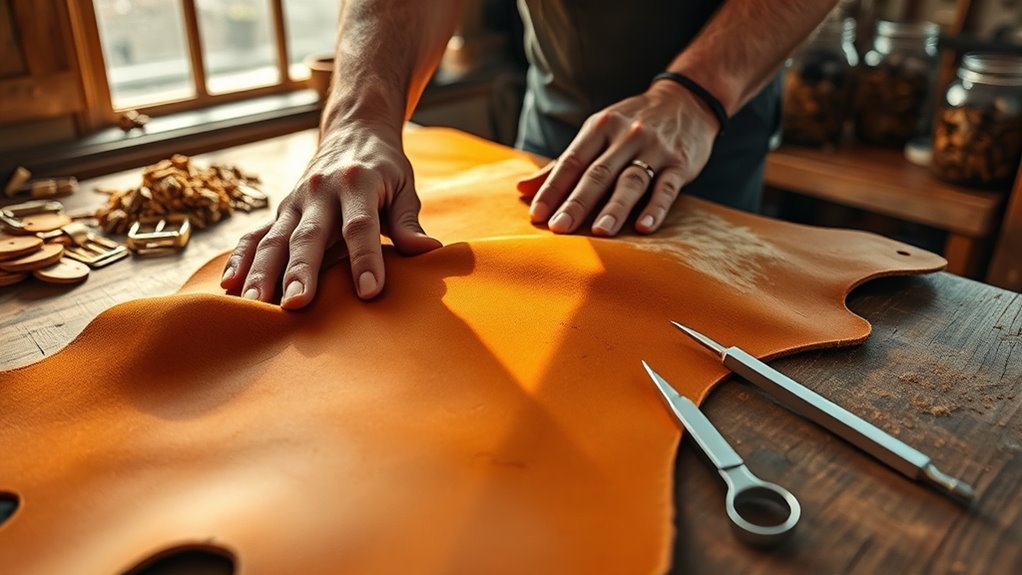
Vegetable-tanned leather is a natural leather made by treating animal hides with tannins extracted from plant materials like tree bark, leaves, and roots, rather than with synthetic chemicals.
Vegetable-tanned leather is natural leather made with plant-based tannins from bark, leaves, and roots.
When you choose it for bags, you’re selecting a material shaped by sustainability practices and more transparent leather sourcing. It’s valued because it avoids harmful chrome compounds, so it’s safer for items that rest against your skin and carry your daily load.
You’ll notice its dense structure, firm hand, rich aroma, and deep earthy tones, all created through natural inputs instead of synthetic dyes.
Over time, the surface develops a distinct patina, giving your bag more character while preserving durability. That aging process reflects use, not waste, so you get a long-lasting product that resists disposable culture.
If you want gear that supports cleaner production and practical resilience, vegetable-tanned leather gives you a grounded, durable choice.
How Vegetable Tanning Works
To see why this leather performs so well in bags, you need to look at how the tanning process changes a raw hide into a stable material. You start by curing the hide with salt to block bacterial growth, then liming removes hair and fat. Next, de-liming lowers the pH so the hide can accept tannins.
| Step | Action | Result |
|---|---|---|
| Curing | Salt hides | Preserve hide |
| Liming | Remove hair and fat | Clean surface |
| De-liming | Lower pH | Prepare fibers |
| Tanning | Drum in tannin baths | Stabilize hide |
| Drying | Oil, stretch, trim | Ready for bags |
You use tanning techniques built on natural materials from bark, leaves, and roots, and the full cycle takes 30 to 60 days. After tanning, drying lasts 2 to 4 days. The leather gains rich color, a distinct aroma, and a patina that deepens with use, giving your bag durable character and a freer, more personal life.
Vegetable-Tanned vs. Chrome-Tanned Leather
When you compare vegetable-tanned leather with chrome-tanned leather, you’ll see that plant-based tannins create a slower, costlier process but also produce a more durable hide that develops a patina and offers better skin-contact safety.
Chrome tanning uses chromium salts to finish leather in hours, so it’s cheaper and softer, but it can increase environmental concerns and may crack or peel sooner.
You’ll also notice clear differences in look and feel: vegetable-tanned leather has earthy tones and a natural aroma, while chrome-tanned leather gives you more color options with less traditional character.
Vegetable Tanned Benefits
Compared with chrome-tanned leather, vegetable-tanned leather offers a stronger mix of sustainability, longevity, and user safety: it relies on natural tannins from plant-based materials rather than harsher chemical agents, which reduces environmental impact and lowers the risk of skin irritation or allergic reactions.
You get leather that ages with a rich patina, not premature failure, and its dense fiber structure can last decades, even a lifetime, with proper care.
You’ll also notice the scent and tactile depth that signal authentic artisanal craftsmanship.
Because the process takes more time and skill, you support slower production and heirloom quality instead of disposable goods.
For bags, that means a material you can trust, repair, and carry confidently without compromising your body or values.
Chrome Tanned Differences
Vegetable-tanned and chrome-tanned leather differ most in how they’re processed, how they perform, and what they leave behind: vegetable tanning uses natural tannins from plant sources and takes 30 to 60 days, while chrome tanning relies on chromium salts for a much faster production cycle.
You’ll get sturdier, more durable leather from vegetable tanning, with a patina that deepens over time and an earthy scent. Chrome-tanned leather feels softer, ships faster, and comes in more colors and textures, but it’s usually less long-lasting and can carry a chemical odor.
When you compare tanning methods, the chrome tanned drawbacks include toxic waste risks, poorer skin safety, and less ecological integrity.
If you want materials that support ease, durability, and lower environmental harm, vegetable-tanned leather gives you a cleaner path.
Why Vegetable-Tanned Leather Works Well for Bags
You get a strong, durable structure that holds up well under daily bag use, so the leather keeps its shape and resists wear over time.
As it ages, it develops a patina that changes with handling, light, and moisture exposure, giving each bag a distinct surface character.
You also get a natural, earthy look that stays visually grounded and pairs well with practical, long-lasting designs.
Strong, Durable Structure
Built for hard use, vegetable-tanned leather owes its strength to the natural tannins that bind tightly with the collagen fibers in the hide, creating a dense, durable structure that holds up well in bags.
You get a material that resists wear, keeps its shape, and stays dependable through daily handling. Because the tanning process takes 30 to 60 days, the hide receives thorough treatment, which improves robustness without relying on harsh chemicals.
That slower method also reflects sustainability practices and historical significance, linking your bag to a long craft tradition. Unlike chrome-tanned leather, it won’t crack or peel as easily, so you can trust it for repeated use.
Its breathable structure lets moisture escape, helping protect your bag’s integrity over time.
Patina With Age
Time adds character here: vegetable-tanned leather develops a patina that deepens color, softens the surface, and gives each bag a look shaped by your use.
You’ll see patina evolution as oils, handling, light, and weather work into the fibers, creating color changes that reflect how you move through the world.
Because the hide still breathes, it stays flexible and durable while it ages, so the leather keeps performing instead of breaking down.
Vegetable tanning also leaves natural marks visible, so each bag keeps its own identity rather than hiding imperfections.
With basic care, you can extend service life for decades, letting the finish mature without losing strength.
That makes every scratch, tone shift, and polish a record of ownership, not damage.
Natural, Earthy Look
Vegetable-tanned leather gives bags a natural, earthy character that feels purposeful rather than polished to perfection. You get warm tones, a distinctive aroma, and a surface that deepens into rich patina, so each bag develops its own identity.
Because tanners use plant-based tannins, the leather holds up under daily stress while still supporting natural aesthetics. Natural oils and waxes leave it soft in your hand but resilient enough for long use, so you can carry it comfortably without sacrificing strength.
Its sturdy build and long service life make it a practical choice for sustainable fashion, especially when you want gear that works hard and looks honest. The result is timeless, grounded, and ready to use.
How to Spot Real Vegetable-Tanned Leather
How can you tell if a bag is made from real vegetable-tanned leather? Start with leather authenticity markers: smell the hide, inspect the edges, and test the surface.
Genuine veg-tan gives off an earthy aroma, not the plastic or chemical note you’d get from synthetic or chrome-tanned materials. Check the cut edges; they should look unfinished and show a warm cream or tan core, proving the leather stayed close to its natural state.
Next, use the moisture absorption test: place a water droplet on a hidden spot. Real vegetable-tanned leather darkens as it absorbs moisture, while treated substitutes resist it.
You can also press firmly into a dampened area; a crisp impression that lingers signals authentic veg-tan. These traits reflect a slower 30–60 day tanning process, which builds durability and character.
When you know these signs, you can choose materials with confidence and refuse deception.
How to Care for Vegetable-Tanned Leather Bags
To keep a vegetable-tanned leather bag in good condition, condition it regularly with natural oils or beeswax so the leather stays supple and doesn’t dry out. Use these conditioning methods sparingly and evenly, then buff the surface with a soft cloth.
Condition vegetable-tanned leather regularly with natural oils or beeswax to keep it supple and prevent drying.
For cleaning techniques, wipe away dust and grime with a dry microfiber cloth; if you need a deeper clean, use a barely damp cloth and don’t soak the leather. Water droplets can darken the surface, so if the bag gets wet, dry it in a well-ventilated area, away from direct heat, to stop fungus and mildew.
Avoid high humidity and prolonged moisture, because they weaken the hide and invite mold. When you’re not using the bag, store it in a cool, dry place inside a dust bag.
Check regularly for wear, then apply a waterproofing balm like Galen Leather Balm to strengthen resistance and keep your gear free from wear.
Frequently Asked Questions
How Long Does Veg Tan Leather Last?
Veg tan leather can last decades or even a lifetime if you manage durability factors well. You’ll maximize lifespan with maintenance tips: condition regularly, avoid excess moisture, and store it properly to keep fibers flexible and strong.
How Does the Leather Tanning Process Work?
Leather tanning uses a 30-to-60-day soak in tannin-rich baths after curing and liming. You de-lime, dry, oil, and finish hides.
Is Vegetable Tanned Leather Actually Leather?
Yes, you’re buying real leather: vegetable tanning preserves animal hide while replacing harsh chemicals with plant tannins. You’ll get durability, breathability, patina, sustainability benefits, and better ethical sourcing, making it practical for relaxed, long-lasting bag ownership.
What Happens When Vegetable Tanned Leather Gets Wet?
When it gets wet, you’ll see darkening as it absorbs moisture; over time, water damage can stiffen it, and you should use care techniques like slow room-temperature drying, then conditioning.
Conclusion
So, when you choose vegetable-tanned leather, you’re choosing a material that’s slowly taught by bark, water, and time to become strong, flexible, and dependable. Like a well-trained traveler, your bag ages with purpose, not weakness, developing patina instead of peeling. If you inspect the grain, feel the firmness, and care for it with clean conditioning, you’ll extend its life. In the end, you’re not just carrying a bag—you’re maintaining a long-term tool.
