
For strong handbag seams, use polyester or nylon thread. Bonded nylon is the usual choice for leather and heavy bags, because it is very strong and resists abrasion. Polyester is the best all-round thread for fabric bags, and it stands up better to sunlight and moisture. Cotton and silk suit light or decorative work only. Match the thread thickness to the fabric and use a needle large enough for the thread.
What Thread Works Best for Handbags?
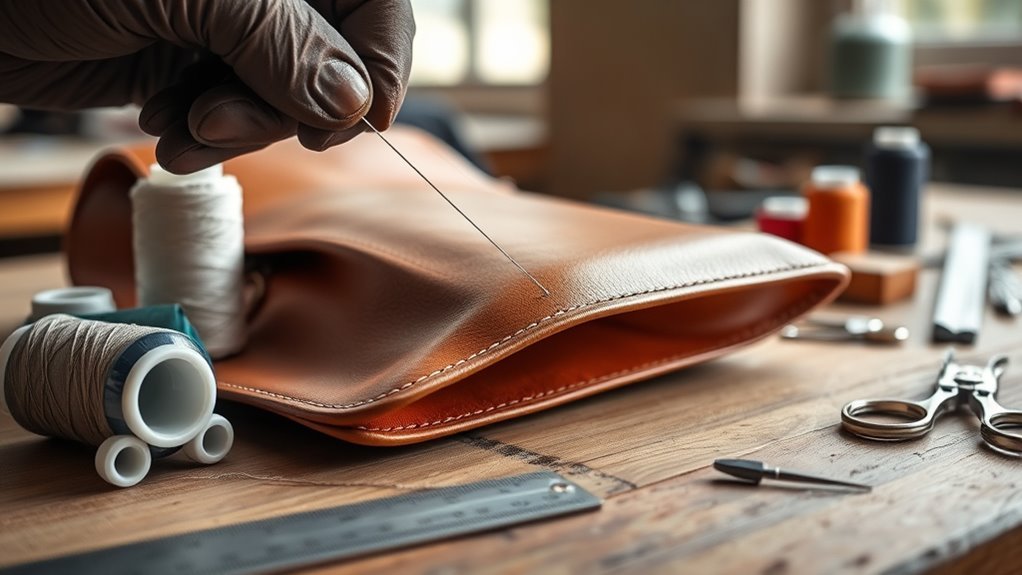
Bag seams take more stress than clothing seams. They carry weight, rub against hardware and flex every time the bag is used. The thread has to be strong and resist wear.
For leather and heavy canvas, bonded nylon or bonded polyester is the standard. Bonded means the thread is coated with a resin that holds the strands together, so it frays less and runs smoothly through thick material.
For cotton and other light to medium fabrics, a good all-purpose polyester thread is enough for most seams. Ordinary cotton sewing thread is weaker and is not a good choice for handles and strap anchors.
Thickness matters as much as fiber. Use a thicker thread for seams that carry load and for topstitching, and a finer one for linings and details.
Color is a design choice. Matching thread hides the stitching, and contrasting thread turns it into a feature.
For hand-sewn leather, waxed polyester or linen thread is traditional. The wax helps the stitches grip and stay tight.
Polyester vs. Nylon Thread for Bags
Polyester and nylon are both strong synthetic threads, and either can make a durable bag. The differences are small but useful to know.
Nylon is a little stronger and more resistant to abrasion. Polyester holds up better in sunlight and absorbs less moisture.
As a simple rule, use nylon for leather and heavy, high-stress bags that live mostly indoors or under cover. Use polyester for fabric bags and for anything that spends long hours in the sun.
Strength And Stretch
Both threads are far stronger than cotton of the same thickness. They differ in how much they stretch.
Polyester stretches very little. Seams stay flat and stable, which suits structured bags and straight topstitching.
Nylon is slightly stronger and stretches more. That give helps a seam absorb sudden loads, such as a heavy bag being picked up by one handle.
Too much stretch can cause puckering on thin fabric, so nylon is best kept for heavier materials.
On a home machine, both need a test run. Sew a sample through the same layers and adjust the tension until the stitches lock in the middle of the material.
Abrasion And Durability
Abrasion is what wears out most bag seams. Stitches rub against hardware, clothing and the things inside the bag.
Nylon has the edge in abrasion resistance, which is one reason it is the standard for leather goods and luggage. Bonded versions of either thread resist fraying better than plain ones.
Polyester resists sunlight much better. Nylon slowly weakens and yellows with long UV exposure, so polyester is the safer choice for beach bags, outdoor bags and pale topstitching.
Both resist mildew and rot, which cotton thread does not. For most handbags, either one will outlast the fabric if the thread is thick enough.
Best Uses For Bags
Choose the thread by the load on the bag, the material and where the bag will be used.
Use polyester for everyday totes, fabric handbags, linings and mixed-fabric bags. It is easy to sew, widely available and comes in the most colors.
Use bonded nylon for leather bags, backpacks, luggage and other high-stress work. It is slippery, so test the tension and lock your stitches at the start and end.
You can also mix them in one bag. Many makers use heavy thread for the outer seams and topstitching and a finer polyester for the lining.
When to Use Cotton or Silk Thread
Cotton and silk threads have a place in bag making, but not in the seams that carry weight.
Cotton thread suits light cotton bags, quilting on bag panels and projects you plan to dye. Silk suits fine hand finishing on delicate fabrics.
For handles, strap anchors and the base, use polyester or nylon even when the rest of the bag is sewn with cotton.
Cotton Thread Basics
Cotton thread is soft, has a matte look and blends well into cotton fabric. It makes flat, neat seams and is pleasant to quilt with.
It has very little stretch and good stitch definition. It is weaker than polyester of the same thickness, and it wears faster where seams rub.
Cotton also absorbs moisture and can weaken or rot if it stays damp. Keep it for bags that stay dry and carry light loads.
Use it where its look matters, such as visible quilting or decorative stitching on cotton and canvas.
For more strength with a similar look, use a cotton-wrapped polyester thread. It has a polyester core for strength and a cotton surface.
Silk Thread Uses
Silk thread is fine, smooth and strong for a natural fiber. It glides through delicate fabrics without leaving marks.
It has a soft sheen and very little bulk, so stitches sink into the fabric and almost disappear. That makes it useful for hand-finishing silk linings and evening bags.
Silk is best for hand sewing, such as closing a lining or attaching trims, and for fine decorative topstitching.
It is expensive and not as resistant to abrasion as polyester or nylon, so it is not the thread for structural seams.
Think of silk as a finishing thread. Use it for the last invisible stitches, not for building the bag.
Choose the Right Thread Weight and Needle
Thread thickness is labeled in two common ways. With weight (wt), a lower number means a thicker thread, so 30 wt is thicker than 50 wt. With Tex, a higher number means a thicker thread. For sturdy seams and topstitching, use about 30 to 40 wt with a 90/14 or 100/16 needle. For linings and light fabrics, use 50 to 60 wt with a 70/10 or 80/12 needle.
Bonded nylon for bags is often Tex 70, also sold as size 69. It needs a 100/16 or 110/18 needle, and it is about the heaviest thread most home machines can handle. Use a leather needle for leather and a jeans needle for canvas. A few more tips:
- Test each thread and needle combo on scrap first.
- Use heavier thread for load-bearing seams.
- Choose smaller needles for precision on fine materials.
- Adjust thread tension if stitches look loose or tight.
- Match the needle eye to the thread’s diameter.
A needle that is too small shreds the thread and skips stitches. One that is too large leaves visible holes, which is a real problem in leather, where holes are permanent.
Lengthen the stitch for thick thread and thick layers. A stitch of about 3 mm or a little more suits most bag topstitching.
Pick Thread Color for a Cleaner Finish
For seams that should not show, match the thread to the fabric. If you cannot find an exact match, go one shade darker. Darker thread blends into a seam, while lighter thread stands out.
On prints and multicolor fabrics, match the background color or use a medium gray or beige, which blends with many shades.
Check the match in daylight. Unwind a little thread and lay it across the fabric, since thread on the spool looks darker than a single strand.
For topstitching, contrast can be a feature. Tan thread on dark leather and white on navy canvas are classic choices.
Contrast shows every wobble, so sew slowly and use a longer stitch for neat, even lines.
Store Thread Properly and Fix Stitch Problems
Store thread in a closed box or drawer, away from sunlight, dust and damp. Light and age weaken thread, so test old spools before using them on a bag:
- Run a tug test. If the thread snaps easily, discard it.
- Thread your machine through every guide to keep tension consistent.
- Watch for skipped stitches, which often signal misrouting or weak thread.
- Clean lint from the machine regularly, especially after poor-quality thread.
- Swap to a different spool if breakage continues. Thread quality varies.
Most stitch problems come from threading, the needle or tension, not from the fabric. Rethread the machine, fit a new needle and test again before changing anything else.
If the thread shreds, the needle is too small or damaged. If loops show on the underside, check the upper threading and tension. If stitches skip, change the needle type or size.
Frequently Asked Questions
What’s the Strongest Thread to Sew With?
For bag making, bonded nylon is the usual choice for maximum seam strength, with bonded polyester close behind. Thickness matters as much as fiber, so a heavier thread of either type makes a stronger seam.
What Is the Best Thread for Sewing on Leather?
Bonded nylon or bonded polyester, with a leather needle. For hand sewing, use waxed polyester or linen thread. Choose a heavier thread, around Tex 70, for bags, and use a longer stitch so the holes do not weaken the leather.
What Are the Strongest Threads?
Among common sewing threads, nylon and polyester are the strongest, and bonded versions resist fraying best. Specialty fibers are stronger still, but they are rarely needed for handbags.
What Is Thick Thread Called?
It is usually sold as heavy-duty, upholstery or topstitching thread. On labels, look for a low weight number, such as 30 wt, or a high Tex number, such as Tex 70.
Conclusion
The right thread gives handbag seams real staying power. Use polyester for most fabric bags and bonded nylon for leather and heavy loads. Keep cotton and silk for light and decorative work. Match the thread thickness to the needle and the material, test on a scrap, and your seams will last as long as the bag.

