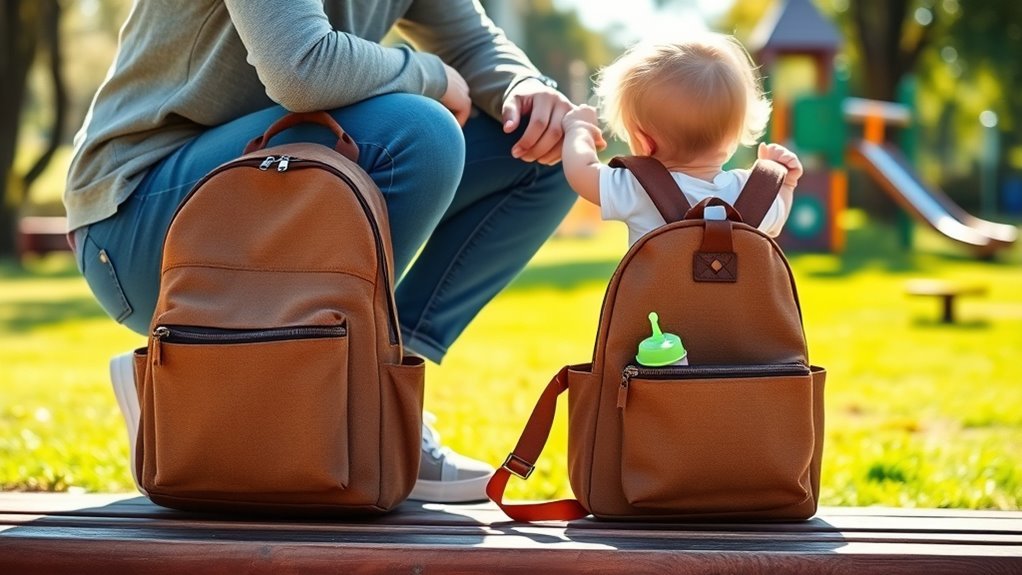
Most parents stop using a full diaper bag when their child is reliably using the toilet, usually somewhere between two and four years old, though every child differs. The change is gradual: you swap the large bag for a small tote, a belt bag or a pouch, and keep a spare outfit and a few extras in the car. The signs below can help you decide when to make the switch.
Signs Your Child May Be Ready to Go Without a Full Diaper Bag
- Your child stays dry for longer stretches during the day, and tells you when they need the toilet.
- You are using fewer diapers, or none during the day.
- Your child eats solid food and drinks from a regular cup, so that you carry fewer bottles and formula supplies.
- Outings are shorter, or you can easily get back to the car or to home.
- You find that you are carrying items that you never use.
Children develop at different speeds, and accidents are normal during toilet learning. If you are not sure, talk to your pediatrician. For details about how to pack during this stage, see the potty-training diaper bag checklist and diaper bag checklist for potty training.
It Is a Gradual Change
Most families do not drop the bag overnight. A common approach is to start by taking out things that you no longer need, such as bottles, burp cloths and a bulky changing pad, then to replace the big bag with something smaller for quick trips, and to keep a larger bag for longer outings. Keep the spare diapers and wipes until your child has gone for a while without accidents, including at night, and when they are tired or distracted.
What to Keep in a Smaller Bag
- A spare set of clothes, including underwear and socks
- A few wipes, and a small bag for wet clothes
- One diaper, or a few pull-ups, until your child is reliable
- Hand sanitizer
- Snacks and a spill-proof cup
- Any medication or items that your child needs
- A small toy or a book, for waiting
For snacks, follow age-appropriate safety rules. Whole grapes, nuts, popcorn and some other foods are choking hazards for young children, so cut or avoid them, according to your pediatrician advice.
Alternative Bags for Older Toddlers
- A small tote or crossbody: enough for a spare outfit, wipes and snacks.
- A belt bag: keeps your hands free, and holds the essentials. See what a belt bag is.
- A toddler backpack: a child can carry a few light items, such as a toy and a book, which also builds independence.
- An insulated lunch bag: for snacks and a drink on a short trip.
- A kit in the car: keep spare clothes, wipes and a bag for wet items in the car, so that you do not have to carry them.
Short Trips and Longer Trips
Quick Errands
For a short trip to the shop, a pouch with a wipe, a spare diaper or pull-up, and a snack is enough. Keep the heavier items in the car.
Day Trips and Travel
For longer days, travel and unfamiliar places, you may want to use a bigger bag again, with extra clothes and supplies. See how to pack a diaper bag for a road trip and seasonal diaper bag packing tips.
Questions Parents Ask
When Should a Child Stop Wearing Diapers?
There is no single age. Many children show signs of readiness between about two and three years, but some are ready sooner or later. Look at your child signals, such as staying dry, showing interest in the toilet and being able to follow simple directions, and ask your pediatrician if you have questions. Many children still wear a diaper or pull-up at night after they have stopped wearing them in the day.
Should Each Parent Have a Diaper Bag?
Some families keep a bag for each parent, or one in the car. It can be handy, as long as you keep them stocked. Others prefer one shared bag, which is simpler to maintain.
When Should I Start Packing a Diaper Bag?
Many parents pack it in the last weeks of pregnancy. See the diaper bag packing checklist.
Reusing the Bag Afterwards
When you stop using a diaper bag for diapers, it can still be a good bag: a play bag, a travel organizer, a gym bag or a bag for crafts. Empty it, and wash it according to the label. See how to wash a diaper bag and how to disinfect a diaper bag. If you plan to keep it for another child, store it clean and dry.
Handling Accidents While Out
Accidents are a normal part of toilet learning, and they are more likely when a child is excited, tired or busy. Keep the response calm and matter-of-fact. Carry a spare outfit, a plastic bag or a wet bag for the wet clothes, and a few wipes. If your child has an accident, change them in a private spot, such as a restroom or the car, and put the wet clothes in the bag. Praise the effort, and not just the result, and avoid showing frustration, since pressure can slow progress. It also helps to offer a toilet trip before you leave and soon after you arrive, and to learn the places where you can find a toilet quickly. Some families keep pull-ups for long outings or car trips until their child is dependable, and that is a personal choice. If you have concerns about your child progress, or if accidents continue beyond what you expect, your pediatrician is the best person to ask.
Conclusion
There is no fixed date for putting the diaper bag away. Watch your child for signs of readiness, shrink the bag in stages, keep a spare outfit and wipes handy and use a larger bag again when you need it. The right size of bag is the one that suits your outings, now.