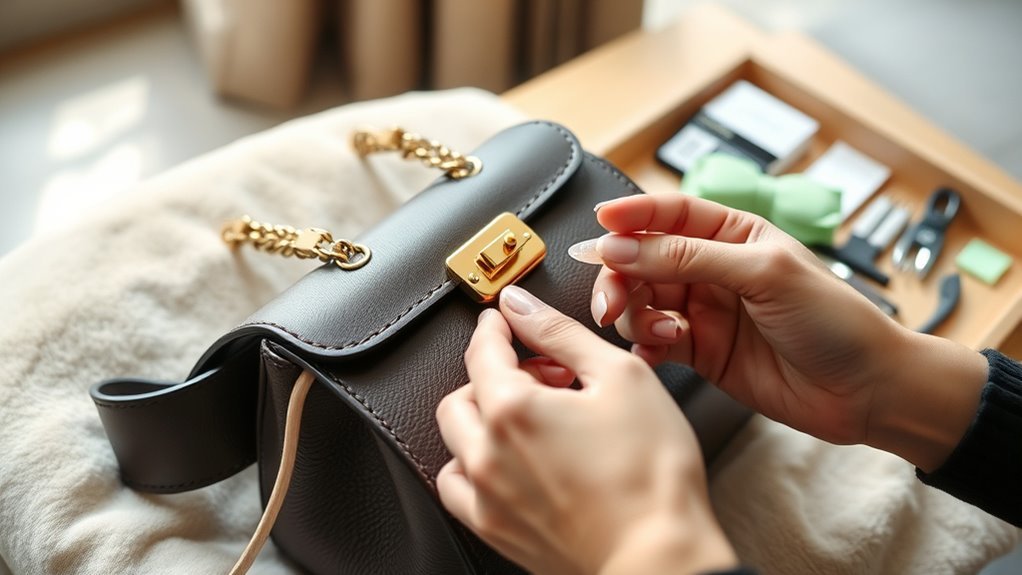
To protect purse hardware from scratches during use, keep hard objects away from it and cover the parts that take the most contact. Carry keys in a pouch, set the bag down on its base on clean surfaces, and take care with rings and bracelets near the clasp. Clear protective film on clasps, plates, and feet prevents most fine scratches. Wipe the metal with a soft cloth after use, and store the bag in a dust bag so hardware does not rub against other bags.
Understanding the Importance of Protecting Handbag Hardware
Hardware is the first place a bag shows wear. Clasps, locks, zipper pulls, and feet are polished or plated metal, and that smooth surface shows every fine line.
Scratches cannot be wiped off. On plated hardware they can also cut through the thin top layer, and the metal underneath then discolors.
Prevention is far easier than repair. Careful habits and, if you like, a clear protective film keep the original finish intact. That also helps resale value on bags that hold their price.
Protective films are sold as pre-cut sets for popular bag models and as plain sheets that you trim yourself. Prices vary by brand and model, so compare a few sellers.
Top Causes of Handbag Hardware Damage You Should Know
It helps to know what actually causes the damage. These are the usual culprits:
- Rough surfaces: Placing your bag on concrete or metal edges can lead to scratches.
- Frequent contact: Keys or jewelry can cause unwanted abrasions on metal components.
- Moisture and dirt: Oils from your hands, along with dirt, can tarnish hardware quickly.
- Overloading: Too much weight adds strain, increasing the chance of scratches and stress damage.
- Improper storage: Stacking bags or squeezing them into tight spaces can lead to hardware rubbing against each other.
Selecting the Best Anti-Scratch Protectors for Your Handbag
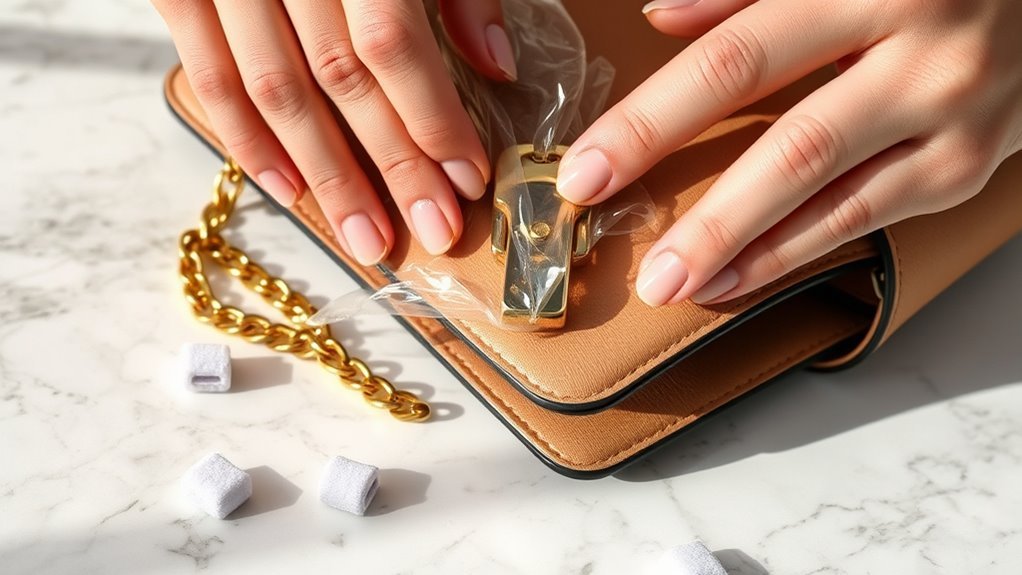
Hardware protectors come in a few forms. The most common is clear adhesive film, similar to a phone screen protector, cut to the shape of a clasp, plate, or lock. Look for film that is thin, clear, and removable without residue.
Other options are small silicone or felt covers for bag feet, and soft sleeves that wrap a chain or a lock while the bag is stored. Pre-cut film sets save time if one is made for your exact bag. For other bags, a plain sheet and small scissors work.
Film does wear, since that is its job. Expect to replace it when it looks scuffed or starts to lift at the edges.
Essential Maintenance Tips to Keep Handbag Hardware Pristine
Daily habits do as much as any product. These keep hardware looking new:
- Inspect and clean hardware with a gentle cloth to remove dirt and prevent oxidation.
- Apply protective films or caps as soon as you get a new handbag to shield against scratches.
- Avoid overloading your bag to reduce strain and prevent bending or scratching.
- Store handbags properly, keeping them away from rough surfaces and sharp objects.
Applying Protective Film: A Step-by-Step Guide
Film goes on best when the bag is new and the metal is unmarked. Work in good light and take your time. Clean the metal with a cotton swab that is barely damp with rubbing alcohol, and keep the alcohol off the leather. Then follow these steps:
| Step | Description | Tips |
|---|---|---|
| 1. Clean | Wipe metal fittings with a lint-free cloth and isopropyl alcohol. | Confirm no residue remains. |
| 2. Dry | Let the cleaned fittings air-dry for at least 10 minutes. | Film sticks best to dry metal. |
| 3. Position | Use tweezers for precise placement of the film. | Avoid air bubbles. |
| 4. Smooth | Start from the center and smooth outward to eliminate bubbles. | Apply gentle pressure. |
| 5. Heat | Gently heat the edges for a snug fit, especially on curves. | Use a hairdryer on low. |
If a piece goes on crooked, lift it at once and try again. Press down the edges well, because dust gets under a lifted edge. To remove old film, peel it back slowly from one corner.
How to Store Your Handbag for Maximum Longevity
Hardware also gets scratched in the closet, when bags touch each other.
Store each bag in a cool, dry place out of direct sunlight.
A dust bag or soft cloth around each bag keeps metal parts from rubbing on the bag next to it.
Proper Storage Techniques
A few storage habits prevent most closet scratches:
- Always use a dust bag or soft pouch to shield your handbag from scratches and dust.
- Avoid placing bags on rough surfaces to prevent damage to hardware and leather.
- Use padded storage solutions like padded shelves to minimize impact between bags.
- Keep handbags in a climate-controlled space to avoid moisture-related issues.
- Regularly check on your bags for signs of wear, allowing for timely maintenance.
If a bag has a chain strap, tuck the chain inside the bag, wrapped in tissue or a soft cloth, so it does not rest on the clasp or the leather.
Ideal Environment Conditions
The room matters as well. Keep bags in a cool, dry spot, out of direct sun.
Do not stack bags or put heavy things on top. Pressure pushes hardware into the bag below and can dent both.
Keep bags off the floor, where grit and damp collect. Aim for moderate humidity, about 40 to 55 percent, since damp air speeds up tarnish.
When to Get Professional Help for Hardware Damage?
Some damage is beyond home care. See a professional in these cases:
- Significant tarnishing or oxidation that cleaning won’t fix
- Noticeable scratches or dents affecting zippers or clasps
- Rust or corrosion that threatens the hardware’s integrity
- Complex repairs involving intricate mechanisms
- Luxury handbags needing specialized care for preservation
A handbag repair shop can polish solid metal, replate worn pieces, or replace hardware with matching parts.
Do not try to buff out scratches on plated hardware with metal polish. It removes more of the plating and makes the mark worse.
For a high-value bag, ask the brand first. Some offer hardware repair or replacement.
Frequently Asked Questions
How to Protect a Leather Purse From Scratches?
Keep sharp items such as keys and pens in a pouch inside the bag. Do not overfill it, and avoid rubbing it against rough walls and the zips on your clothes. Store it in a dust bag.
How to Polish Hardware on a Handbag?
Wipe it with a clean, dry microfiber cloth. For plated hardware, avoid abrasive metal polish. A jewelry polishing cloth can be used lightly and only now and then.
How Can I Fix Scratches on My Leather Handbag?
Rub a light scratch gently with a clean fingertip or a soft cloth. The warmth and natural oils often blend it in. For a deeper mark, use a leather conditioner or a color-matched leather repair cream, and test it on a hidden spot first.
Conclusion
Scratches on hardware are easier to prevent than to fix. Keep keys and jewelry away from the metal, set the bag down with care, and cover high-contact parts with clear film if you want extra protection. Wipe the hardware after use and store each bag in its own dust bag.

