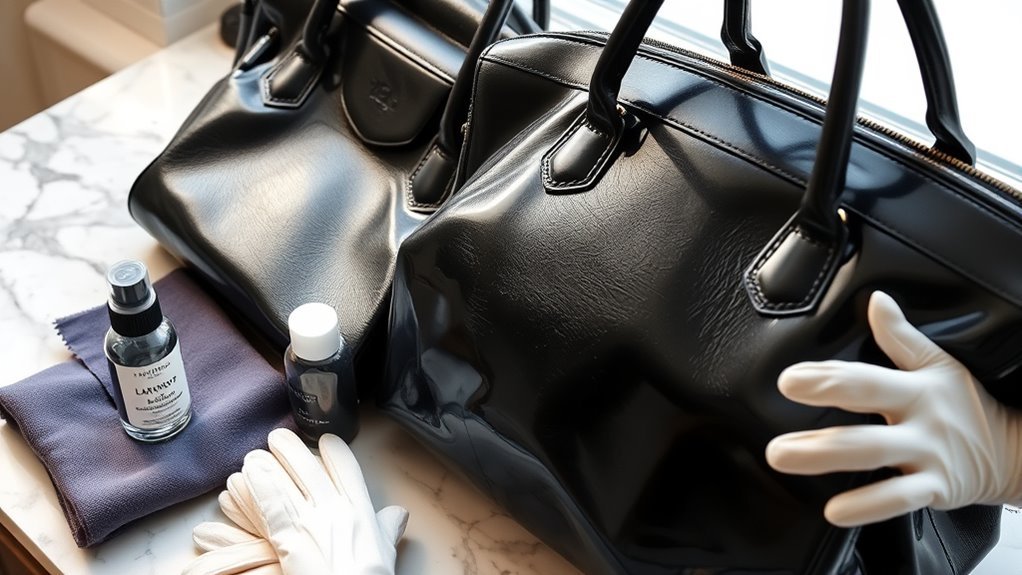
Patent leather bags get sticky when the glossy finish starts breaking down from body oils, hand sanitizer, dirt, heat, sunlight, or harsh cleaners. You can often help it with a soft damp cloth, then a careful test of diluted white vinegar or a mild leather cleaner on a hidden spot. Avoid aggressive scrubbing and standard conditioners. If the tackiness persists, or you see cracking or peeling, a professional repair may be needed, and the details below explain why.
Why Patent Leather Gets Sticky
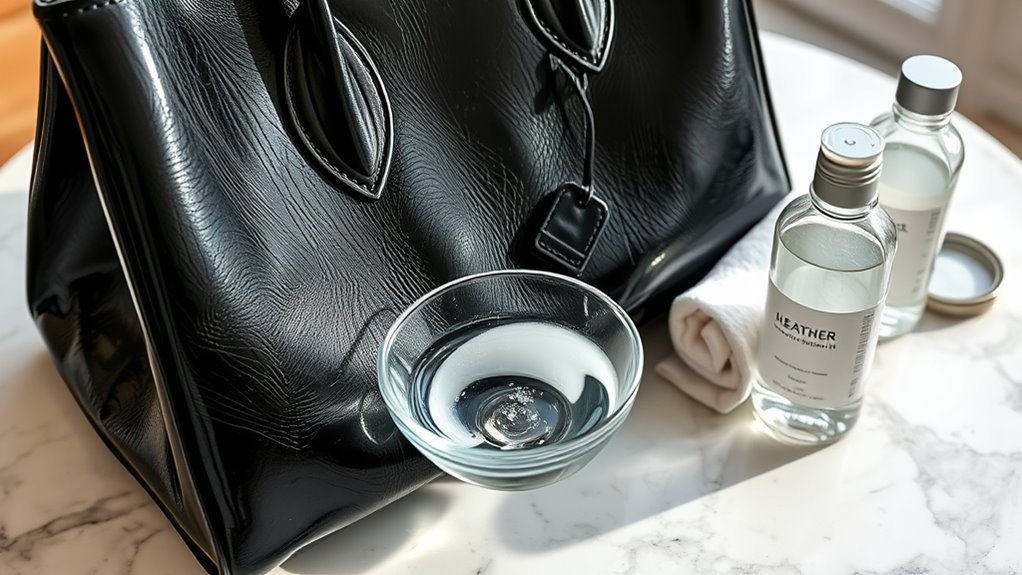
Patent leather gets sticky when its glossy, plastic-like finish begins to break down, especially after repeated exposure to body oils, hand sanitizer, dirt, and other residues.
You’ll notice that patent leather develops a tacky film when surface contaminants accumulate and bond with its synthetic coating. Frequent handling, environmental exposure, and improper cleaning can accelerate this change.
If you use harsh chemicals or the wrong cleaner, you can strip the protective layer and leave the finish vulnerable. Older bags often show this effect because the coating naturally degrades over time, especially on items you wear or carry often.
Immediate attention matters: residue that sits too long can stain, discolor, or worsen the breakdown. Your best maintenance tips focus on careful, prompt cleaning and avoiding products that attack the finish.
Common Causes of Sticky Finishes
Sticky finishes on patent leather bags usually start with the coating itself breaking down, most often after repeated contact with body oils, hand sanitizer, dirt, and other residues.
You’re seeing a failure in the finish’s material properties: the plastic-like layer softens, then loses its smooth, sealed surface.
The finish softens, then loses its smooth, sealed surface.
If you’ve used too much conditioner, or cleaned with the wrong product, you can leave a tacky film that builds on top of the leather instead of protecting it.
Harsh chemicals can strip away the coating, making the bag more vulnerable to stickiness over time.
Light-colored patent leather also shows color transfer and staining faster, which can intensify the problem if you don’t address it quickly.
Heat and sunlight accelerate surface degradation, pushing the finish toward a gluey texture.
Smart maintenance tips focus on limiting residue, avoiding abrasive agents, and respecting the bag’s material limits so you keep control over its condition.
Can You Clean Sticky Patent Leather at Home?
Can you clean a sticky patent leather bag at home? You can try, but your DIY Solutions should stay conservative.
Sticky finishes usually mean the plastic coating has started breaking down from oils, sanitizer, or residue, so aggressive scrubbing won’t fix the chemistry. Skip traditional leather cleaners and strong soap mixes; they often leave the surface unchanged or worsen it. Instead, test a small hidden spot first.
A dilute white vinegar wipe may reduce mild tackiness temporarily, but you need a patch test because discoloration is possible. You can also trial a classic furniture polish on an inconspicuous area if you want extra gloss, yet compatibility matters.
If the stickiness persists, or the finish looks soft, cloudy, or damaged, stop. At that point, a leather specialist can clean or refinish it more safely.
Good Maintenance Tips help you protect the bag’s surface and keep your options open for future use.
What Helps Sticky Patent Leather Handles?
You can start with gentle cleaning steps: wipe the handles with a damp cloth, then test a mild solution such as diluted white vinegar or a patent leather cleaner on a small, hidden area.
If the tackiness remains after careful cleaning, the finish has likely degraded beyond surface residue.
At that point, you should consider replacing the handles or consulting a leather repair specialist for refinishing.
Gentle Cleaning Steps
A few gentle methods can reduce stickiness on patent leather handles without damaging the finish. You should start with gentle techniques and select cleaning products that respect the coating. Wipe the handle with a soft, damp cloth to remove oils and residue before they bond to the surface.
- Test mild leather cleaners on a hidden spot first.
- Use a diluted white vinegar solution only after a patch test.
- Stop if the finish dulls or reacts.
Avoid harsh chemicals and traditional leather care products; they can strip the glossy layer and intensify tackiness.
If the stickiness persists after careful cleaning, you can seek professional patent leather care to preserve the bag’s integrity and keep your use autonomous.
When To Replace Handles
When a patent leather handle stays sticky after careful cleaning, replacement may be the most practical fix, but only after you assess the bag’s overall condition.
You should inspect the finish, stitching, and structure, because breakdown from body oils, hand sanitizer, and environmental exposure can spread beyond the handle.
If the coating has degraded, leather cleaners or diluted soap won’t restore it, and harsh chemicals can worsen the plastic layer.
Compare handle materials and review replacement options with a repair specialist; many users choose regular leather handles because they resist tackiness and free you from repeated refinishing.
If the rest of the bag is sound, handle replacement can extend use and preserve function.
Keep up regular maintenance afterward to reduce future stickiness.
How to Prevent Patent Leather Stickiness
Prevention starts with limiting the conditions that make patent leather tacky in the first place. You can control stickiness by using disciplined prevention tips and care techniques that reduce contamination and finish degradation. Wipe the surface with a slightly damp cloth on a routine basis to remove dirt, skin oils, and residue before they polymerize into a film.
- Store the bag in a dust bag or pillowcase to block dust, moisture, and color transfer.
- Keep it away from direct sunlight, radiators, and hot cars, since heat accelerates breakdown of the glossy coating.
- Handle it with clean hands, or use a cloth or gloves, to avoid transferring natural oils.
Skip harsh chemicals and standard leather conditioners; they’re formulated for porous leather, not a sealed patent finish. You’re protecting the bag’s material integrity, not accepting avoidable degradation.
Consistent environmental control keeps the surface smooth, clean, and tactically ready for use.
When to Get Patent Leather Professionally Repaired
If routine cleaning no longer removes the tacky feel, it’s time to contemplate professional repair. When stickiness persists after gentle care, you need expert evaluations to determine whether the coating is stable or failing.
When tackiness lingers after gentle cleaning, it’s time to seek expert repair before the coating worsens.
Visible flaking, cracking, or peeling means the finish is losing structural continuity, and home treatment won’t restore it. You should also seek help when stains or discoloration resist safe cleaners, because specialists can apply targeted repair techniques and controlled products that won’t disturb the surface layer.
If environmental exposure or poor storage has left the bag warped, softened, or gummy, a leather repair specialist can assess the damage and refinish it to regain resilience.
Once the material itself starts breaking down, prompt intervention matters; otherwise, deterioration accelerates. Professional service gives you a precise, conservative path to preserve the bag’s function, extend its lifespan, and free it from avoidable decline.
Frequently Asked Questions
How to Repair a Sticky Patent Leather Bag?
Clean the bag with a damp cloth and mild leather cleaner, then test diluted white vinegar on a hidden spot. You’ll use precise cleaning techniques, maintenance tips, and, if needed, consult a specialist.
What Is the Best Patent Leather Cleaner for Bags?
You’ll want a specially formulated patent leather cleaner—gentle, nonabrasive, and plastic-safe. You’ll preserve shine, you’ll avoid damage, and you’ll support patent leather maintenance with the best cleaning techniques. Test first; consult a specialist if needed.
Why Does Patent Leather Go Sticky?
Patent leather goes sticky because its polymer coating degrades, and you’re seeing patent leather properties break down under humidity effects, oils, heat, and harsh cleaners; plasticizers migrate, leaving a tacky, weakened surface you can’t ignore.
How Can I Refresh Patent Leather?
Use a mild glossy-surface cleaner, or a diluted white-vinegar solution after patch testing; then wipe with a damp microfiber cloth. Your cleaning techniques and storage tips should avoid heat, sun, and harsh chemicals for lasting shine.
Conclusion
You can keep patent leather from becoming a sticky nightmare by controlling heat, humidity, and product buildup, then cleaning it with a mild, manufacturer-safe method. If the tackiness has already spread like wildfire, test a small area first and stop if the finish softens or transfers. For handles and heavily worn spots, professional repair may be your best option. With careful handling, you’ll preserve the glossy finish and extend your bag’s usable life.