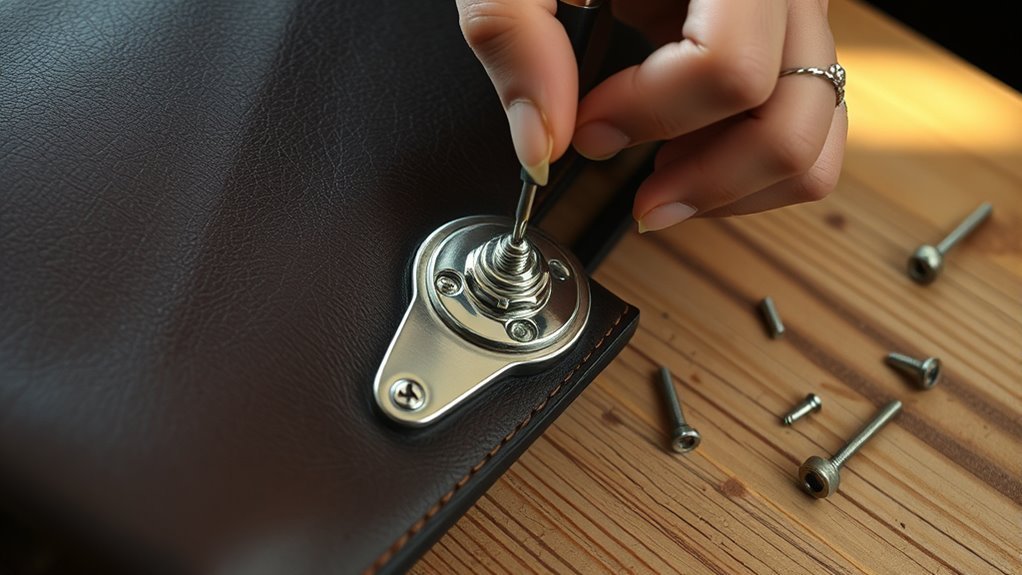
To fix a loose handbag turn lock, check the back of the lock for loose screws or bent prongs, tighten or straighten them, realign the lock in its slots and reinforce the fabric behind it if it is weak. If the hardware is cracked or worn, replace it with a matching lock. Test the lock under normal use before you rely on it.
How to Diagnose a Loose Turn Lock
Open the bag and examine the lock from both sides. Gently twist and press the lock, and watch for movement. Look for gaps between the hardware and the material, since a gap shows that the lock has loosened or that the fabric has stretched. Check for screws that have backed out, prongs that are bent or broken, and a back plate that has shifted. Also notice whether the lock turns too freely or is stiff, as this points to different problems. A lock that spins loosely usually has a loose mounting, while a stiff lock may be misaligned or dirty. Closures are compared in purse closure types, and the layout of a bag is shown in handbag parts explained.
Tools You Need
- A small screwdriver that fits the lock screws
- Flat-nose pliers, with the jaws wrapped in tape to prevent scratches
- A seam ripper and sharp scissors
- Fusible interfacing or a scrap of firm fabric or leather
- A removable thread-locking compound, if the screws keep loosening
- Fray sealant for raw fabric edges
Tighten the Screws First
Many turn locks are held on the back by two small screws or a back plate. Tighten them until they are snug, and stop when they seat, because overtightening can strip the thread or crush the fabric. Check that each screw sits straight and that the back plate is flat against the lining. If a screw keeps backing out, clean the threads and add a tiny dab of a removable, low-strength thread-locking compound. Use only a little, and keep it off the fabric. Do not use a permanent compound, since you may need to remove the lock again.
Realign the Lock for a Snug Fit
If the lock sits crooked, loosen the screws just enough to move it, then realign the prongs with their slots. The back ring should sit square, and the prongs should lie flat against the lining, bending away from the center. Tighten the screws evenly, a little at a time, and then twist the lock to check that the turn is smooth. A lock that is a few millimeters off will not meet its slot, so adjust it until it lines up with the bag opening.
Secure a Wobbly Base
If the base still wobbles after tightening, the fabric may be too soft or stretched. Place a thin layer of firm backing between the lining and the back plate. This spreads the pressure and holds the lock steady. Check the prongs, and if any are bent or cracked, replace the lock. Do not rely on glue alone to hold a lock that is under daily stress.
Reinforce the Fabric Around the Lock Opening
A turn lock often works loose because the fabric around the opening has weakened. A reinforcing patch spreads the load and makes the repair last.
- Open the lining or seam so that you can reach the back of the lock area.
- Cut a square of fusible interfacing or firm fabric a little larger than the lock plate.
- Fuse or stitch it on the wrong side, following the instructions for the product. Do not iron leather or coated material directly.
- Seal any raw edges with fray sealant and let it dry.
- Reinstall the lock, and close the lining.
For more on stiffening a bag panel, see bag foam stabilizer explained.
Stripped Screw Holes
If a screw no longer holds, the thread in the hardware may be stripped. Try the next size up, if the hole will take it, or replace the screw with a matching one. If the thread is worn out, it is better to replace the lock, because filling the hole with glue is not a durable repair for hardware that moves.
Replace Damaged Turn Lock Hardware
Replace the lock if it is bent, cracked, badly worn or corroded.
- Remove the screws and the back plate, and keep track of the washers.
- Lift the lock out. If the prongs are bent over, straighten them carefully with taped pliers.
- Choose a replacement lock that matches the size, shape and prong spacing of the original. Measure before you buy.
- Mark the prong positions, and make small, clean slits in the material to match, as narrow as you can.
- Push the prongs through, place the back plate, and tighten the screws or fold the prongs flat.
- Twist the lock to check that it works smoothly.
For a bag that has a different closure, see how to fix a kiss lock purse frame and how to fix a magnetic purse clasp.
Test and Lubricate
Twist the lock several times, and watch the prongs and the back ring. It should turn smoothly and catch securely. If it feels stiff, remove any grit, and apply a very small amount of dry lubricant or a dab of wax to the moving parts, keeping it away from the fabric. Fill the bag with your usual items, and test again. If a strap is attached near the lock and pulls on it, see how to fix a strap attachment.
Keep the Turn Lock From Loosening Again
- Tighten the screws after the first week of use, and check them from time to time.
- Do not overfill the bag, because pressure on the flap strains the lock.
- Clean grit out of the mechanism with a dry brush.
- Check for loose rivets or hardware elsewhere on the bag, as explained in how to fix loose handbag rivets.
Frequently Asked Questions
Why Does My Turn Lock Keep Coming Loose?
The screws may be backing out, the fabric around the lock may be too weak, or the bag may be overfilled. Tighten the screws, reinforce the fabric and avoid overpacking.
Can I Fix a Turn Lock With Glue?
Glue can help to hold a patch, but it should not be the only fix for a lock under constant stress. Use screws, prongs and reinforcement.
How Do I Fix a Magnetic Purse Closure?
Clean the halves, check the alignment, and replace the snap if it is weak. The steps are covered in a separate guide.
Conclusion
Most turn lock problems come from loose screws, bent prongs or weak fabric. Tighten, realign and reinforce first, replace the hardware if it is damaged, and check it again after a week of use.