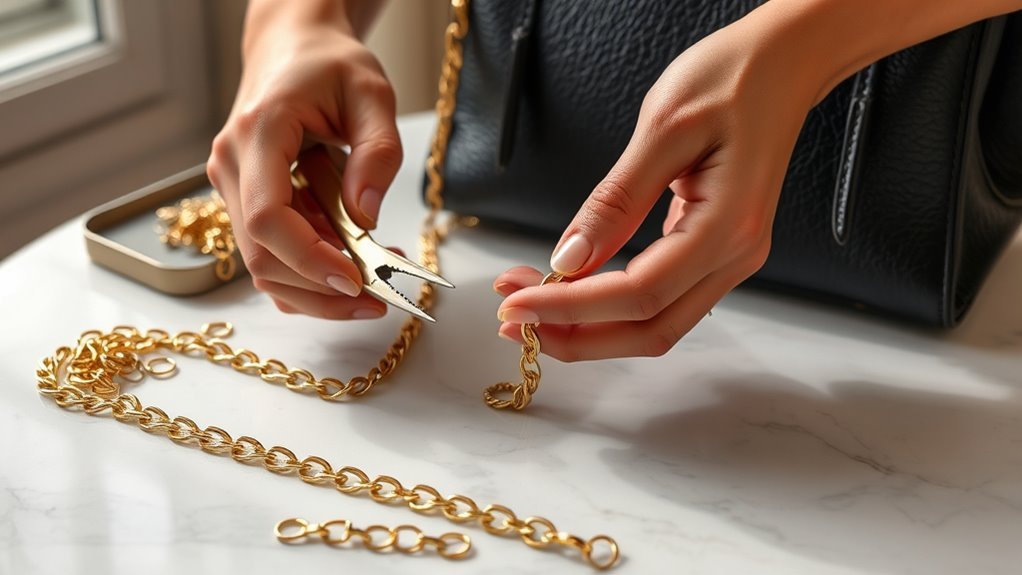
To fix a broken purse chain, first find out what failed: a single open or snapped link, a broken clasp or a worn connection point on the bag. For a split link, you can close it with two pairs of pliers, or replace it with a new link or a lobster clasp. For a damaged strap attachment, repair the bag, not the chain. If the chain is thin, heavily worn or expensive, take it to a jeweler or a bag repair shop, because a weak repair on a load-bearing chain can fail while you carry the bag.
Why Purse Chains Break
Chain straps carry the full weight of the bag and its contents, and they flex and twist with every step. Over time, links can open up, thin out where they rub, or crack at a weld. Clasps wear at the spring and at the ring. The most common failure points are the links closest to the bag, the clasp and the attachment ring. A chain can also look fine and be weak, so check the whole length, not only the visible break.
Check the Damage First
- Lay the chain flat on a table, in good light.
- Look at each link for gaps, cracks, flattened or thin spots and bent shapes.
- Test the clasp: does it open, close and stay shut?
- Check the ring or the loop where the chain joins the bag. See how to fix a torn bag strap attachment.
- Run your finger along the chain and notice any rough or sharp edges.
If more than one or two links are damaged, or if the metal is flaking, it is usually better to replace the whole chain than to patch it.
Tools and Materials
- Two pairs of flat-nose or chain-nose pliers
- Replacement jump rings or links in the same size and metal type
- A lobster clasp, if the clasp needs to be replaced
- A soft cloth, so that the pliers do not scratch the finish
- A small wire cutter, if you need to remove a damaged link
How to Close a Split Link or Jump Ring
- Wrap the jaws of the pliers in a soft cloth, so that the finish stays intact.
- Hold the link with one pair of pliers on each side of the gap.
- Push one side toward you and the other away from you, and do not pull the gap wider, since that weakens the metal.
- Bring the ends back together, so that they meet flush, with no gap. They should click closed.
- Check the repaired link by gently pulling on the chain, and look again for a gap.
A link that has been opened and closed several times can become weak, so if you have to repair the same link twice, replace it instead.
How to Replace a Damaged Link
- Open the damaged link or the nearest jump ring, using the twisting method above.
- Remove the broken link, and slide the new link or jump ring onto the chain.
- Close it fully, and check that there is no gap.
- Choose a replacement that is at least as thick as the original, and made of the same type of metal, since a mismatch can corrode.
How to Replace a Clasp
If the clasp is the weak part, replace it with a lobster clasp of the same size or larger. Attach it with a jump ring, which you close firmly, as described above. Test the clasp by opening and closing it several times, and by pulling it gently. If the clasp holds the bag, a high-quality clasp is worth the cost.
About Soldering and Glue
Some guides suggest soldering a link closed. Soldering joins the metal permanently, but it needs the right solder, flux and heat control, and it can discolor or damage plated finishes and weaken neighbouring links. For that reason, it is best left to a jeweler. Glue is not a reliable repair for a chain that carries weight, because it can let go suddenly. If a repair would be your only protection against dropping a bag, choose a mechanical fix or a professional one.
When to Take It to a Professional
- The chain is thin, delicate or precious metal.
- The bag is expensive, or has sentimental value.
- More than a few links are worn or damaged.
- The finish is plated and easily scratched.
- You are not confident that your repair will take the load.
A jeweler or a bag repair shop can often fix a chain quickly and for a small fee. It is also worth asking them to check the other links while they are at it.
Preventing Future Breaks
- Do not overload the bag. A heavy load pulls the chain beyond its design.
- Do not let the chain twist and kink, and straighten it when you put the bag down.
- Keep the chain dry, and wipe it with a soft cloth after exposure to moisture, since tarnish and corrosion weaken the metal. See why handbag hardware tarnishes.
- Avoid dragging a chain across rough surfaces.
- Check the chain, the clasps and the attachment points every few months.
- Keep a chain strap from catching your hair, or snagging on clothing. See why bag chains catch hair.
Testing the Repair Before You Rely on It
After any repair, hang the empty bag from a hook, and add weight gradually. Start with a light load, then test with the heaviest items that you usually carry, and keep your hand under the bag. Watch for a link that opens, a clasp that slips or a ring that distorts. Do not carry valuables until the repair has passed. If it does not, take it to a professional or replace the chain. For loose rivets or hardware on the bag body, see how to fix loose handbag rivets, and for a strap that slips on the shoulder, see why a shoulder bag keeps slipping.
Frequently Asked Questions
Can I Fix a Broken Purse Chain Myself?
Often yes, if the problem is an open link, a jump ring or a clasp, and you have the right pliers. A thin or delicate chain, or a bag you value, is better handled by a professional.
What Is the Best Way to Close a Chain Link?
Use two pairs of pliers, and twist the ends sideways, so that the link closes flush. Do not pull the gap open, because that weakens it.
Will Glue Hold a Chain Together?
It is not a safe choice for a chain that bears weight. Use a mechanical closure or a professional repair.
Should I Replace the Whole Chain?
If several links are worn, flaking or thin, a new chain is usually a better and safer choice than repeated repairs.
Conclusion
Most chain problems begin with a single link, a ring or a clasp. Find the weak point, repair it with the right pliers and parts, and test it carefully before you trust it with a loaded bag. When the chain is delicate, worn in several places or valuable, ask a jeweler or a bag repair shop to do the job.