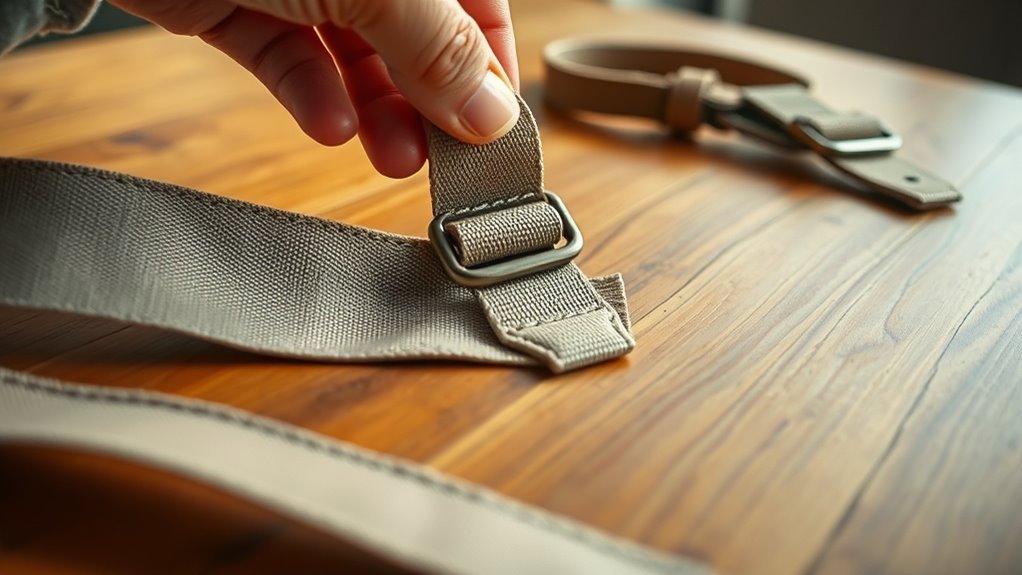
To fix a slipping bag strap buckle, check the buckle for wear, clean off grit, thread the strap through it correctly with the return pass that locks it, and add friction if it still slides. If the buckle is worn, bent or too wide for the strap, replace it with one that fits. Test the repair under load before you carry the bag.
Why a Bag Strap Buckle Slips
A strap buckle holds by gripping the webbing. It slips when the grip is lost, which can happen for several reasons.
- Wrong threading: if the strap is not looped back through the correct slot, nothing locks it.
- Worn or rounded teeth: a buckle with a smooth, worn bar no longer bites into the strap.
- Buckle too wide for the strap: a gap lets the webbing slide sideways.
- Slick webbing: smooth nylon or satin straps slide more easily than rough cotton.
- Dirt or oil: grit and body oils reduce friction.
- Overload: a heavy bag can pull the strap through an otherwise good buckle.
Inspect the buckle for cracks, bends and burrs, and compare the opening to the strap width. A buckle that is bent or cracked should be replaced, not repaired.
Thread the Strap Correctly
Most adjustable buckles lock because the strap makes a short, tight path through them. The exact path varies, so check how the buckle on your bag is built, and follow the original routing, or the instructions that came with a replacement.
- Feed the strap end up through the first slot from underneath, so that it lies flat.
- Loop it over the center bar, and feed it back down through the second slot, if the buckle has one.
- Pull the strap through until it is the length you want.
- Pull the loaded side of the strap tight, so the buckle bites into the webbing.
- Tug firmly to test that it holds.
The return pass is what creates the locking loop, so if the strap is only passed through once, it will slide. If the strap has a flat section with a stitched keeper loop, tuck the tail through it, so that it does not flap.
Clean the Buckle and Strap
Wipe the buckle and strap with a damp cloth and a drop of mild soap, and use a soft toothbrush on the teeth to remove grit. Dry the parts, and check whether the grip improves. Oils from skin and lotion make nylon slippery, and a clean strap grips better. For nylon straps, how to wash a nylon bag explains safe cleaning.
Add Friction to Stop the Slipping
- Double the strap through the buckle, if there is room, for a second pass that adds friction.
- Add a small strip of non-slip silicone grip tape on the inside of the strap, where it passes through the buckle.
- Replace a slick strap with a textured one, such as a cotton webbing, or a webbing that has a ribbed surface.
- Add a slider or a friction lock made for the strap width, which grips more than a plain buckle.
- Tie or stitch a stop at the strap end so that it cannot pull through.
Check the strap regularly after adding friction, since friction wears webbing faster. If the strap is a belt-bag strap, see how to choose a belt bag strap length and how to replace a belt bag buckle.
Replace a Broken Hook With a Suitable Clip
If the bag has a hook or clip that is bent, cracked or missing, replace it with a snap hook, a swivel clip or a clip designed for bags. Pick one that fits the loop opening, has a gate that closes firmly and is rated for more than the weight you will carry. Be careful with decorative clips and small keychain carabiners, which are often not load-rated and can open or snap under a heavy bag. A climbing carabiner is made for safety and is a strong choice for a heavy load, but it is usually heavier and bulkier than a bag needs. Test the gate before loading it. For a swivel clip replacement, see how to replace a purse swivel clip.
Sew the Strap for a Permanent Fix
If you do not need to adjust the strap, you can sew it at the length you want. Fold the strap, align the layers, and sew a box with an X in the middle through all layers, using strong thread and a heavy needle. Backstitch at the ends. This removes adjustability, but it also removes the part that slips. If the strap is attached to the bag with a weak stitch or rivet, fix that at the same time. See how to repair a strap attachment and how to fix loose handbag rivets.
Test the Repair Before Carrying the Bag
Load the bag with a typical weight, and hang it from the strap. Check each attachment point, the buckle and the stitching. Move the strap through its length settings and see whether it holds at each. Tug the strap and check that nothing moves. If anything shifts, cracks or opens, stop and fix it before you carry the bag. A strap that slips on a shoulder is annoying, but a strap that fails with a heavy or expensive load is a real problem.
Preventing Future Slipping
- Do not overload the bag, particularly if the strap is thin or slick.
- Clean the strap and buckle regularly.
- Check the stitching and the hardware every few months.
- Store the bag with the strap loosely coiled, and not stretched.
If the bag slips off your shoulder, as opposed to the buckle slipping, see why a shoulder bag keeps slipping. A fabric strap that has stretched is a different problem, covered in why tote bag straps stretch.
Frequently Asked Questions
How Do I Make a Bag Strap Tighter?
Pull the free end through the buckle until the strap is snug, then check the locking loop. If it still loosens, add friction or replace a worn buckle.
How Do I Thread an Adjustable Strap?
Feed the end through the buckle slot from underneath, loop it over the center bar and pass it back through the second slot. Follow the original path if there is one.
How Can I Make a Purse Strap Non-Slip?
Use a textured webbing, add a silicone grip strip or use a strap pad with a rubbery inner side.
Conclusion
A slipping strap buckle usually comes from wrong threading, a worn buckle or slick webbing. Thread it with the return pass, clean it, add friction if you need it and replace worn hardware, then test it under load before you rely on it.
