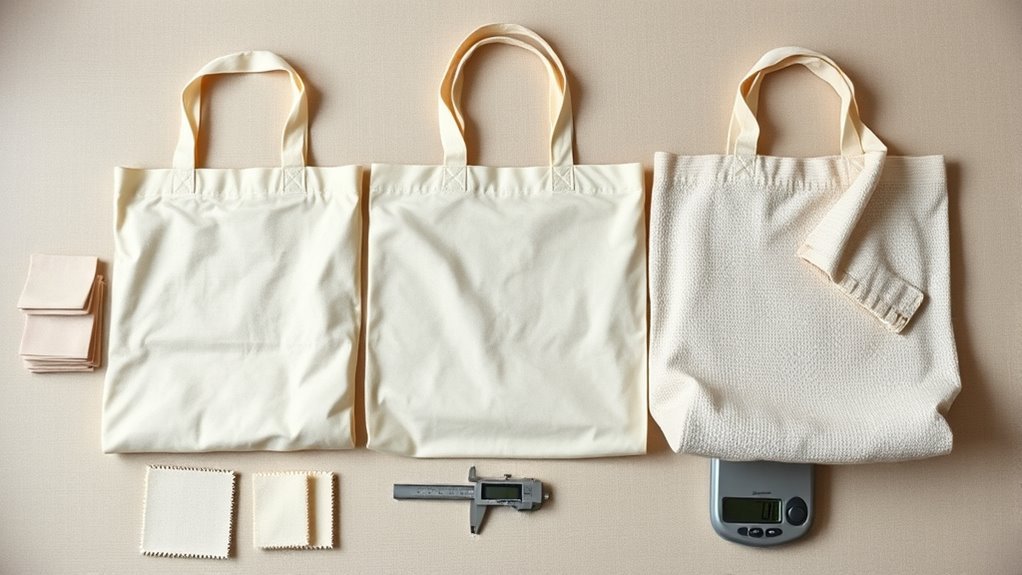
Canvas weight tells you how much fabric mass you’re getting per square yard, usually in oz/yd² or GSM; 1 oz/yd² is about 33.91 GSM. When you choose a tote, 6–8 oz feels light and flexible, 10–12 oz gives a balanced structure, and 14 oz+ adds stiffness and durability. Duck canvas uses a tighter weave for stronger performance. Heavier fabric usually costs more, prints sharper, and holds shape better, which matters when you compare options.
What Does Canvas Weight Mean?
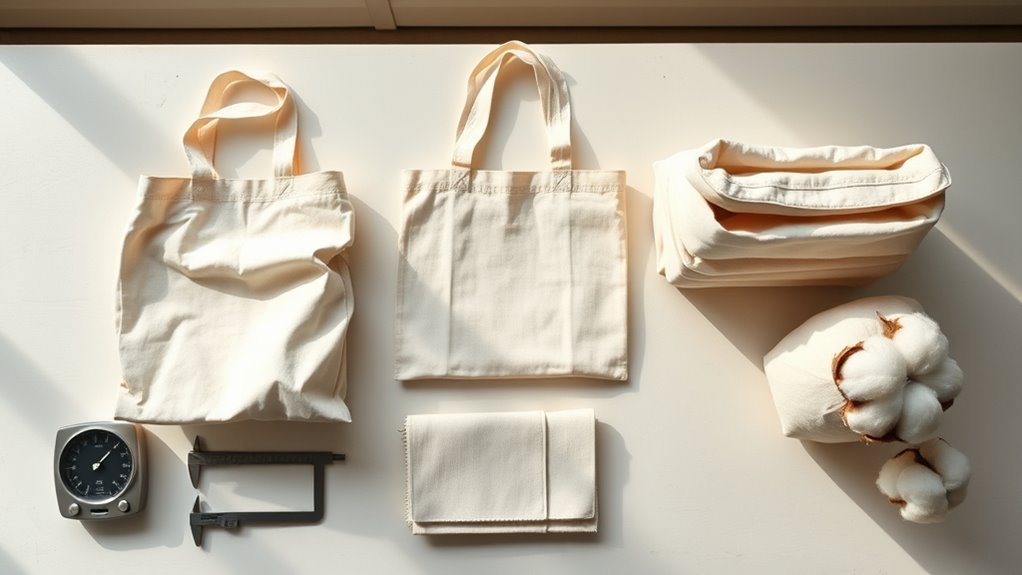
Canvas weight refers to the fabric’s mass measured in ounces per square yard (oz/yd²), and it’s a direct indicator of thickness, density, and durability. You use this metric to judge how a tote will perform under strain.
Lower weights, around 4oz, give you lighter material with more canvas flexibility, while higher weights, up to 24oz, create a denser, stiffer structure that resists tearing and supports heavier loads. More ounces mean more cotton fibers packed into each area, so the fabric feels firmer and lasts longer.
That increased firmness affects folding, carrying comfort, and the bag’s overall shape retention. If you want practical freedom, you match the weight to the job: lighter canvas for easy handling, heavier canvas for demanding use.
How Are Oz and GSM Measured?
When you compare tote-bag fabrics, you’ll usually see weight listed in ounces per square yard (oz/yd²) or grams per square meter (GSM). In an oz measurement, you assess one square yard of canvas and weigh it in ounces; this tells you the fabric’s density and, indirectly, its thickness. A higher ounce count usually signals a sturdier weave and more structural integrity.
For a gsm comparison, you use the metric standard: one square meter of fabric is weighed in grams. The two systems relate directly, since 1 oz/yd² equals about 33.91 GSM. You can convert between them to compare products across markets and claim systems.
Some mills also use the duck number system, where lower numbers mean heavier canvas. Because manufacturers don’t always classify weight identically, you should verify each spec before you buy, so you keep control over quality and your material choices.
Which Canvas Weights Work for Tote Bags?
Once you know how tote-bag fabrics are measured, you can narrow the useful range quickly: most canvas tote bags fall between 6 oz and 14 oz, with 10 oz to 12 oz offering the best balance of durability, structure, and everyday usability.
If you want lightweight options, 6 oz canvas works well for promotional totes, mailers, and short-term carry needs, but it won’t hold shape as firmly.
At 12 oz, you get stronger body, better load support, and cleaner surfaces for printing or embroidery, so it fits retail bags and repeated use.
When you need heavy duty alternatives, 14 oz and above shifts into industrial territory, where longevity and carrying demands matter more than ease.
You should match weight to purpose: lower ounces reduce cost and bulk, higher ounces increase stability and visual precision.
Your choice determines how your tote performs, looks, and lasts.
Why Duck Canvas Feels Stronger
You’ll notice duck canvas feels stronger because its weave packs yarns more tightly than standard canvas.
That denser structure resists seam stress and reduces the chance of tearing under load.
As a result, you get a fabric that holds up better in demanding tote bag use.
Tighter Weave Structure
Duck canvas feels stronger because its weave is tighter and denser than standard canvas, which improves tear resistance, abrasion resistance, and overall durability.
You get a tighter weave structure that packs more cotton fibers into each square yard, so the cloth holds its shape under load without feeling flimsy. That density boosts fabric durability and gives you a smoother surface that supports cleaner printing for branding.
The name “duck” comes from the Dutch doek, signaling a sturdier textile tradition, and higher ounce ratings usually reflect this added mass and structural integrity.
When you choose duck canvas, you’re selecting a material engineered for resilience, not compromise, so your tote can work harder and stay serviceable longer.
Higher Tear Resistance
That tighter, denser plain weave also gives duck canvas a clear advantage in tear resistance. You get more cotton fibers per square inch, so force spreads across a larger network instead of concentrating at one weak point.
These tear resistance factors matter when you carry tools, hardware, or dense goods that can strain seams and edges. Duck canvas advantages become obvious in weights from 10 oz to 24 oz, where added mass usually means higher structural integrity.
In lab tests, it sustains heavier static loads before failure than standard canvas, and its robust construction resists punctures better. You can rely on it for tote bags that need to hold up under hard use without surrendering to premature fraying or split panels.
How Canvas Weight Affects Tote Durability
Canvas weight, measured in ounces per square yard, is one of the clearest predictors of tote bag durability because heavier fabric resists wear, tearing, and deformation more effectively.
You can use a weight comparison to judge canvas durability: 6 oz to 8 oz cloth feels flexible, but it won’t endure repeated strain as well as denser weaves.
At 10 oz to 12 oz, the fabric can hold up to about 45 pounds in static loading, so you get reliable performance for daily carry and grocery use.
Once you move to 12 oz and above, the fibers pack tighter, improving tear resistance and helping the bag keep its shape under stress.
At 15 oz and above, you’re choosing heavy-duty material built for bulky loads and harsher handling.
That means you’re not just buying a tote—you’re selecting a tool that supports practical freedom.
Which Canvas Weight Prints Best?
You’ll get the best print performance from canvas in the 10 oz to 12 oz range, with 12 oz often giving you the best balance of structure, color fidelity, and detail.
A tighter weave and smoother surface control ink flow, reduce bleed, and improve clarity, especially for fine graphics and logos.
If you compare cotton and polyester blends, 100% cotton usually prints more cleanly in screen printing because it absorbs ink well and supports sharper, more vibrant results.
Best Print Weights
For most tote bag prints, canvas in the 10 oz to 12 oz range delivers the best balance of durability and image clarity, so logos and graphics stay crisp without sacrificing fabric strength.
You’ll get strong design clarity with common printing techniques, especially screen printing on 100% cotton canvas, where ink can bite into the surface cleanly.
If you need more visual impact, 14 oz and heavier canvas can support thicker inks and reduce bleed, giving you sharper edges and longer wear.
A tighter weave, such as duck canvas, also improves print definition by presenting a smoother field for ink transfer.
Match the fabric to your method, and you’ll control contrast, detail, and permanence with technical confidence.
Weave And Ink Flow
When weave density matters, duck canvas usually prints best because its tighter structure helps ink absorb evenly and keeps fine details and logos sharp. You’ll see stronger print clarity because the fibers hold pigment with less spread, so edges stay defined.
For most tote applications, 10 oz to 12 oz canvas gives you the best balance of durability and pliability, letting ink flow smoothly without distortion. At 12 oz and above, the surface becomes even more stable, which supports vibrant prints and precise registration.
Lighter 6 oz to 8 oz fabrics can sag, and that movement can blur designs. If you need sharp logos or intricate graphics, choose a higher ounce rating; it also supports cleaner embroidery and a more professional finish.
Cotton Vs Polyester
100% cotton canvas usually prints best for screen printing because its high ink absorption lets ink sit cleanly in the fibers, producing vivid color and sharp detail.
You should weigh cotton properties against polyester advantages before you choose. Cotton absorbs ink well, but it can shrink 8%-10%, which may distort alignment after washing.
Polyester resists moisture, holds color longer, and keeps dimensions stable, so it works better for sublimation and long-term consistency.
If you want sharper detail, use heavier canvas, around 12 oz; lighter 6 oz fabric can blur fine lines because it lacks structure.
Cotton-poly blends give you a practical middle path: they reduce shrinkage, improve durability, and keep the print surface softer for everyday carry.
How Canvas Weight Affects Price
Canvas weight directly influences tote bag price because heavier fabrics require more raw cotton and more intensive manufacturing, which raises unit cost.
You can run a clear cost comparison by weight implications: 6 oz to 8 oz canvas usually costs less, while 10 oz to 12 oz increases the price as density rises and print performance improves.
When you order in bulk, each added ounce can lift per-unit spend, so you need to align your budget with your branding goals.
- 6 oz–8 oz: lower price, easier access
- 10 oz–12 oz: balanced durability and cost
- 12 oz: sharper printing, higher unit cost
- 15 oz+: premium price, long-term value
If you want freedom from short-lived materials, heavier canvas can justify its premium through endurance.
For you, the key is choosing the weight that matches your use case without surrendering control of costs.
Best Canvas Weights for Each Tote Use
Different tote uses call for different canvas weights, and you should match the fabric to the bag’s load, durability, and presentation requirements.
For lightweight promotional bags, 6 oz canvas works best because it folds easily and keeps event carry costs low, though it won’t support heavy loads.
If you need an everyday reusable tote, 10 oz canvas gives you a practical balance of flexibility and strength for moderate cargo.
Choose 12 oz canvas when you want a branded retail bag with a cleaner structure, a more professional surface, and enough body for frequent handling and larger logos.
For demanding service, 14 oz canvas delivers heavy-duty performance and a premium hand, making it suitable for tool bags and repeated strain.
When you need maximum support, 18 oz to 22 oz duck canvas gives you the firmest structure for utility totes built to endure heavy loads and long-term use.
How to Choose the Right Tote Bag Weight
To choose the right tote bag weight, start with the bag’s intended use and expected load. Canvas weight, measured in oz/yd², rises with thickness and durability, so your selection should match stress, structure, and freedom from failure.
Choose tote weight by use and load: heavier canvas brings more durability, structure, and stress resistance.
For giveaways, 6-8 oz lightweight options keep cost and weight low. For daily errands or branded retail bags, 10-12 oz cotton duck canvas is the industry standard and can sustain up to 45 pounds of static load.
For tool transport or demanding work, 14 oz and above delivers heavier reinforcement, superior shape retention, and premium feel.
- Light enough to move freely
- Strong enough to resist tearing
- Balanced for daily independence
- Built for heavy duty choices
Always assess seam strength and load distribution too. If you need a bag that holds form under pressure, choose a heavier fabric; if you want portability and economy, choose lighter canvas.
Frequently Asked Questions
What Does 10 Oz of Canvas Mean?
It means you’re getting canvas that weighs 10 ounces per square yard, which gives you solid canvas durability for tote bag applications. You’ll get medium thickness, dependable structure, and better shape retention.
What Is the Difference Between 7 Oz and 10 Oz Canvas?
Like a feather versus a shield, 7 oz canvas gives you lighter tote bag styles, while 10 oz boosts canvas durability, holds heavier loads, and keeps prints sharper; you’ll pay more for that strength.
Is 12 Oz of Canvas Heavy?
Yes—12 oz canvas is fairly heavy for tote bag uses, and you’ll get strong canvas durability. It’ll feel substantial, hold shape well, and support daily carrying better than lighter fabrics without sacrificing versatility.
Is 14 Oz Fabric Considered Heavy?
Yes, 14 oz fabric is heavy: you get stronger canvas durability, stiffer structure, and broader tote bag applications. You’ll carry loads, resist wear, and choose a material that won’t compromise your freedom.
Conclusion
When you choose canvas weight, you’re really choosing the tote’s future: lighter oz and GSM keep the bag flexible and printable, while heavier weights deliver structure, abrasion resistance, and longer wear. Think of it like selecting the fabric’s armor—thin enough to fold, dense enough to endure. Match the weight to the job, and you’ll get the right balance of cost, durability, and appearance for everyday carry, retail branding, or heavy-duty use.