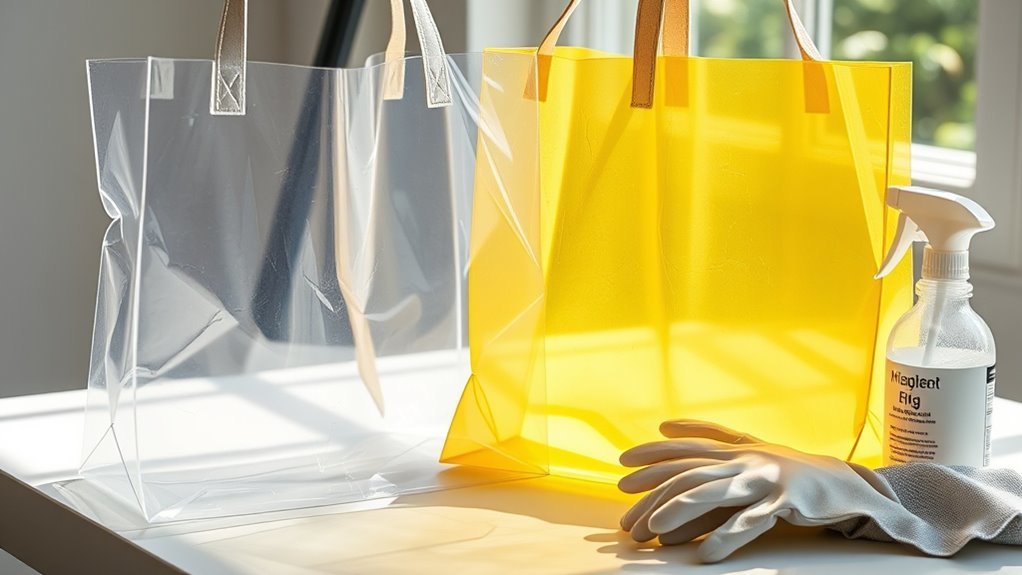
Clear vinyl bags turn yellow because UV light, heat, oils, and dirt break down the plastic over time. The damaged plastic absorbs blue light, so it looks yellow. You can slow this down. Store the bag out of the sun and away from heat, and clean it gently with mild soap and warm water. Avoid harsh cleaners and rough scrubbing, which make the damage worse. If the yellow color will not go away or the bag turns weak, it is time to replace it. The sections below explain the causes and what you can do.
Why Do Clear Vinyl Bags Turn Yellow?
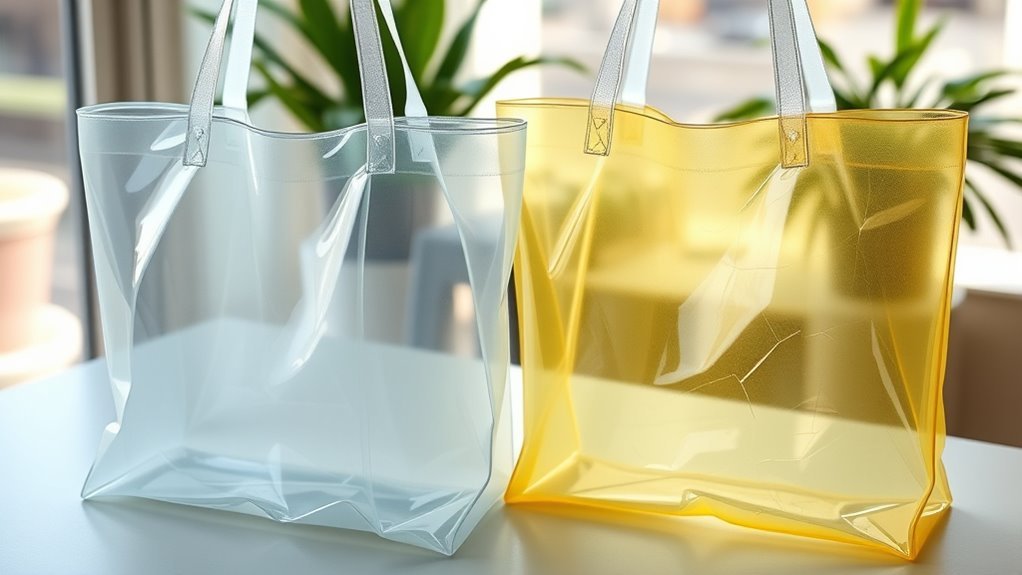
The main cause is UV light. It triggers a reaction called photo-oxidation in the vinyl. This breaks the long chains that make up the plastic. The new structures that form absorb blue light, and that gives the material an amber tint.
So the yellow color is a chemical change, not just dirt. Heat speeds it up. Skin oils, sweat, and particles in the air can also settle into the material and make the color worse.
The change usually starts at the surface and can go deeper with time. That is why the yellowing is so stubborn and often looks uneven.
You can slow the process with simple care. Wash the bag with mild soap, avoid harsh chemicals, and remove residue before it bonds to the surface.
These steps limit further damage and dirt. They cannot repair plastic that has already broken down.
If you want a clear vinyl bag to stay clear and last, protect it from light, heat, and grime from the start.
What Causes Clear Vinyl Bags to Yellow Faster?
If your clear vinyl bag yellows fast, the usual causes are strong UV light, high heat, and contact with chemicals. Sunlight breaks the plastic down, and the damaged material shifts toward amber.
Heat adds stress, so the reaction runs faster and the bag loses its clarity sooner. Moisture, air pollution, oils, and sweat can also work into the surface and add to the color change.
A lower-grade bag will likely yellow faster. Cheaper vinyl often lacks the stabilizers that resist UV light and slow oxidation.
Storage matters a lot. Keep the bag away from direct light, hot cars, and oily or dirty surfaces. This lowers the stress on the material and keeps it clear for longer.
How Does UV Light Discolor Vinyl?
UV light discolors vinyl through photo-oxidation. The rays break the plastic chains and create structures that absorb blue light. The material then looks yellow.
Most of the damage is in the thin outer layer of the vinyl, where the light hits first. There the rays attack weak bonds and change the chemistry of the plastic.
As more of these structures build up, the vinyl reflects less blue light, so it looks more yellow.
With long UV exposure, the breakdown goes on, and the vinyl slowly becomes more yellow and more brittle.
Heat and dirt can make the reaction stronger, but UV light is the main trigger.
To keep clear vinyl clear, keep it out of direct sunlight as much as you can.
Why Does Heat Make Vinyl Bags Yellow?
Heat speeds up yellowing. It makes the plastic oxidize and break down faster, and the damaged material looks amber.
Warm air, direct sunlight, and a hot car all raise the temperature of the vinyl. The higher the heat, the faster the damage.
These reactions change more than the color. They also make the vinyl less flexible, so you can feel a bag aging as well as see it.
The damage adds up. Each time the bag gets hot, a little more harm is done, and the amber tint deepens over time.
You can slow this by storing bags in cool, shaded places and cleaning them often. You cannot undo the aging that has already happened.
Heat does not ruin vinyl at once. It wears the material down slowly, so the best defense is to keep the bag cool.
Do Oils and Dirt Make Yellowing Worse?
Yes. Oils and dirt can make yellowing worse. Skin oils, sunscreen, and grime leave a film on the surface, and that film helps the plastic break down.
Some oils and lotions also react with the vinyl or stain it. UV light drives most yellowing, and a dirty surface makes it worse. A clean surface helps the bag stay clear for longer.
Residue can trap UV light, speeding vinyl breakdown; keeping the surface clean helps preserve clarity longer.
You do not need strong cleaners. Harsh chemicals can damage the vinyl and deepen the color change. Use mild soap and a soft cloth or soft brush to remove dirt without scratching.
Regular cleaning will not make a bag last forever, but it removes the film that speeds up damage. It protects clarity and adds to the life of the bag.
Can You Remove Yellow Stains From Vinyl Bags?
Sometimes, in part. Yellowing usually comes from UV light, heat, and chemical changes inside the plastic, so it is more than a surface stain.
You can often lighten it with a baking soda paste, a white vinegar solution, a hydrogen peroxide soak, a light pass with a melamine sponge, or a commercial cleaner that is safe for plastic.
Severe cases may respond to Retrobrite treatment.
To limit future yellowing, clean the bag often and store it away from light and heat.
Causes Of Yellowing
Clear vinyl bags usually yellow because long UV exposure triggers photo-oxidation. This breaks the plastic chains and forms amber-colored compounds in the material. Heat speeds the change, so storage near a window or in a hot car makes it worse. Oils, dyes, and air pollution can also get into the vinyl and stain it. How deep the change goes depends on the plastic. Some bags yellow all the way through, and others mainly at the surface.
| Cause | Effect |
|---|---|
| UV light | Photo-oxidation |
| Heat | Faster degradation |
| Contaminants | Color alteration |
To prevent yellowing, limit light, heat, and contact with residue. Steady care protects clarity. Once the plastic itself has changed, though, the stain is more than dirt.
Removal Methods That Work
Sometimes you can lighten the yellow on a clear vinyl bag. Success depends on how deep the UV damage and oxidation go.
One method is to soak the bag in a mix of hydrogen peroxide and water for a few hours. Some people place it in sunlight to speed up the reaction. Results vary, and this can make soft vinyl more brittle, so test a small area first.
You can also put a paste of baking soda and water on yellow spots. Leave it on for up to a day, then rinse well.
If you prefer a store-bought product, choose a cleaner made for vinyl and follow the label exactly. Too much cleaner or the wrong solvent can weaken the material.
These methods can lighten surface stains. They will not fully reverse damage inside the plastic, so treat them as a way to improve the bag, not a sure fix.
Preventing Future Discoloration
To stop a clear vinyl bag from yellowing again, limit the things that break the plastic down.
Store bags in a cool, dark place, away from direct sunlight, heaters, and other heat sources. UV light speeds up the damage, so an opaque or UV-filtering storage bag helps.
For more protection, you can apply a UV protectant made for vinyl to slow the color change.
Wash each bag often with mild soap and water. This removes dirt, oils, and residue that speed up surface damage.
Handle the bag gently, dry it fully, and avoid harsh chemicals.
If you start early, the plastic stays stable and clear for much longer.
Which Cleaning Methods Work Best for Vinyl?
Match the cleaner to how bad the stain is. Hydrogen peroxide is the strongest option for deep yellowing. White vinegar, denture tablets, and baking soda paste are milder choices.
If you need to rub, use a melamine sponge with very light pressure. It is slightly abrasive and can dull a clear surface, so test it on a hidden spot first.
With every method, watch the soak time and how hard you rub. Clean just enough to lift the stain and not so hard that you damage the surface.
Best Vinyl Cleaners
The best cleaners for clear bags are products made for plastic. They lift grime and residue without clouding or harming the vinyl. Choose a mild one for light dirt and a stronger one only when you need it.
| Cleaner | Action | Risk |
|---|---|---|
| Mild soap | Loosens dirt | Low |
| Plastic cleaner | Dissolves residue | Low |
| Isopropyl blend | Cuts oils | Moderate |
For routine care, warm water and a soft cloth are enough. This stops dirt from building up and slows yellowing. Avoid bleach and ammonia, which can damage vinyl and speed up the color change. A gentle clean every few weeks keeps your bag clear.
Safe Scrubbing Methods
Safe scrubbing lifts residue without scratching the vinyl. Put a baking soda paste on yellow areas, let it sit for up to a day, and wipe it away with a soft cloth.
A damp melamine sponge can remove surface yellowing. Use light pressure and do not soak it. If residue remains, use a mild all-purpose cleaner exactly as the label directs.
For a deeper clean, soak the bag in a mix of equal parts white vinegar and water to loosen stains. For regular care, scrub gently with a soft cloth or sponge so dirt never builds up.
With steady care, the vinyl stays clear and strong for longer.
What Should You Avoid When Cleaning Vinyl Bags?
Avoid abrasive cleaners and scrubbing pads. They scratch the surface and make yellowing look worse. Skip bleach, ammonia, and oily products too. They can damage or stain vinyl and trap dirt. Do not leave bags in direct sun or in a hot car, since UV light and heat speed up the breakdown of the plastic.
| Hazard | Effect | Risk |
|---|---|---|
| Abrasives | Surface scratching | Faster yellowing |
| Harsh chemicals | Vinyl breakdown | Brittleness |
| Heat and UV | Material degradation | Discoloration |
| Avoid | Result | Outcome |
| Oils | Staining | Dust buildup |
| Sunlight | UV exposure | Yellowing |
| Heat | Softening | Distortion |
Handle the bag gently and store it in a cool, shaded place. That keeps the vinyl clear and strong for longer.
How Can You Keep Clear Vinyl Bags From Yellowing?
To keep clear vinyl bags from yellowing, limit UV light, control heat, and keep the surface clean.
Store bags out of direct sunlight and away from radiators, vents, and hot cars. Steady temperature and humidity slow the reactions that cause yellowing. A closet or cabinet works better than an open shelf.
Store clear vinyl bags away from sunlight and heat; stable temperature and humidity help prevent discoloration.
When you buy, choose good-quality vinyl that is labeled UV resistant. The makeup of the material decides how well it resists yellowing.
Clean each bag with mild soapy water and a soft cloth. This removes residue without scratching the surface.
You can also use a protective spray made for vinyl if the maker of the bag approves it. It adds a barrier against sun and dirt.
These habits keep the bag clear, add to its life, and keep it ready for use.
When Should You Replace a Yellowed Vinyl Bag?
Replace a yellowed vinyl bag when you can no longer see through it clearly. Lasting yellow color usually means the material has been damaged by UV light and heat. This affects how well the bag works, not just how it looks.
When you cannot see your things at a glance, the bag no longer does its job. Some venues also require bags to be clear. If cleaning does not remove the tint, replacing the bag is the sensible choice.
Bags that get a lot of sun, heat, or dirt may need replacing after a year or two. Check a bag more often if you keep documents, tools, or daily essentials in it.
Deep, uneven, or widespread yellowing often means the vinyl is also getting weaker and more brittle. A new bag gives you a clear view and a reliable carry again.
Frequently Asked Questions
How to Stop Plastic From Yellowing?
Keep it out of sunlight, keep it cool, and keep it clean. Store items in a cool, dark place and wash them gently. When you buy, choose plastics labeled UV resistant, since they contain stabilizers that slow yellowing.
What Is a Good Yellow Remover for Plastic?
Hydrogen peroxide is the most common choice. It can bleach the yellow color out of some plastics, and sunlight or UV light speeds up the effect. Results vary by plastic, so test a small area first. Rinse and dry the item well afterward.
How to Make Plastic That Has Gone Yellow and White Again?
Try a hydrogen peroxide treatment in sunlight, a method often called Retrobrite, or a baking soda paste for light stains. A commercial plastic cleaner is another option. Afterward, keep the item away from heat and UV light. Deep yellowing may not come out fully.
Conclusion
You can slow yellowing by limiting UV light, heat, and residue, but you cannot stop the plastic from aging. Store clear vinyl bags in cool, shaded places and clean them with mild, gentle methods to keep them clear for longer. If the yellow color will not come out, the plastic itself has aged. At that point, replacing the bag is not a failure. It is the practical way to get a clear, good looking, reliable bag again.
