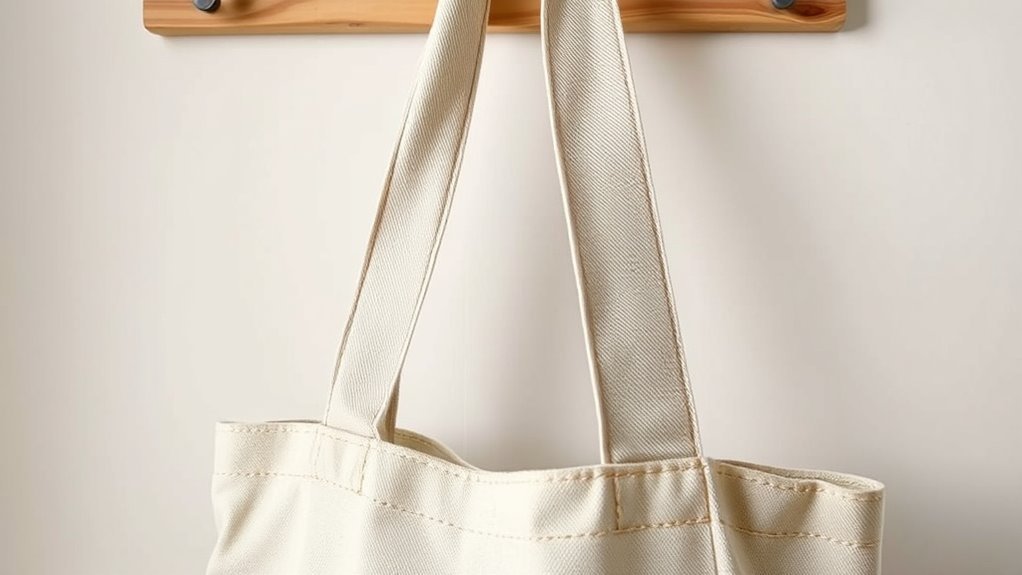
Tote bag straps stretch because repeated tension from the bag’s load gradually elongates yarns, especially in cotton and other natural fibers. If the crocheting is uneven, strain concentrates in one area and the strap loses symmetry faster. More weight also increases strap drop, so the bag hangs lower and shifts your carry position. Stable materials like canvas, webbing, or reinforced blends resist this better, and the details below show how to control fit.
Why Tote Bag Straps Stretch

Tote bag straps stretch because the load inside the bag creates constant tension that gradually elongates the yarn or fabric over time.
You should assess strap elasticity as a mechanical response, not a flaw, because repeated tensile stress reorients fibers and weakens recovery. Material composition matters: cotton and other natural fibers typically deform more than synthetics, and cotton can stretch 2-5% under load.
Assess strap elasticity as a mechanical response: repeated stress reorients fibers, and cotton typically stretches more under load.
If you crochet unevenly, you create localized strain, so one section elongates faster and the strap loses symmetry and strength. Humidity also changes fiber behavior by softening structure and increasing sag.
You can reduce this effect by reinforcing the strap with slip stitch edging or lining, which distributes force more evenly and preserves function.
When you choose stronger yarn and build consistent tension, you give yourself a bag that holds up without surrendering shape.
How Weight Changes Strap Drop
When you load a tote with groceries, books, or other weighty items, the added tension stretches the straps and increases the strap drop, so the bag hangs lower on your body. That extra descent can add several inches, shifting the load away from your natural carry position and changing how you move.
As the drop lengthens, you’ll notice less strap comfort and more sway, especially when the contents aren’t evenly distributed. You can reduce that effect by checking weight balance before you leave, since uneven packing concentrates force on one side and accelerates stretch.
A lower drop may improve access in some cases, but too much length makes the tote cumbersome and less stable. By monitoring how much you carry and where you place it, you keep the bag’s geometry closer to its intended fit.
That lets you move freely without letting the load dictate your posture or pace.
Which Tote Strap Materials Hold Shape?
Which materials keep a tote strap stable under load?
In material comparison, cotton canvas gives you high strap durability because its tight weave resists elongation and keeps the strap’s geometry steady.
Webbing straps, usually nylon or polyester, hold shape even better under heavier loads; they’re lightweight, strong, and designed to avoid sagging.
Leather can also preserve form well when you care for it properly, but it may stretch a bit over time, so its stability isn’t absolute.
Cotton-acrylic blends add resilience, pairing cotton strength with acrylic recovery to limit deformation under weight.
If you choose reinforced straps, added stitching or backing improves load distribution and helps the strap stay flat and controlled.
For you, the key metric isn’t only strength, but dimensional stability under repeated use.
When you want freedom from droop and distortion, prioritize materials that preserve their profile while bearing force.
How to Reinforce Tote Straps
You can reinforce tote straps with a slip stitch edging, which forms a firm border that limits stretch and improves durability.
If you need more support, add a double-layer slip stitch and back the strap with cotton canvas or medium-weight interfacing to distribute load more evenly.
Check the attachment points regularly, then strengthen any high-stress area before elongation starts.
Slip Stitch Support
Slip stitch support can stabilize tote bag straps by creating a firm, non-stretchy border that helps the strap keep its shape under load.
You gain clear slip stitch benefits: the stitches distribute stress evenly, limit sagging, and raise strap durability without relying on excess bulk.
When you add a slip stitch backing, you increase thickness and reinforce the strap’s lengthwise stability, so it resists elongation over time.
Vertical slip stitch lines improve structural integrity while preserving freedom of movement and keeping the strap efficient.
At high-stress attachment points, slip stitch anchoring secures the connection and reduces premature stretching.
You’re not just repairing a strap; you’re engineering resilience, so your tote can carry weight with controlled, dependable support and fewer distortions.
Fabric And Hardware Reinforcement
Reinforcing tote straps with fabric and hardware gives the load a stronger path from handle to bag body, reducing stretch where tension concentrates.
You can add cotton canvas or denim through fabric layering behind the strap, then hand-stitch it in place so the support stays flexible but firm. Use tight stitch patterns, including slip stitch edging, to lock the edge and slow deformation.
At the attachment points, install D-rings or swivel clips so weight transfers through metal instead of pulling directly on yarn loops. This setup distributes force more evenly, preserves shape, and lets you carry more without surrendering comfort.
Test the strap under load, then reinforce any high-stress zones before they fail.
How Bag Size and Hardware Affect Fit
Bag geometry and hardware placement directly affect how a tote carries load and sits on the body. When you choose a larger tote, you add leverage: the wider body pulls weight farther from your side, so you often need longer straps to keep balance and avoid a cramped carry.
Smaller bags can hang higher without that shift. Your strap alignment also depends on the attachment points; clips, rings, and similar hardware can move the load line outward or inward, changing how the bag drops and swings.
A 10–12 inch drop usually sets a workable hang, but heavier totes may need 1½–2 inch straps to spread pressure and resist distortion. As load rises, material and construction matter more, because weak webbing stretches and changes fit.
You shouldn’t accept hardware that constrains movement; you can tune the system so the bag supports your body, not the other way around, and keep carry comfortable.
How to Test Tote Strap Length Before Cutting
Before you cut tote straps, you should test the length under real use conditions: temporarily attach the strap, load the bag with items that match your usual carry, and wear it to check how the strap rides on your shoulder and where the bag hangs on your body.
Measure the drop while moving, not standing still, because weight shifts alter fit. If the bag pulls forward or climbs off your shoulder, shorten or lengthen the strap and retest.
A dress form or mannequin can help you compare hang and clearance across body types, but your own body gives the final data. Match the length to intent: crossbody wear needs extra reach, while shoulder carry benefits from a tighter span.
Repeat these adjustment techniques several times, since weight distribution changes strap comfort and function. Each trial gives you evidence, so you can cut only when the strap supports your movement, not restricts it.
Frequently Asked Questions
How to Make Tote Bag Straps Stronger?
Choose durable strap materials like cotton canvas or denim, and use reinforcement techniques such as slip-stitch edging, backing layers, and dense stitching at stress points. You’ll distribute load better, resist stretch, and keep straps stable.
Why Are Bags With Broad Straps More Comfortable?
Broad straps spread load across your shoulder, so you feel less pressure and shoulder fatigue. With the right strap material and greater surface area, you’ll prevent digging, support heavier loads, and carry more freely.
How Wide Should Tote Bag Straps Be?
You should use 1½ to 2-inch straps—because, naturally, skinny straps love punishing shoulders. You’ll get better load distribution, and your strap materials and strap lengths should match bag size for stability and comfort.
Why Does My Tote Bag Keep Slipping off My Shoulder?
Your tote slips because the straps don’t generate enough friction, fit your shoulder poorly, or hang too long. You’ll improve shoulder comfort by choosing grippier strap materials, shortening the drop, and balancing the load.
Conclusion
You want a tote that looks crisp, not saggy, yet every pound you add pulls the straps lower. That contrast matters: light loads keep a neat drop, heavy loads lengthen it. Choose dense webbing, reinforce stress points, and test the hang before you cut. Small hardware and a smart bag size can preserve fit, but stretch always shifts geometry. Measure, load, reassess—because a tote that’s empty can fit differently when it’s full.
