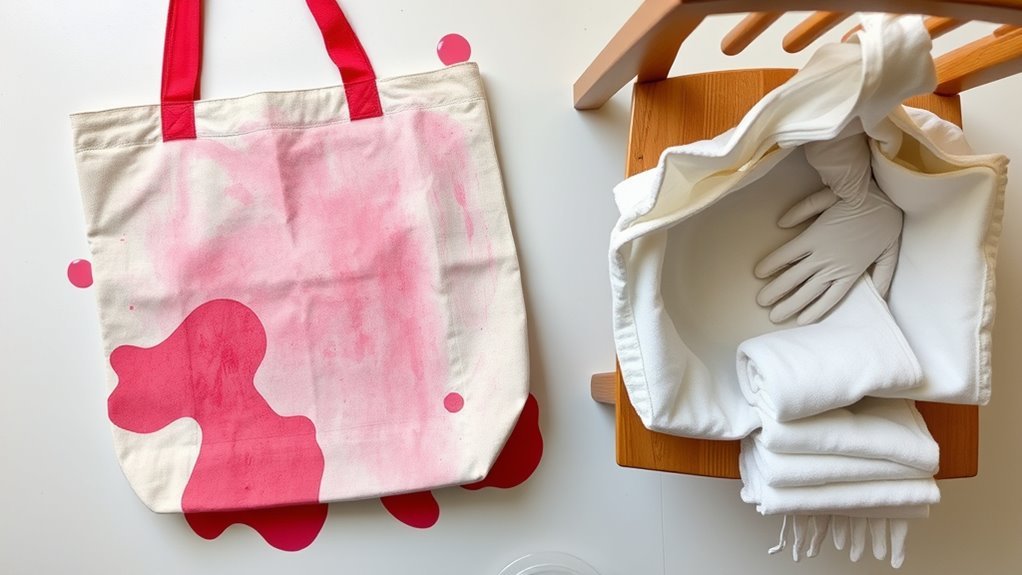
Tote bag colors bleed when loose dyes, weak colorfastness, and unfinished setting leave pigment mobile in the fibers. You’ll see more transfer on dark or untreated materials, especially when humidity, sweat, or rain add moisture and friction. To limit it, avoid contact with dark clothing, choose washed textiles, apply a material-safe protector, and store the bag in a breathable dust cover. If stains appear, blot them quickly with a soft dry cloth, and there’s more to check next.
What Causes Tote Bag Colors to Bleed?
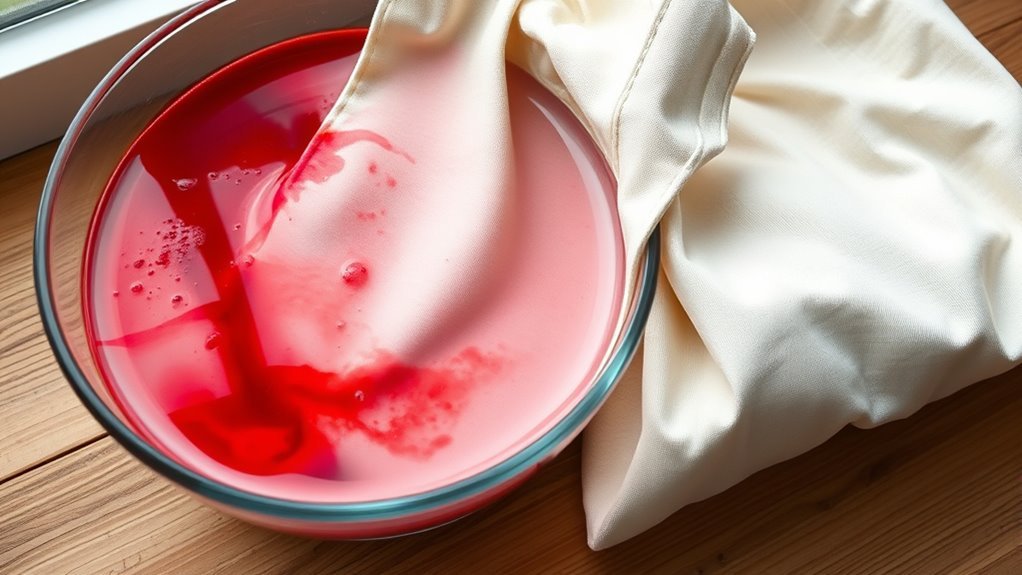
Tote bag colors bleed when dyes aren’t fully set during manufacturing, allowing loose pigment to transfer onto other surfaces under friction or moisture.
You see weaker color fastness when dye setting is incomplete, so surplus dye remains mobile in the fibers. Dark textiles, especially indigo-dyed denim, often release more pigment because they carry higher residual dye load.
If your tote uses suede or untreated cotton, the surface texture can amplify abrasion and expose unstable colorants more quickly.
Humidity, sweat, and rain raise the moisture content of the fabric, which lets pigment migrate more readily.
You can reduce risk by choosing well-fixed colors, prewashing new items, and applying color fixatives before regular use.
When you understand these mechanisms, you can select bags that resist transfer and keep your wardrobe free from avoidable staining.
Why Moisture and Friction Transfer Dye?
Moisture weakens the bond between dye and fabric, so sweat, rain, and humidity make color transfer more likely.
Friction then rubs loose dye particles off the source material and onto your tote bag or other light surfaces.
In humid conditions, you’ll see this effect intensify because higher moisture levels accelerate dye migration.
Moisture Loosens Dye
When fabric picks up sweat, rain, or humid air, the dye can loosen and become easier to transfer onto other surfaces. You’re seeing moisture absorption in action: water penetrates fibers, weakens dye-fiber bonds, and creates conditions where color can migrate.
If the fabric wasn’t properly fixed during dye setting, saturation makes release even more likely. Dark denim is a common example because indigo can run when damp, and wet tote bags can mark lighter garments or linings.
You can reduce risk by keeping wet items separate and limiting contact with pale bags. This isn’t passive wear-and-tear; it’s a material response you can assess and control.
Understanding how moisture destabilizes dye gives you practical leverage over color bleeding and protects your gear.
Friction Rubs Color Loose
Friction adds a second release mechanism to dye bleeding: as your tote bag rubs against clothing, straps, or nearby surfaces, the movement abrades loose pigment and transfers it where contact occurs.
You’ll see this most often with dark bags, untreated denim, or any fabric whose dye wasn’t fully set.
To protect your gear and your freedom of movement, evaluate:
- fabric compatibility before daily carry,
- color retention after repeated wear,
- cleaning and conditioning schedules that preserve surface integrity.
Poor-quality dyes release faster under mechanical stress, so even brief contact can stain.
When you choose well-finished materials and maintain them regularly, you reduce pigment loss and keep transfer under control.
That lets you move with confidence, not fear, while your tote stays structurally and chromatically stable.
Humidity Raises Transfer Risk
Even a little humidity can raise the risk of dye transfer because it increases moisture content in both the tote bag and anything it contacts. You’ll see stronger humidity effects when damp air, sweat, or rain saturate fibers; dyes loosen and migrate more easily. If you rub a leather tote against humid denim, friction speeds transfer and dark pigments can mark the surface. | Condition | Transfer risk |
| — | — |
|---|---|
| Dry air | Low |
| High humidity | Moderate |
| Wet fabric contact | High |
For effective moisture management, keep your bag dry, air-dry clothing before contact, and avoid storage in humid spaces. By controlling moisture, you reduce bleeding and keep your gear free from avoidable color loss.
How to Prevent Dye Transfer on Tote Bags?
To prevent dye transfer on tote bags, you should minimize direct contact with dark or unwashed clothing, since friction can release dye onto the bag’s surface. You can also control risk through deliberate fabric choices and disciplined cleaning methods, especially if you use light-colored leather.
- Choose washed or lighter textiles and keep abrasive garments away from the bag.
- Apply a high-quality protector suited to your tote’s material, then reapply on schedule to maintain a barrier.
- Store the bag in a breathable dust bag, out of sunlight and away from colored materials, so airborne or contact transfer stays low.
If you spot staining, act fast: wipe the area gently with a soft, dry cloth before the dye sets.
These steps give you practical control, reduce dependence on luck, and let your tote stay clean, functional, and visually free.
Which Outfits Cause the Most Transfer?
You’ll see the most transfer from dark, unwashed denim because its indigo dye can rub onto light tote fabric with minimal contact.
Newly dyed garments also raise the risk, since excess dye hasn’t fully set and can migrate during normal wear.
If you pair a light tote with these outfits, you increase the likelihood of visible color bleed.
Dark Denim Risks
Dark denim—especially new or unwashed pairs—poses one of the highest transfer risks because indigo dye readily migrates onto lighter tote materials.
You’ll see the most color migration when bag straps, seams, and hems rub against your legs or lap, concentrating pressure at contact points.
- Wear pre-washed dark denim to lower loose dye load.
- Avoid untreated cotton or other bleeding fabrics beside light leather totes.
- In warm weather, sweat and friction intensify transfer, so separate your tote from dark garments when possible.
If you choose dark denim, you can reduce risk by washing it regularly and setting the dye correctly.
That keeps your tote cleaner, preserves surface clarity, and supports the freedom to wear what you want without sacrificing your bag.
New Clothes Bleed
New clothes often cause the most transfer, especially when they’re made from dark denim or richly dyed fabrics that haven’t had enough time to set. You’ll see the highest risk with indigo-dyed jeans, recently dyed garments, and vivid pieces worn close to light totes.
These fabric types release excess dye during friction, heat, and moisture, so the bag absorbs pigment quickly. Even cotton and wool can bleed if you skip proper washing.
Before pairing any new outfit with a pale tote, run colorfast testing: dampen a hidden seam and check for lift. Prewash first, or choose washed, lighter clothing instead.
That simple filter reduces transfer, protects your bag’s surface, and keeps your style self-directed instead of constrained by avoidable stains.
How to Protect a Tote Bag Before First Use?
Before first use, apply a high-quality leather protector spray or cream that matches the bag’s leather type to form a barrier against dye transfer. This step anchors tote bag maintenance and disciplined leather care, giving you practical control over future staining risks. You’re not waiting for damage; you’re engineering resistance.
- Test first: apply a small amount on an inconspicuous area and inspect it after drying for darkening, stiffness, or other adverse reactions.
- Cover fully: work the protector into all surfaces, with special attention to seams, edges, and high-friction zones where transfer concentrates.
- Maintain the barrier: reapply every few months, adjusting the schedule for use frequency and exposure to dyed fabrics or other pigment sources.
Follow the manufacturer’s instructions exactly, because formulation, absorption time, and finish compatibility affect performance.
When you protect the bag correctly from day one, you preserve its appearance and keep its surface ready for everyday use.
How to Remove Dye Transfer From a Tote Bag?
When dye transfer appears on a tote bag, you should act fast: gently blot the area with a soft, dry cloth to lift surface residue without spreading it deeper into the leather.
Then assess the stain’s extent and material sensitivity. For light surface marks, lightly dampen a clean cloth with water and a few drops of mild soap, then test a hidden spot first. Use controlled, minimal pressure; don’t scrub.
If the stain remains, switch to a specialized leather cleaner matched to your bag’s finish, and follow the manufacturer’s directions exactly.
These dye removal techniques work best when you intervene early, because fresh pigment bonds less aggressively. Strong solvents and abrasive pads can compromise leather care and make the damage permanent.
If discoloration persists, or if you’re dealing with delicate leather, contact a professional cleaner. Fast, disciplined action gives you the best chance to restore the bag while preserving its structure, finish, and autonomy.
Frequently Asked Questions
How to Prevent Color Transfer on Bags?
Use colorfast materials, avoid dark unwashed denim, and keep your bag away from dye-heavy fabrics. You’ll improve bag care by sealing surfaces, storing it in breathable dust bags, and cleaning transfer immediately.
How to Keep Colors From Bleeding When Tie Dyeing?
A stitch in time saves nine: you can stop bleeding by using precise tie dye techniques and proper fabric pre treatment. Prewash, apply fiber-reactive dye, cure 24 hours, then rinse cool and use fixative.
Does Oxiclean Prevent Color Bleeding?
No, OxiClean doesn’t prevent color bleeding; it targets stains, not dye fixing. You’ll still need colorfast fabrics, cold washes, and separate laundering. Test first, because unstable dyes can still migrate or fade during treatment.
How to Prevent Fabric Dye From Bleeding?
You can stop bleeding like locking a gate: prewash separately, test with a white cloth, use fabric treatment techniques, apply dye fixing methods like Retayne or ColorStay, add color catchers, and wash matching colors.
Conclusion
When you carry a dark tote on a warm, damp day, tiny dye molecules can migrate like ink in water, leaving faint shadows where fabric meets fabric. You can limit transfer by sealing the fibers before first use, keeping the bag dry, and avoiding high-friction contact with light clothing. If bleeding starts, act quickly with gentle cleaning. With careful handling, you’ll keep your tote’s color stable, crisp, and clean for much longer.