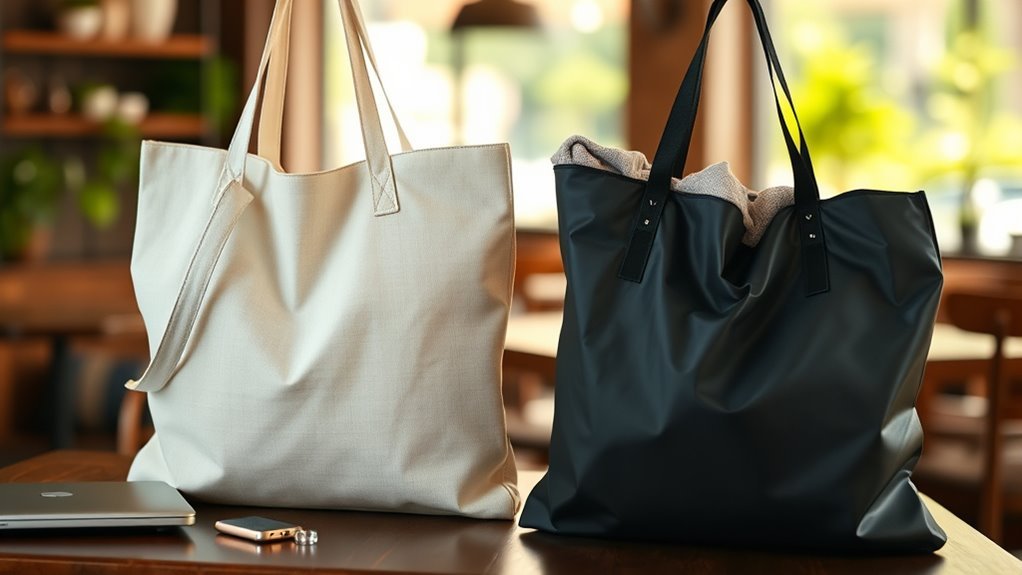
When choosing between canvas and nylon tote bags, consider their unique characteristics. Canvas offers aesthetic appeal and is great for carrying heavy loads, but it’s less water-resistant and more prone to mildew if untreated. Nylon is lighter, moisture-resistant, and generally more durable, often lasting longer. However, it may require specialized repairs. Both materials serve different needs effectively, so understanding their performance will help you make an informed decision about which bag suits your lifestyle best.
Which Bag Is Best for Your Needs?
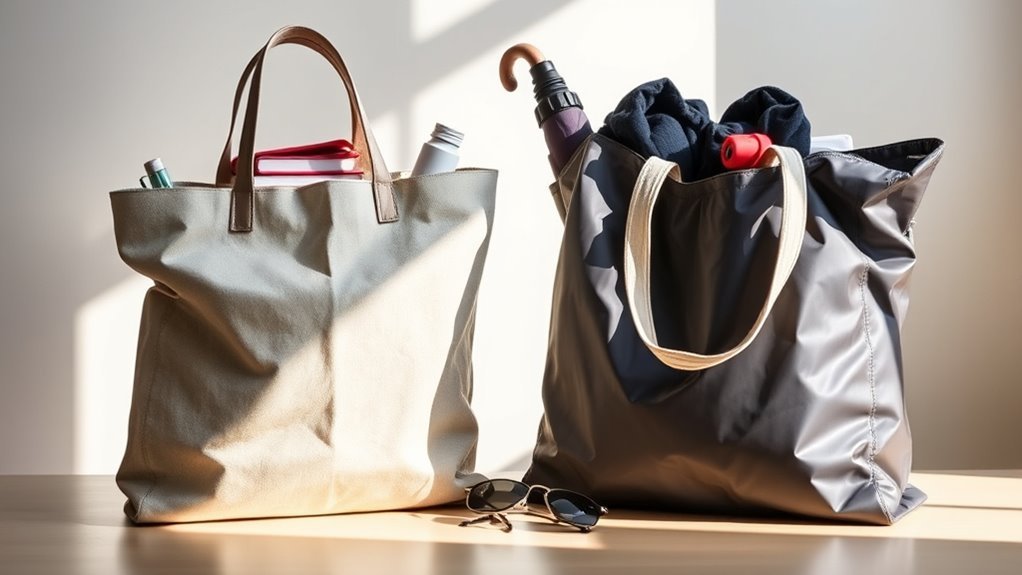
When choosing between canvas and nylon tote bags, how do you determine which is best for your needs? Your design preferences play an essential role. If you value a classic aesthetic that develops character over time, canvas might appeal more to you.
However, if you prefer a sleek, modern look, nylon stands out.
Nylon offers a sleek, modern aesthetic, perfect for those who value contemporary style in their accessories.
Consider the environmental impact, too. Canvas is often made from cotton, a renewable resource, but its production can be resource-intensive.
Nylon, while lightweight and durable, is a synthetic fabric that poses recycling challenges.
For practical use, think about weight and weather resistance. Nylon bags are lighter and moisture-resistant, ideal for travel or unpredictable conditions.
Canvas bags excel in carrying heavy loads, making them suitable for groceries or books.
Ultimately, it’s about balancing your style with functionality, ensuring you choose a bag that aligns with your values and everyday needs.
How Long Do Canvas and Nylon Bags Really Last?
Choosing between canvas and nylon totes also means considering longevity. The lifespan of your bag can greatly impact your choice, particularly if you value durability. Here’s a quick comparison:
- Canvas Lifespan: Typically lasts 4-7 years under heavy use, depending on the type and care.
- Nylon Longevity: Ballistic nylon bags can endure 8-12 years, thanks to superior abrasion and tear resistance.
- Durability Features: Robust canvas, like #4 duck canvas, resists heavy static loads but may show wear over time.
- Strength Comparison: High-denier nylon (1050D) boasts up to 2.5 times the tensile strength of heavy-duty cotton canvas.
While heavy canvas bags can last years with proper care, untreated canvas is susceptible to mildew if stored wet.
Choosing wisely guarantees you’re equipped for both durability and function, aligning with your desire for liberation in everyday use.
Comparing Water Resistance: Canvas vs. Nylon
When it comes to water resistance, nylon clearly outperforms untreated canvas, thanks to its natural hydrophobic properties and the ability to achieve high water repellency ratings.
While nylon maintains its shape and dries quickly, untreated canvas can absorb moisture, leading to deformation and mildew risk.
Understanding these differences helps you choose the right bag based on your specific environmental needs and maintenance preferences.
Natural Water Resistance Factors
While both canvas and nylon tote bags serve various outdoor purposes, their water resistance characteristics starkly contrast. Nylon’s hydrophobic nature provides superior water resistance, keeping moisture absorption below 0.4%.
In comparison, untreated canvas absorbs water, leading to increased weight and shape alteration.
- Coated nylon can achieve hydrostatic head ratings over 1,500mm, rendering it effectively waterproof.
- Treated nylon boasts up to 90% water repellency, outperforming untreated canvas.
- Heavy-duty canvas relies on wax treatments, making it less reliable in unpredictable weather.
- Canvas retains moisture longer, increasing the risk of mildew and odor.
Ultimately, for outdoor activities, nylon’s quick-drying properties greatly reduce moisture retention, enhancing usability.
Durability Under Wet Conditions
Nylon’s superior water resistance makes it a more durable option under wet conditions compared to canvas. Treated nylon can repel up to 90% of moisture, ensuring it remains lightweight and maintains its shape.
In contrast, untreated canvas absorbs water, increasing its weight and susceptibility to mildew and odor. While waxed canvas offers improved resistance, it still requires maintenance and is heavier than nylon.
Nylon’s hydrophobic properties result in less than 0.4% water absorption, considerably reducing the risk of mildew growth. Additionally, coated nylon can achieve hydrostatic head ratings over 1,500mm, providing effective waterproofing.
As a result, for those seeking reliability in adverse weather, nylon stands out as the practical choice for durability and mildew resistance.
Maintenance and Care Tips
Although both canvas and nylon tote bags serve practical purposes, their maintenance and care differ considerably due to their material properties. Here are some care routines and cleaning methods to take into account:
- Nylon: Clean with mild soap and water; it dries quickly, minimizing mildew risk.
- Canvas: Use gentle cleaning solutions; be cautious as it absorbs moisture and can stain.
- Repairs: Canvas is easier to patch, while nylon often requires specialized techniques.
- Water Resistance: Remember that untreated canvas absorbs water, altering its shape, whereas nylon can achieve high repellency with DWR treatments.
How Do Canvas and Nylon Bags Age Over Time?
As you use your canvas tote, it develops a soft character that adds to its charm over time, showcasing signs of wear that many find appealing.
In contrast, a nylon bag maintains its sleek appearance, resisting visible aging due to its synthetic structure.
Understanding these differences is essential for choosing the right bag for your lifestyle.
Canvas Aging Characteristics
When comparing how canvas and nylon bags age over time, you’ll notice distinct characteristics that define each material’s journey.
Canvas undergoes a fascinating transformation, often aligning with your aesthetic preferences as it evolves. Key features include:
- Softening: Canvas develops a lived-in feel, enhancing its charm.
- Creases and Patina: Over time, visible creases and a rich patina emerge, showcasing the canvas texture evolution.
- Moisture Absorption: Untreated canvas can absorb moisture, altering its shape with use.
- Repairability: Canvas is generally easier to patch and maintain, extending its lifespan considerably.
While nylon remains resilient, canvas’s aging characteristics can create a unique identity that resonates with those who appreciate its journey.
Nylon Aging Resistance
Nylon bags stand out for their exceptional aging resistance, thanks to their synthetic composition that effectively combats wear and tear over time.
With impressive nylon longevity, these bags maintain their structural integrity and aesthetics, resisting visible signs of aging. Unlike canvas, which develops a unique but worn character, nylon remains visually appealing, thanks to its hydrophobic properties that deter moisture, mildew, and odors.
However, be mindful that nylon can lose its tensile strength and color when exposed to UV light without protective treatments.
While canvas offers easier patching options, nylon’s complex structure may necessitate specialized repairs.
Ultimately, if you value durability and a polished look, nylon bags are an excellent choice for long-term use.
Which Is Easier to Repair: Canvas or Nylon?
How do canvas and nylon tote bags compare when it comes to repairs? When it comes to ease of mending, canvas generally takes the lead. Its natural fibers allow for straightforward repair methods, while nylon, though durable, poses challenges due to its synthetic nature.
Here are key points to evaluate:
- Canvas can be patched and mended using basic sewing techniques.
- Gentle spot cleaning works well for canvas, preserving its integrity.
- Nylon repairs often require specialized patch techniques and thorough cleaning.
- Over time, canvas develops a “lived-in” character, making repairs less noticeable.
For long-term maintenance, canvas is easier to reinforce, while nylon may need professional services for ideal repair. If you’re looking for a bag that stands the test of time and is easy to fix, canvas may be your best bet.
Weight and Portability: Which Material Is Lighter?
Which material offers a better weight-to-portability ratio: canvas or nylon?
In a weight comparison, nylon tote bags generally come out on top. With denier measurements ranging from 210D to 1000D, nylon is considerably lighter than standard cotton canvas, which typically weighs between 6 to 12 oz, and even up to 18 oz for heavier options. This lightweight nature makes nylon bags easier to carry and compress, essential for travel and mobility.
In terms of portability analysis, nylon bags excel due to their ability to fold and store compactly, making them ideal for dynamic environments with limited space.
While canvas bags provide sturdier structures for heavier items, their bulkier feel can hinder portability. If you prioritize a lightweight, easily manageable option, nylon is your best bet, allowing you the freedom to move without being weighed down.
How to Maintain Your Canvas and Nylon Bags
Maintaining your tote bags is key to guaranteeing they last, especially when comparing canvas and nylon options. Each material has unique care requirements. Here are some tips to keep both in top shape:
- Use mild soap and cool water for nylon; canvas needs careful spot cleaning to avoid damage.
- Treat stains on canvas promptly with gentle methods to preserve its integrity.
- Air dry both types away from direct sunlight to prevent UV damage and mildew.
- Regularly wipe down nylon and gently spot clean canvas to extend their lifespan.
Implementing these stain prevention techniques and drying methods will help you enjoy your bags longer.
Keep in mind that while canvas bags are easier to repair, nylon may require specialized care. Balancing proper maintenance with your lifestyle guarantees both materials serve you well, reflecting your commitment to sustainability and practicality.
Cost Comparison: Which Material Is More Affordable?
When considering affordability in tote bags, you might wonder how canvas and nylon stack up against each other. Canvas pricing strategies generally favor budget-conscious shoppers, with basic models starting at around $5. Durable, heavy canvas bags can range from $20 to $50, reflecting their construction quality.
In contrast, nylon bags typically range from $10 to $100, with premium options leveraging advanced materials for lightweight and water-resistant features, aligning with current nylon market trends.
Although initial costs for canvas bags are lower, nylon’s longevity and performance may lead to reduced long-term expenses, as you won’t need to replace them as frequently.
Customization can also impact overall pricing, with personalized nylon bags often costing more due to their superior material quality. Ultimately, your choice may depend on whether you prioritize upfront savings or long-term investment in durability and functionality.
Ideal Scenarios for Using Canvas vs. Nylon Tote Bags
Choosing the right tote bag often hinges on understanding the specific scenarios where canvas and nylon excel. Each material offers unique benefits tailored to different needs, enhancing your experience:
- Canvas versatility makes it ideal for carrying groceries and tools, thanks to its structured design and weight-bearing capacity.
- Nylon applications shine in travel and daily commutes, where its lightweight and abrasion-resistant properties are essential.
- For moisture-prone scenarios, nylon bags dry quickly and resist water, ensuring they remain functional and lightweight.
- Canvas bags, while heavier, develop a unique character over time, making them perfect for casual outings and aesthetic appeal.
Frequently Asked Questions
What Type of Fabric Is Best for Tote Bags?
For tote bags, nylon’s durability comparison and easier fabric maintenance make it ideal for frequent use. However, if you prioritize eco-friendliness, canvas can be a sustainable choice despite its heavier weight and care requirements.
Which Is Better, a Nylon or a Canvas Bag?
If you prioritize durability, nylon’s abrasion resistance and lightweight nature make it superior. However, if style matters more, canvas offers aesthetic appeal and structural support. Choose based on your specific needs and preferences.
Why Are Trader Joe’s Canvas Tote Bags so Popular?
Trader Joe’s canvas tote bags are popular due to their sustainability factors and appealing design aesthetics. They combine durability with eco-friendliness, offering a practical, stylish solution for conscious consumers seeking reusable, reliable shopping options.
What Are the Downsides of Nylon Bags?
Imagine a knight’s shield: strong yet vulnerable. Nylon bags face durability concerns, losing strength over time. Their environmental impact looms large, contributing to pollution while lacking the grace of nature’s fabric. Choose wisely for longevity.
Conclusion
In the world of tote bags, your choice between canvas and nylon hinges on your unique needs. While canvas offers timeless durability akin to a trusty companion, nylon shines in lightweight versatility, dancing through rain with ease. Both fabrics have their strengths, from repairability to maintenance. Ultimately, whether you opt for the robust embrace of canvas or the sleek agility of nylon, each bag holds the potential to be your perfect partner in everyday adventures.