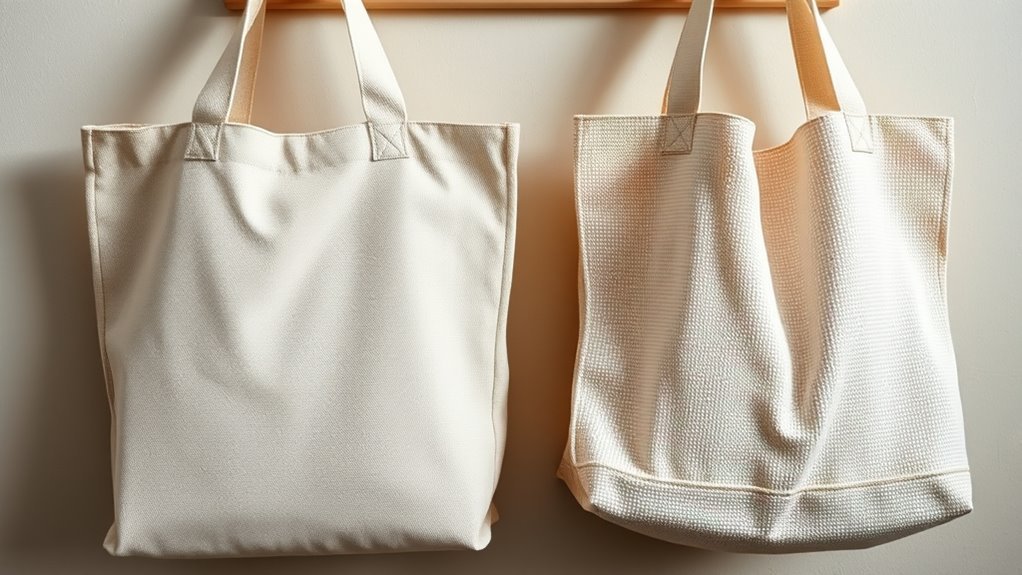
Fabric weave affects how strong a tote bag is and how much it stretches. Tight plain weaves and twills resist stretching and wear well, basket weaves are thick and flexible, and ripstop weaves resist tearing. Stretch is mainly a matter of how the fabric is cut and how the load is carried, because even a stable weave gives a little along the diagonal.
Why Weave Matters for a Tote Bag
A woven fabric is made by interlacing two sets of yarns, the warp running lengthwise and the weft running across. The pattern of crossing decides how tightly the yarns lock together, and so how the fabric behaves under load. A close, regular weave has little free movement, so it keeps its shape. A loose or floppy weave allows the yarns to slide, so it stretches, sags and wears faster. When you choose a tote, the weave tells you a lot about how it will age.
Plain Weave, Twill and Basket Weave
- Plain weave: each yarn goes over one and under one. It is simple, stable and uniform, and it is the weave of most canvas and many cotton totes.
- Twill weave: yarns go over two or more, which creates a diagonal rib. Twill is generally more flexible and drapes better than plain weave, and it hides wear well. Denim is a familiar twill.
- Basket weave: pairs of yarns are woven together, which makes a thicker and more textured fabric. It is flexible and looks distinctive, but it can snag, and the looser structure may stretch more.
For a bag that has to keep its shape under a steady load, a tight plain weave or a twill is a reliable starting point. For the other fabrics that are used in bags, see what a tote bag is.
Best Woven Fabrics for Tote Bags
Cotton canvas and denim are common and well tested for totes. Canvas is strong and plain, and denim is a durable twill. A medium weight of about 10 to 12 oz is often a good compromise between strength and comfort, as explained in canvas weight for tote bags. If you want moisture resistance, choose a fabric with a coating or a tightly woven synthetic, and see water-resistant versus waterproof bags for the limits.
How Tight Weaves Affect Strength
A tighter weave leaves less space between yarns, so each yarn is supported by its neighbors. This generally gives better abrasion resistance, less stretch under tension and better stability after washing. A dense weave can also make a fabric stiffer and heavier, so there is a trade-off between structure and comfort. Yarn quality and fiber type also matter. A tight weave of weak yarn is still weak.
Weave and Stretch
Woven fabric does not stretch much along the warp or weft, but it can stretch more along the bias, which is the diagonal direction. If a tote handle is cut on the bias, or a panel is cut off-grain, it will stretch more than one cut straight along the grain. This is one reason why straps are cut along the length of the fabric. For a detailed look at handle stretch, see why tote bag straps stretch.
Why Lining and Interfacing Help
A lining adds a second layer, which reduces the stress on the outer fabric and keeps the interior clean. Fusible interfacing adds stiffness and stabilizes the fabric, so that the bag holds its form. Used together, they extend the life of a bag and make it look better, but they also add weight and make washing more complicated. For how to add them, see how to sew a tote bag, and for calculating fabric, see how to calculate fabric for a tote bag and its handles.
Best Weaves for Everyday Totes
- Plain weave canvas: a stable, uniform surface that suits printing and everyday use.
- Twill: stronger diagonal ribs, good wear resistance and a slightly softer hand.
- Basket weave: a textured look and good flexibility, best for lighter loads.
- Ripstop: a nylon or polyester fabric with a reinforcing grid of heavier threads, which stops small tears from spreading. See ripstop fabric.
- Satin weave: smooth and shiny, but it snags and wears easily, so it is less suited to hard use.
How to Prevent a Tote From Stretching
- Choose a fabric with a tight weave and a suitable weight.
- Cut straps and main panels along the grain, not on the bias.
- Reinforce handles with a second layer or a stitched backing.
- Pack the bag so that the heaviest items sit at the bottom and the weight is balanced.
- Do not overload the bag, and avoid hanging heavy items from a single handle.
- Wash it gently and dry it flat, as how to wash a canvas tote bag without shrinking it describes.
Surface wear, such as fuzzing, is a different issue, which is covered in why tote bag fabric pills.
Frequently Asked Questions
What Is the Most Durable Fabric for Bags?
Heavy cotton canvas, and tightly woven nylon such as ballistic or ripstop types, are all strong. The best option depends on your use. Canvas is strong and natural, and nylon is light and more water-resistant.
What Are the Downsides of Woven Fabric?
It can fray at cut edges, snag, wrinkle, and stretch on the bias. Edges need hemming or a binding to stop fraying.
How Do I Make a Tote Bag More Sturdy?
Use a suitable weight of canvas, add interfacing or a lining, reinforce the handle attachments with extra stitching and a base panel, and avoid overloading.
Does Woven Fabric Stretch?
Only a little along the grain. It stretches more on the bias, and fabric that has been loaded for a long time can slowly give.
Conclusion
Weave decides how a tote carries a load. Choose a tight plain weave or a twill for strength, cut and reinforce the bag well, and keep loads sensible, and the tote will keep its shape for a long time.