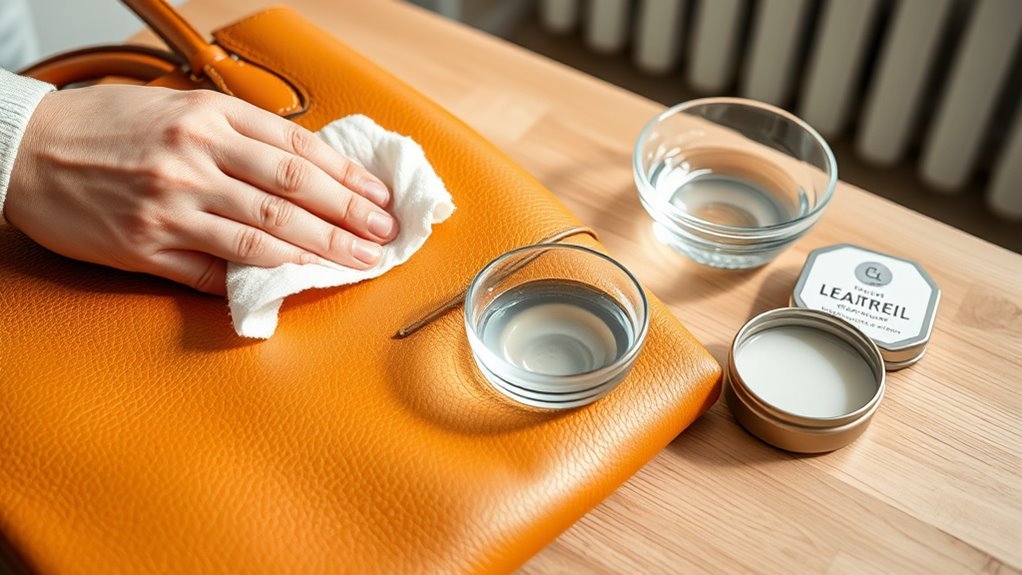
To remove a water stain from a leather bag without leaving a ring, blot excess moisture, then evenly dampen the whole stained panel from seam to seam with a barely damp cloth, so the water spot blends in, and let the leather dry naturally away from heat. Once dry, condition finished leather. Suede and nubuck need a different method, and should not be cleaned with water.
Why Water Stains Appear on Leather
Leather is a natural material, and water can move the oils, dyes and finishes in it. When a drop dries, it can leave a ring at its edge, because the moisture has carried some of these materials to the border of the wet area, or because the water has darkened or lifted the finish. How visible the mark is depends on the leather. Aniline and other lightly finished leathers mark easily, while pigmented, coated leathers are more resistant. For the types and finishes, see leather types used in handbags.
Identify Your Leather Before You Start
Check the label or the maker information, and look at the surface. A smooth, even, slightly glossy finish usually means a protected leather. A velvety surface is suede or nubuck, and these should never be cleaned with water, as covered in the differences between suede and nubuck bags. If you are not sure, test a hidden area, such as the inside of a strap, before you treat a visible one.
How to Remove a Water Stain From Smooth Leather
- Blot the area with a dry, soft cloth to take up any moisture that remains. Do not rub.
- Dampen a clean, soft cloth with plain water, and wring it out until it is barely wet.
- Wipe the whole panel, from seam to seam, with light, even strokes, so that the dampness covers the stain and blends into the surrounding area. A ring forms where wet and dry leather meet, so work across the entire section instead of dabbing one spot.
- Blot lightly with a dry cloth.
- Let the bag dry naturally, at room temperature, away from sun, radiators and hair dryers. Stuff it with acid-free tissue to help it keep its shape.
- When the leather is fully dry, apply a thin layer of leather conditioner suited to the finish.
If a mark remains after drying, you can repeat the process once. Do not keep adding water, which can make things worse. If the stain is deep or the bag is valuable, see a professional.
Mistakes to Avoid
Using Too Much Water
Soaking leather can warp it, stiffen it as it dries and leave more marks. Keep the cloth barely damp, and never pour water on the bag.
Rubbing Instead of Blotting
Rubbing can scuff the finish and spread the mark. Use light, even strokes, and blot when you want to lift moisture.
Using Heat
A hair dryer, radiator or sunny windowsill dries the leather too fast and can cause cracking, shrinking and color change. Let it dry slowly.
Using Household Products
Do not use solvents, WD-40, alcohol or oil on a water stain. They can strip or darken the finish and do not remove the mark. If you have already used a product, stop and have the bag assessed by a leather specialist.
How to Prevent Water Stains
- Blot any splash straight away with a soft cloth.
- Condition finished leather every three to six months, because supple leather handles moisture better than dry leather. See how to condition leather.
- Consider a protective spray designed for your type of leather. Test on a hidden area, apply in a thin, even layer, and check how it changes the look first. Some sprays darken leather.
- Store the bag in a cool, dry place, in a breathable dust bag, and not in sealed plastic.
- Carry a small umbrella or a rain cover on wet days, and keep the bag away from wet surfaces.
If the Bag Gets Soaked
Take everything out, blot the surface and stuff the bag with acid-free tissue or a clean towel. Leave it to dry slowly in a ventilated room, and replace the stuffing when it becomes damp. When the bag is dry, condition it. If the dye has run, or the leather has stiffened badly, take it to a specialist, since home methods will not restore it. For a related repair, see removing scratches from a leather purse, and for a dye problem, see why tote bag colors bleed.
When to Call a Professional
Consider a professional if the stain is large, the leather is delicate, such as aniline or exotic leather, the bag is valuable, or a home attempt has failed. A specialist can test the finish and use suitable products, and might be able to re-dye or refinish the area. For a bag that needs a new color, how to dye a leather handbag without uneven color patches explains what is involved.
Frequently Asked Questions
How Do I Get Water Marks Off a Leather Handbag?
Blot the area, dampen the whole panel evenly with a barely damp cloth, let it dry naturally, and condition the leather afterward.
Do Water Stains Come Off Leather?
Often, yes, particularly on smooth, finished leather. Deep stains or delicate leathers may need professional help.
Does WD-40 Remove Leather Stains?
No. It is a solvent and oil, which can darken and damage leather, and it will not remove a water stain.
Is My Leather Bag Ruined If It Gets Wet?
Usually not. If you dry it slowly, away from heat, and condition it after, most bags recover.
Conclusion
Treat a water stain on leather by blotting, evening out the dampness across the whole panel and drying slowly, then conditioning the leather. Avoid heat and harsh products, and take valuable bags to a specialist.