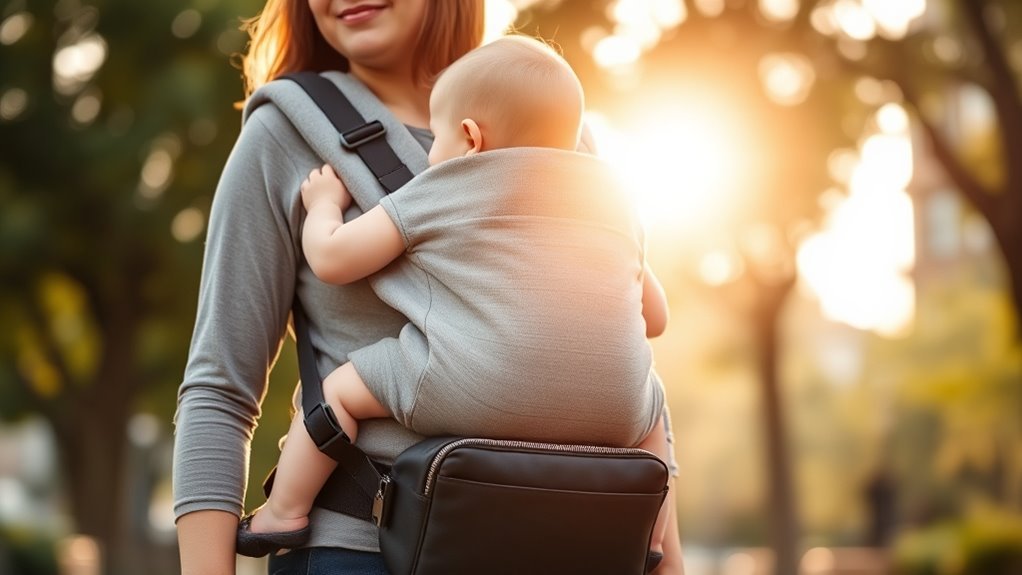
Carrying a bag with a baby carrier can be tricky, but there are ways to avoid strap clashes. Opt for a lightweight crossbody or backpack-style bag that distributes weight evenly. Adjust your straps for comfort and fit, keeping the carrier snug against your body. Also, consider bags with side pockets for easy access. Remember to balance your load to enhance your experience. You’ll discover even more helpful tips to make this process smoother!
How to Choose the Right Baby Carrier for Your Needs
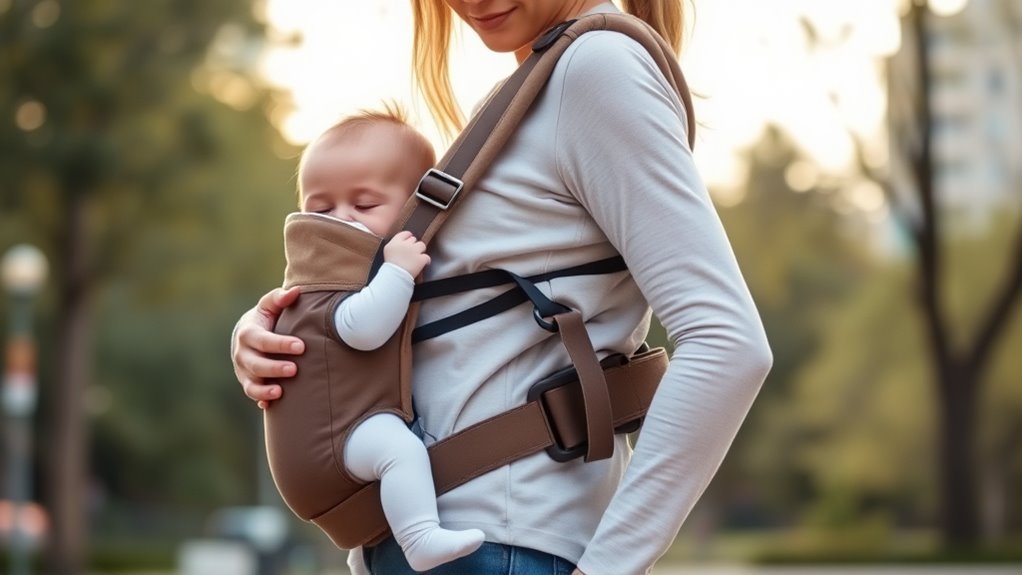
Choosing the right baby carrier can make all the difference in your daily outings with your little one. Start by evaluating your lifestyle needs—are you planning short trips or longer adventures? This will help you choose among carrier types like soft structured, slings, or backpacks.
Consider your baby’s age and weight; versatile options like the LennyHybrid can support various stages, ensuring comfort and safety.
Look for carriers with adjustable straps and ergonomic features that promote healthy hip development. This not only keeps your baby comfortable but also prevents strain on you.
Ease of use is essential, so opt for a carrier that allows quick adjustments and is easy to put on and take off independently.
Finally, investigate cleaning options and fabric breathability, ensuring your carrier adapts to different climates and remains easy to maintain. This thoughtful choice enhances your outings and fosters a connection with your little one.
Best Bags for Your Baby Carrier
When you’re juggling a baby carrier and a bag, choosing the right bag can make all the difference.
Look for crossbody or backpack styles that won’t clash with your carrier’s straps, and opt for lightweight materials to keep things comfortable.
With external pockets for easy access and padded straps for even weight distribution, you’ll find yourself better equipped to tackle your day with baby in tow.
Ideal Bag Types
Selecting the right bag can make a significant difference in your carrying experience while using a baby carrier. You want something that complements your mobility and keeps essentials accessible without hassle.
Here are the ideal bag types:
- Crossbody bags: They distribute weight evenly, allowing easy access without clashing with your carrier’s straps.
- Lightweight backpacks: With side pockets for your essentials, they keep your shoulder straps free and your load balanced.
- Diaper bags with adjustable straps: Worn across the body, they minimize interference and enhance comfort with their slim profiles and padded straps.
Choosing the right bag empowers you to enjoy every moment with your little one, free from discomfort and distraction.
Strap Management Tips
While you navigate the demands of carrying your baby, managing bag straps effectively can greatly enhance your experience. Opt for crossbody bags to guarantee hands-free convenience and prevent strap clashes. Look for lightweight, compact designs that minimize bulk and interference with your baby carrier. Adjustable straps are essential for proper bag positioning, allowing you to customize the fit and avoid tangling. Bags with side pockets offer quick access to essentials like pacifiers, promoting efficient strap organization. Prioritize ergonomic features to distribute weight evenly, reducing strain on your body.
| Feature | Benefit |
|---|---|
| Crossbody Design | Hands-free convenience |
| Lightweight & Compact | Minimizes bulk |
| Adjustable Straps | Customizable fit |
| Side Pockets | Quick access |
| Ergonomic Features | Reduces strain |
Space-Saving Solutions
Managing your bag straps effectively sets the stage for choosing the right bag that complements your baby carrier. To liberate your hands and simplify your life, consider these options:
- Crossbody Bags: Distribute weight evenly, preventing strap clashes while you navigate daily tasks.
- Backpacks: Adjustable straps guarantee a snug fit, keeping your bag secure without interfering with your baby carrier.
- Lightweight Materials: Opt for slim profiles to minimize bulk, making it easier to maneuver in tight spaces.
Incorporating minimalist packing and smart organization strategies, these bags help you access essentials effortlessly.
This allows you to focus more on your baby and less on the chaos of carrying. Choose wisely, and enjoy your adventures together!
Tips for Seamlessly Using a Bag With Your Baby Carrier
Carrying a bag while using a baby carrier can feel like a juggling act, but with the right approach, you can make it seamless.
Opt for a backpack-style bag; it allows for hands-free carrying and minimizes strap clashes with your baby carrier. If you prefer a different style, choose bags with adjustable straps that can be worn across your body to distribute weight evenly.
Look for bags with side pockets for quick access to essentials without needing to remove the bag or adjust the carrier.
Lightweight options are ideal, as they won’t add excessive weight, helping you maintain balance and comfort while carrying your baby.
Finally, consider utilizing clips or hooks to secure the bag to the carrier or your waist, keeping it stable and preventing slips during movement.
With these travel tips, you can enjoy your outings without the hassle!
How to Adjust Your Baby Carrier for Comfort
Adjusting your baby carrier for comfort is essential, especially when you’re juggling a bag at the same time.
Start by ensuring the shoulder straps are properly adjusted to distribute weight evenly, which reduces strain on your back and shoulders.
Keeping your baby’s center of gravity close to your body won’t only enhance comfort for both of you but also make it easier to manage your other items.
Proper Strap Adjustment Techniques
Finding the right fit for your baby carrier can make all the difference in comfort during outings. Proper straps alignment and comfort adjustments are key to enjoying your time together. Here’s how to achieve that:
- Adjust shoulder straps snugly, ensuring they don’t pinch your skin for even weight distribution.
- Utilize the chest or back clip at mid-back height for added support—this stabilizes your baby and eases fatigue.
- Tuck any dangling strap webbing into integrated elastic loops to avoid tripping hazards, keeping your hands free and your mind at ease.
Regularly reassess your carrier’s fit. The more comfortable you feel, the more liberated you’ll be to explore the world together with your little one!
Achieving Optimal Weight Distribution
Achieving ideal weight distribution in your baby carrier is essential for comfort during outings. Start by adjusting the waistbelt or hip seat high on your waist for even weight alignment, which reduces back strain.
Make sure the shoulder straps are snug and evenly adjusted to guarantee balanced weight distribution, preventing discomfort over time.
Utilize the chest or back clip at mid-back height for added stability without stressing your shoulders.
Continuously reassess the fit, keeping your baby’s center of gravity close to your body to minimize fatigue.
Also, avoid overpacking storage compartments; extra weight can shift your balance and lead to discomfort.
Master these balance techniques, and you’ll enjoy a more liberating carrying experience.
Ensuring Baby’s Comfort Level
While ensuring your baby’s comfort may seem challenging, it’s essential for both their well-being and your carrying experience.
Here are three key tips to help you adjust your baby carrier effectively:
- Snug Fit: Make sure the carrier is snugly adjusted to eliminate slack, keeping your baby close to your body.
- Ergonomic Positioning: Maintain that “M” position with knees higher than the bottom for proper hip development and comfort.
- Monitor Baby Temperature: Regularly check your baby’s temperature and support, adjusting as needed, especially in varying weather.
Preventing Strap Clashes With Your Carrier
To prevent strap clashes with your baby carrier, it’s essential to choose the right type of bag and adjust your carrier accordingly. Opt for a crossbody bag or a backpack to evenly distribute weight and keep your carrier straps free.
Adjust your carrier’s shoulder straps to a looser fit, giving you more room while ensuring your baby stays secure.
For effective bag positioning, place your bag on the opposite side of the baby carrier to minimize clashes and make access easier. Select bags with a slim profile; this helps them fit comfortably alongside your carrier without adding bulk or tension to the straps.
Additionally, consider wearing the baby carrier higher on your torso. This adjustment can create more space for bags worn on your side or back, enhancing both comfort and functionality. You can embrace freedom while ensuring your baby’s safety!
Common Mistakes to Avoid With Your Baby Carrier
When using a baby carrier, it’s easy to make common mistakes that can affect both your comfort and your baby’s safety. Here are three key mistakes to avoid:
- Improper Strap Adjustment: Confirm your carrier’s shoulder straps are adjusted correctly. Misalignment can lead to discomfort and instability, especially when you’re carrying a bag.
- Overpacking Your Bag: Avoid the temptation to overpack. Extra weight can shift your center of gravity, straining the shoulder that carries your baby and risking injury.
- Ignoring Baby’s Position: Regularly check your baby’s positioning. If your bag interferes with the carrier, it can jeopardize both baby carrier safety and your comfort.
Safety Tips for Using Baby Carriers and Bags Together
Using a baby carrier and a bag together can be challenging, but with the right strategies, you can guarantee both your comfort and your baby’s safety. Here are some tips to keep in mind:
| Tip | Benefit |
|---|---|
| Position the carrier high | Creates space for the bag |
| Use a crossbody or backpack style | Guarantees hands-free mobility |
| Opt for adjustable straps | Prevents tangling and discomfort |
Always confirm the baby carrier is snug against your body. This not only enhances baby carrier safety but also keeps your little one secure while you reach for your bag. Regularly check both the carrier and bag positioning as you move to avoid any bumps that could disrupt your baby’s comfort. With these simple adjustments, you can enjoy bag accessibility while keeping your baby safe and snug.
Frequently Asked Questions
How to Setup a Baby Carrier?
To set up a baby carrier, choose the right type for your needs. Secure the waistbelt high, adjust straps snugly, and check carrier safety. Confirm your baby’s comfortable and visible for a safe, enjoyable experience.
What Is the 3 6 9 Rule for Babies?
The 3-6-9 rule highlights key baby milestones: at 3 months, improved head control; 6 months, sitting up; and 9 months, crawling and social engagement. These parenting tips help you nurture your baby’s development effectively.
What Is the Best Baby Carrier for a Newborn Baby?
The best baby carrier for a newborn supports comfort and safety, fitting infants 7-15 pounds. Look for padded straps and breathable fabrics to keep your baby close while freeing your hands for other tasks.
When Can I Start Using a Baby Carrier for a Newborn?
You can start using a baby carrier for your newborn once they’re around 7-10 pounds, ensuring proper newborn positioning and baby carrier safety. Always check for support and comfort as they grow.
Conclusion
By following these tips, you can confidently carry your bag while keeping your little one close. Imagine strolling through the park, your baby snug in the carrier, and your essentials securely at your side—no strap clashes to worry about! With the right adjustments and mindful choices, you can enjoy this special time together. Embrace the convenience of both hands free, and make every outing a breeze, filled with joy rather than frustration.
