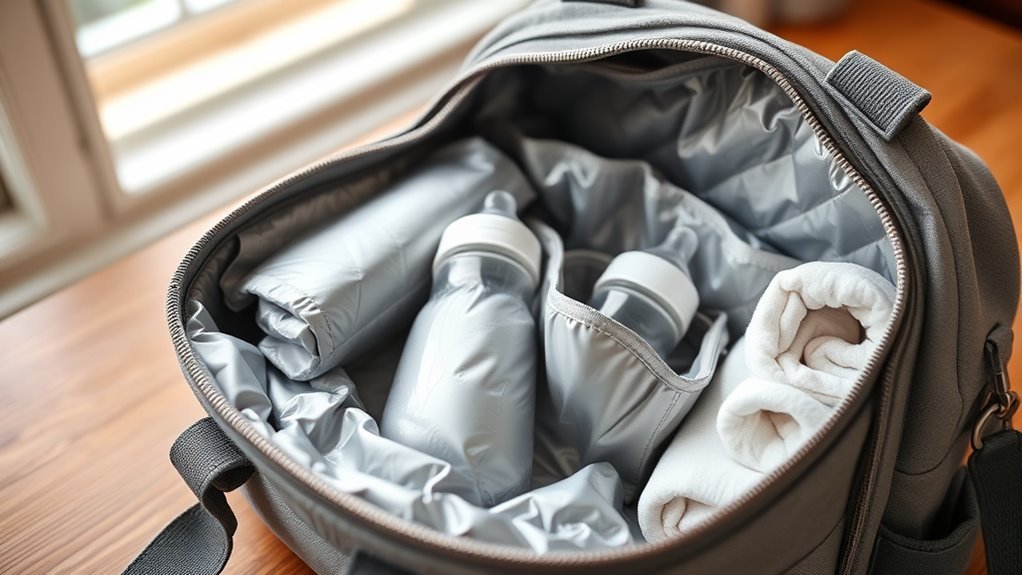
Insulated diaper bag pockets slow warming by trapping cool air and blocking outside heat with foam, barrier layers, and reflective linings. You get better results when the pocket is tightly sealed, since less air exchange means less heat gets in. Pre-chilled bottles, gel packs, and minimal opening time help keep temperatures steadier for hours. Well-made pockets also use dense, multi-layer materials that reduce conduction, convection, and radiant heat, and the best designs do even more.
How Do Insulated Diaper Bag Pockets Work?
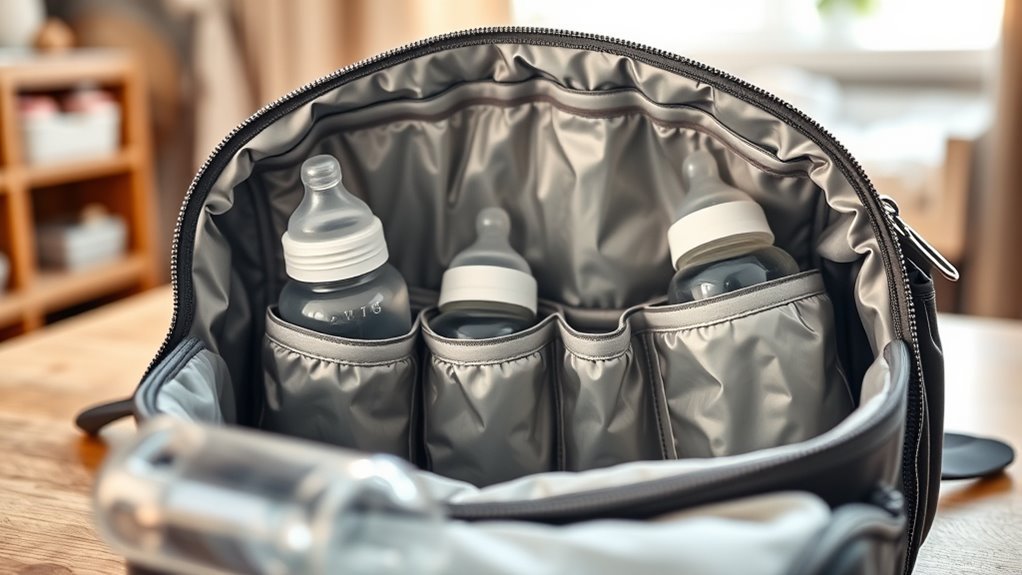
Insulated diaper bag pockets work by slowing heat transfer with materials like foam, reflective liners, and an added barrier layer that helps block outside warmth.
You get better insulation efficiency because these layers cut conduction, convection, and radiation, so heat has a harder time reaching your baby’s bottles or milk.
That means you can trust the pocket to support temperature management during errands, walks, or long days out.
When you seal the pocket tightly, you reduce air exchange and help the cool interior last longer.
This setup keeps formula and breast milk at a steadier temperature, which matters for your child’s comfort and feeding safety.
You don’t need bulky gear to stay prepared; a well-built insulated pocket gives you freedom, flexibility, and less worry.
It’s a simple design, but it does real work every time you leave home.
Which Materials Keep Pockets Cool Best?
Foam and reflective layers do the best job of keeping your pocket cool because they slow heat transfer and bounce radiant warmth away from bottles and snacks.
You’ll often see EPE foam for solid everyday cooling, while EVA foam can hold temperatures longer when you need extra staying power.
The outer fabric and inner barriers matter too, since tighter, well-sealed layers help your diaper bag stay cooler for longer.
Foam And Reflective Layers
When you’re choosing an insulated diaper bag pocket, the best cooling usually comes from a layered build that pairs high-density foam with a reflective lining.
You get foam benefits because polyethylene or polyurethane foam traps cold air and slows heat moving in. You also get strong reflective efficiency as the inner layer bounces radiant heat away from formula or breast milk.
Together, these materials cut conduction, convection, and outside warmth. That means your pocket works harder for longer, so you’re not stuck rushing or overpacking ice packs.
Look for a snug design with a tight closure, too, since less air exchange helps keep temperatures steadier.
With the right layering, you can carry essentials with more freedom and less worry.
Fabric Choices And Barriers
For the best cooling, you want an insulated diaper bag pocket built with a high-resistance core like foam or polyethylene and a reflective barrier such as aluminum foil lining. Choose fabric insulation that pairs nylon or polyester outside with thermal barriers inside; this combo fights heat and wears well. Tighter packing cuts air gaps and slows warming.
| Material | Benefit |
|---|---|
| Foam | High resistance |
| Polyethylene | Low heat flow |
| Foil lining | Reflects radiant heat |
| Nylon | Tough outer shell |
| Moisture coating | Reduces condensation |
When you shop, look for multi-layer construction and sealed seams. Those details help your pocket stay cooler, so you can move freely and keep feeds, snacks, and meds safer longer without extra fuss.
How Reflective Linings Help Hold Temperature
Reflective linings in insulated diaper bag pockets help keep your items at a steadier temperature by bouncing radiant heat away from the contents. When you choose bags with reflective materials, you boost heat reflection and cut one major path of warming. That means your milk, baby food, and snacks stay protected longer while you move through your day.
- Reflective surfaces send heat back out.
- They reduce radiation transfer inside the pocket.
- They slow temperature rise for sensitive items.
- They support other insulation layers.
- They help you pack for longer outings with more confidence.
You’re not trapped by short time windows or constant check-ins. Instead, the lining helps create a calmer storage zone, so temperature swings don’t hit your essentials as fast.
Paired with the rest of the bag’s structure, this simple feature gives you more freedom to focus on your baby, not the clock.
Why Foam Layers Improve Bottle Cooling
Foam layers in insulated diaper bag pockets help your bottles stay cool by creating an air barrier that slows heat transfer. You get better cooling because thicker foam and higher foam density trap cold air and resist outside warmth. That means your milk or formula can stay within a safer range for longer, often 4–10 hours, depending on the weather and how often you open the pocket. Multi-layer foam can also work with reflective materials to push radiant heat away, giving you even more temperature stability.
| Foam feature | Cooling benefit |
|---|---|
| Air barrier | Slows heat flow |
| Thickness | Holds cold longer |
| Foam density | Boosts insulation |
| Multi-layer build | Improves protection |
| Lightweight foam | Keeps packing easy |
For you, that means less stress, less rushing, and more freedom to move through your day while your baby’s bottle stays ready when you need it.
Which Diaper Bag Features Reduce Heat Transfer?
When you’re choosing an insulated diaper bag, the biggest heat-blocking features are the ones that slow conduction, convection, and radiant heat at the same time. You’ll get the best temperature management from insulated designs that use foam, reflective liners, and tight pocket construction.
- Multi-layer walls trap air and reduce heat flow.
- EPE or PE foam adds thermal resistance without bulky weight.
- Reflective layers help bounce radiant heat away.
- Gel packs or vacuum insulation can boost cooling.
- Smart pocket placement shields bottles and food from outside warmth.
These features work together so you can move through your day with less worry and more freedom.
By picking a bag with these details, you’re choosing practical insulated designs that protect baby essentials and make temperature management simpler.
Keep the layout easy to reach, and let the materials do the hard work of slowing heat transfer.
How Long Do Insulated Diaper Bag Pockets Stay Cool?
Insulated diaper bag pockets usually stay cool for about 2 to 4 hours, but that depends on the insulation quality and how hot it’s outside.
You can stretch that time by pre-chilling bottles or snacks before packing them, and ice packs or gel packs help even more.
Try to keep the pocket closed as much as possible, since frequent opening lets heat in faster.
Cooling Duration Factors
Most insulated diaper bag pockets stay cool for about 3 to 6 hours, though that can shift based on the pocket’s build and your environment.
You get better temperature regulation when foam or reflective layers cut heat transfer. Cooling efficiency also depends on:
- outside heat
- insulation quality
- how often you open it
- whether items are pre-chilled
- use of ice packs
Hot weather can cut performance by up to 40%, so your bag won’t hold cold as long on a blazing day. Each opening leaks cool air, letting warmth rush in.
For parents on the move, that means you’ll want to match the pocket to your routine and climate. With the right design, you keep baby essentials ready and your hands free.
Extending Pocket Chill
To keep an insulated diaper bag pocket cold longer, you’ll want to pack it thoughtfully and limit heat exposure. Most pockets stay cool about 4 to 6 hours, but your packing strategies matter. Frozen gel packs add a colder starting point, and foam plus reflective layers slow warming by reducing conduction, convection, and radiation. Use these cooling techniques:
| Tip | Why it helps |
|---|---|
| Freeze gel packs | Lowers pocket temperature |
| Seal the pocket | Cuts cool-air loss |
| Avoid sunlight | Protects insulation |
Every time you open the pocket, you can lose 50% to 80% of the cool air, so grab what you need fast. Clean the lining gently and keep the bag intact. That way, you protect freedom on the move and keep bottles, snacks, and milk ready.
Why Some Insulated Pockets Stay Cooler Longer
Some insulated diaper bag pockets stay cooler longer because they’re built with high-thermal-resistance materials like foam and reflective layers that slow heat transfer.
Insulated diaper bag pockets stay cooler longer with foam and reflective layers that slow heat transfer.
You get better insulation efficiency when the pocket uses multiple layers that trap air and resist conduction and convection. Airtight seals matter too, because they block warm air from sneaking in and protect temperature retention on the go.
- Foam and reflective linings slow warming
- Layered walls trap insulating air pockets
- Gel or ice packs can extend chill time
- Tight seals help preserve cold air
- A snug fill reduces empty space inside
When you choose a well-made pocket, you’re choosing less hassle and more freedom to move through your day.
That means breast milk, baby food, or snacks stay cooler for longer without constant checking. For parents who need reliable gear, the right design supports your routine, not the other way around.
How to Pack Bottles for Better Temperature Control
For better temperature control, start by pre-chilling or pre-heating each bottle before you pack it. Then place it tightly inside an insulated diaper bag pocket designed to slow heat transfer. This simple prep helps you keep feeds ready without tying you down.
Use bottle organization to separate warm, cool, or backup bottles so you can grab the right one fast. Choose pockets with foam or reflective layers, since they help hold temperature longer.
If you need extra cooling, slip in a gel pack or a frozen water bottle alongside the bottles; they add chill without the leak risk of loose ice. Keep the pocket as full as possible, because tight packing cuts air gaps that speed warming.
Open the pocket only when you need a bottle, and pair that with quick temperature monitoring so you know what’s still usable. That way, you stay flexible, prepared, and in control wherever the day takes you.
How to Keep Insulated Pockets Working Longer
Once you’ve packed bottles tightly for better temperature control, you can keep insulated pockets working longer by treating them like a small thermal system. You’re protecting temperature stability, not chasing perfection.
- Pre-chill pockets with ice packs before use.
- Warm them with hot water for warm items.
- Keep openings brief to limit heat loss.
- Clean and inspect liners for damage often.
- Replace worn materials to support insulation maintenance.
These habits help the foam or reflective layers do their job by slowing heat transfer. When you reduce air gaps and avoid repeated opening, the pocket holds cold or warmth more effectively.
If you prep the pocket before packing, you give your bottles a stronger start and a longer window of comfort. That means fewer compromises, less stress, and more freedom to move through your day with confidence.
Which Diaper Bag Features Are Worth Choosing?
When you’re choosing a diaper bag, the best features are the ones that keep daily life simpler: insulated pockets, separate compartments, and easy-to-clean materials.
Look for thermal lining with foam or reflective layers, since they slow heat transfer and help bottles or food stay stable for hours. Separate compartments let you stash warm items apart from cooler ones, so you’re not juggling temps on the go. That kind of setup boosts parent convenience without adding clutter.
Thermal lining and separate compartments help keep bottles steady, temperatures balanced, and your day less chaotic.
You’ll also want durable pockets that wipe clean fast, because spills happen and hygiene matters. If you travel often, prioritize bags that keep contents protected during long outings.
Don’t ignore diaper bag aesthetics, either; a good-looking bag should still work hard for you. The right design gives you freedom to move through your day with less fuss, more control, and gear that actually supports your rhythm.
Frequently Asked Questions
Do Cooler Bags Keep Things Warm?
Yes, cooler bags can keep things warm. You’ll get better temperature retention with insulated materials that slow heat loss, especially if you pack pre-heated food tightly and avoid air gaps during transport.
How Long Will Something Stay Cold in an Insulated Bag?
You’ll usually keep it cold 4–12 hours; premium bags can stretch that to 24–72. Like a shaded cave, strong insulation materials and smart packing boost temperature retention, especially if you don’t keep opening it.
How Does a Thermal Bag Work?
You use a thermal bag with thermal insulation to slow heat transfer, so your baby essentials stay cooler longer. It blocks radiant heat, cuts airflow, and keeps contents packed tight, helping you move freely and confidently.
Can You Use an Insulated Bag as a Cooler?
Yes—you can use an insulated bag as a cooler. Smart, snug insulated materials slow warming, boosting temperature retention for snacks or bottles. You’ll get practical cooling for hours, though it won’t match a premium cooler.
Conclusion
So, when you choose a diaper bag with insulated pockets, you’re giving your bottles a little thermal shield against the day’s heat. Reflective linings bounce warmth away, foam layers slow the march of temperature, and smart packing keeps everything fresher longer. You can’t stop time, but you can buy it a seat on your side. Pick features that fit your routine, and you’ll keep milk and snacks cooler with less stress.