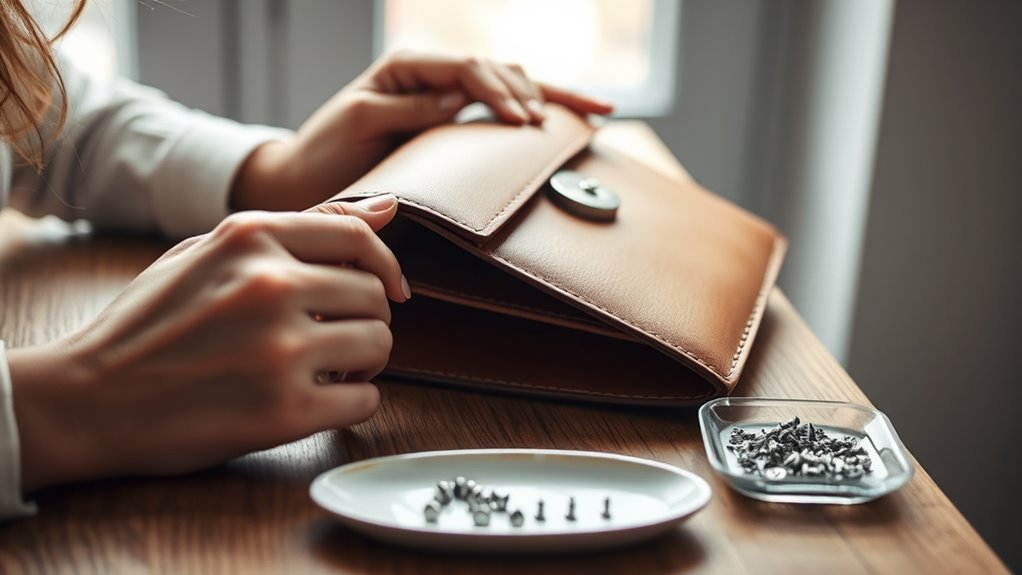
First, check that both magnet halves line up and clear out lint, debris, or trapped fabric. Test the clasp by pressing it shut and gently pulling apart. If it still slips, reinforce the area with fusible interfacing or fleece behind the snap to add support and reduce strain. If the magnet is weak or damaged, replace it. After repair, close the purse under normal load and watch for any shifting or separation—you can fix the common causes quickly from there.
Why a Magnetic Purse Clasp Won’t Stay Shut
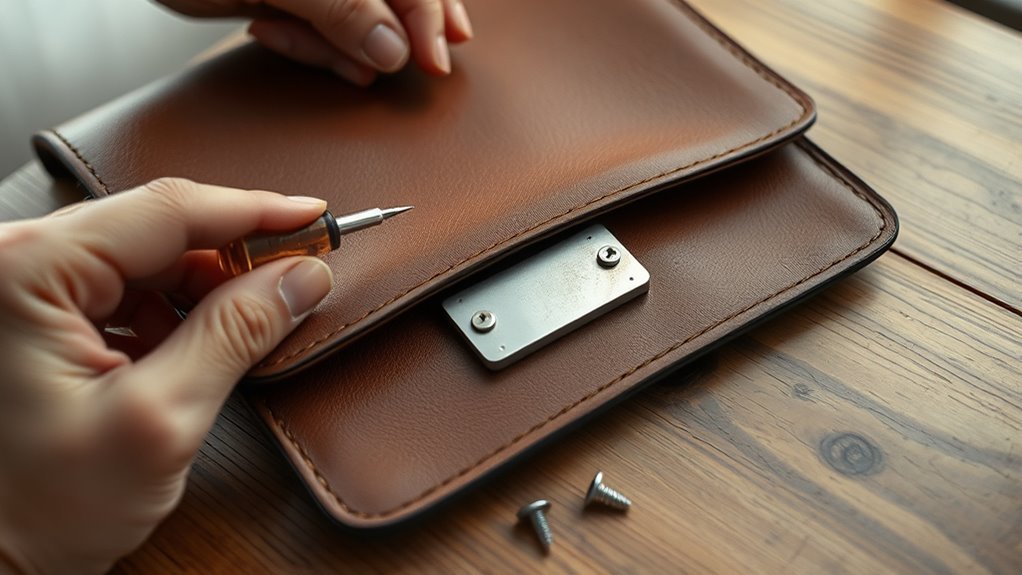
A magnetic purse clasp won’t stay shut when something is interfering with the snap’s engagement or weakening its hold. You may be dealing with low magnet strength from a worn or defective snap, so the clasp can’t resist pull forces reliably.
Moisture, humidity, and temperature swings can reduce performance, and that environmental impact often shows up as inconsistent closure. If the gusset contains padding that’s too thick or poorly placed, it can block full contact between the mating parts.
Moisture, humidity, and temperature swings can weaken closure, while thick or misplaced padding may block full contact.
Poor installation technique can also leave the male and female components slightly off-axis, which undermines snap durability. Material quality matters too; weak hardware loses grip faster and needs earlier replacement.
You can restore control by inspecting the clasp body, confirming the setting is true, and choosing components rated for repeated use. For better wear prevention, match the snap to the bag’s load and handling demands.
Check for Debris and Snap Misalignment
First, clear any lint or debris from the magnetic snap, since even small particles can block full contact.
Then check that the male and female sides line up precisely and that the snap sits securely on the fabric.
Test the closure fit by pressing it shut and gently pulling to confirm it engages without slipping.
Clear Debris First
Start by inspecting the magnetic snap for lint, fabric fibers, or other debris that may be blocking closure. Use a soft brush or dry cloth to clear the contact faces, because even tiny particles can weaken attraction between magnetic materials.
This simple purge is core purse maintenance, and it keeps the clasp free to do its job.
- Wipe both snap halves with light, controlled strokes.
- Remove dirt from seams and stitching near the closure.
- Test the snap after each cleaning pass.
If the clasp still won’t hold, check whether the fabric around it has stretched or worn, since that can reduce fit.
Clean again, then press the snap firmly and retest under normal use.
Check Snap Alignment
Check the male and female snap halves to make sure they line up exactly; if they miss even slightly, the clasp won’t close securely. Use snap maintenance tips and alignment troubleshooting to spot fabric, lint, or a bent prong blocking contact. If the snap was installed off-center, loosen it, shift each piece, then secure it again so the faces meet squarely. Inspect the socket and prongs for wear, because damaged metal can throw the fit off.
| Check | What to Look For | Action |
|---|---|---|
| Alignment | Off-center halves | Reposition |
| Debris | Fabric caught inside | Remove |
| Wear | Bent prongs or socket | Replace |
After cleaning and realigning, press the snap several times. You’re restoring a dependable closure, not accepting weak hardware.
Test Closure Fit
Press the magnetic snap together with varying pressure to see whether the closure feels too loose or too tight, and inspect the contact point for any lint, fabric, or other debris trapped between the halves.
You’ll want the male and female pieces to meet squarely; even slight offset can weaken hold. If the snap still slips, examine the magnetic materials for wear, cracking, or loss of strength.
- Brush away fibers and retest the fit.
- Shift the snap or adjust nearby padding to improve alignment.
- If the hold remains unreliable, compare closure alternatives before replacing hardware.
A clean, centered snap should lock with firm resistance and release only when you pull deliberately.
Reinforce the Magnetic Clasp With Interfacing
Use fusible interfacing, such as SF101, to support the snap area without adding bulk.
Cut the interfacing slightly larger than the magnetic clasp base so you reinforce the surrounding fabric, not just the hole.
Fuse it fully before reattaching the snap so the closure stays secure under daily use.
Fusible Interfacing Support
Fusible interfacing can strengthen the fabric around a magnetic clasp by adding stability where the hardware puts the most stress.
Choose among interfacing types with fabric compatibility in mind, then match thickness to your bag’s weight so you don’t create bulk. You’ll get the best results when you fuse it to both the outer fabric and lining, because that spreads strain and helps prevent the clasp from pulling through.
Follow the manufacturer’s heat, time, and pressure settings exactly to lock in adhesion.
- Cut the patch slightly larger than the clasp area.
- Press evenly; don’t slide the iron.
- Inspect the bond after heavy use and re-fuse if needed.
This targeted support keeps your bag functional and lets you move freely.
Reinforce Snap Area
Once you’ve added support around the clasp area, reinforce the snap area itself with a sturdy interfacing like woven interfacing or fusible fleece. You’ll improve snap durability by matching the interfacing to the snap’s backplate, so the load spreads evenly across the fabric.
Choose interfacing types that give firmness without excess bulk, then fuse the piece to the wrong side before you insert the magnetic clasp. This creates a secure hold that resists pull-through during repeated opening and closing.
After installation, inspect the snap area regularly for fraying, distortion, or loosening. If you catch wear early, you can renew the reinforcement before the clasp fails. That keeps your bag functional, polished, and ready for unrestricted movement.
Replace a Weak or Damaged Magnetic Snap
If your magnetic snap is weak, cracked, or won’t hold securely, replace it with a matching snap, usually 18 mm for standard bags, before the closure fails completely.
Check the old hardware first so you can match diameter, magnet strength, and finish. Use snap selection tips: choose a replacement that matches the bag’s weight and the original spacing.
Cut carefully around the faulty snap, then remove it without stressing nearby fabric or interfacing.
- Insert the new snap through the outer layer.
- Add interfacing behind the area if you want extra support.
- Secure the washer and spread the prongs evenly.
Follow clean installation techniques: keep the parts flat, tighten the fit, and avoid skewing the posts.
Afterward, close the bag several times and test the alignment. If the snap lands off-center, adjust it now so the clasp closes with decisive pressure and stays shut.
Repair a Snap Pulling Through Fabric
When a magnetic purse clasp starts pulling through the fabric, open the lining so you can reach the closure, then carefully cut around the snap and remove it without damaging the interfacing.
Prepare a patch from a sturdy fabric scrap and choose fabric choices that match the bag’s weight and weave. Fuse fusible fleece to the patch for strength, then trim it to size with seam allowance included.
Slide the snap through the patch, align it precisely, and secure it with Wonder Tape before top stitching around the perimeter. This patch techniques approach spreads stress across a wider area, so the clasp stops tearing through the shell.
If the bag needs more body, add woven interfacing over the repair zone after sewing the patch. Reclose the lining, press the seam flat, and test the snap several times.
You’ll restore function without surrendering the bag’s clean line or your control over the repair.
Add Padding to Improve Snap Hold
To improve a magnetic purse clasp’s hold, add a thin layer of padding behind the snap so it sits more securely and moves less in use. Choose padding materials such as fusible fleece or lightweight interfacing; both cushion the hardware without compromising the bag’s structure.
Cut the insert to match the snap area closely, then place it so the support extends just enough to improve snap stability without creating excess bulk. Align the snap with the padded section before you secure it, because even slight offset can weaken the closure and encourage failure under load.
- Measure the snap base, then trim padding precisely.
- Keep the material thin to preserve bag shape.
- Center the hardware over the reinforcement layer.
This small reinforcement helps you reclaim a clasp that works with you, not against you. After installation, the closure should feel firmer and stay engaged during normal use.
Test the Repair for a Secure Closure
Now that the repair is in place, gently press the magnetic snap to verify that it engages cleanly and holds without any visible gaps.
Repeat the action several times, watching for smooth connection and release; this tells you your closure techniques are aligned and the repair materials are doing their job.
Fill the bag with normal items and press the clasp again to see whether it separates under pressure. If it does, inspect the snap position, padding, and interfacing for weak support or slight misalignment.
Test the clasp under normal load; if it separates, check snap placement, padding, and interfacing for support.
Tighten or reinforce any loose area before you rely on it. You want a clasp that stays shut without forcing your movement or limiting your carry.
After the first test, keep using the purse for a few days and monitor performance closely. Early wear or shifting can show up quickly, and timely adjustments will keep the closure secure, dependable, and ready for everyday freedom.
Frequently Asked Questions
How to Fix Magnetic Purse Closures?
Check the magnet strength and closure alignment first; you’ll often fix the clasp by realigning the snaps, trimming excess padding, and replacing worn hardware. If humidity weakens performance, keep the bag dry and stable.
How to Fix a Magnetic Door Latch?
Like a door seeking freedom, you’ll fix it by checking latch alignment, tightening screws, cleaning debris, and shimming sagging hinges. If the magnet’s weak or damaged, you’ll need latch replacement for a secure close.
What Are Invisible Magnetic Bag Closures?
Invisible magnetic bag closures are two-piece magnetic snaps that give you bag security with a clean finish. You install male and female parts through fabric, and their hidden design keeps your bag accessible, practical, and uncluttered.
Can a Magnet Be Repaired?
No, you usually can’t truly repair a magnet. About 60% of weak closures need replacement. You can test magnet types and magnetic strength, then re-magnetize only with specialized equipment; otherwise, you’ll replace it.
Conclusion
If your magnetic purse clasp still will not stay shut, recheck the alignment, fabric tension, and magnet strength before you call the repair done. Clear away any debris, reinforce weak material, or replace a damaged snap as needed. Test the closure several times with the bag loaded, not empty. A secure clasp should hold like a well-set latch on a toolbox: firm, simple, and dependable. With the right fix, your purse should close cleanly again.