
On public transportation, carry a compact handbag that closes fully, and keep it in front of you where you can see it. Wear a crossbody bag across your chest in crowds, hold the bag on your lap when seated and keep the zipper closed. Store your phone and wallet in an inner pocket, not an outer one. Stay aware at doors and in crowded stations, where most thefts happen.
Understanding Public Transportation Policies for Bags
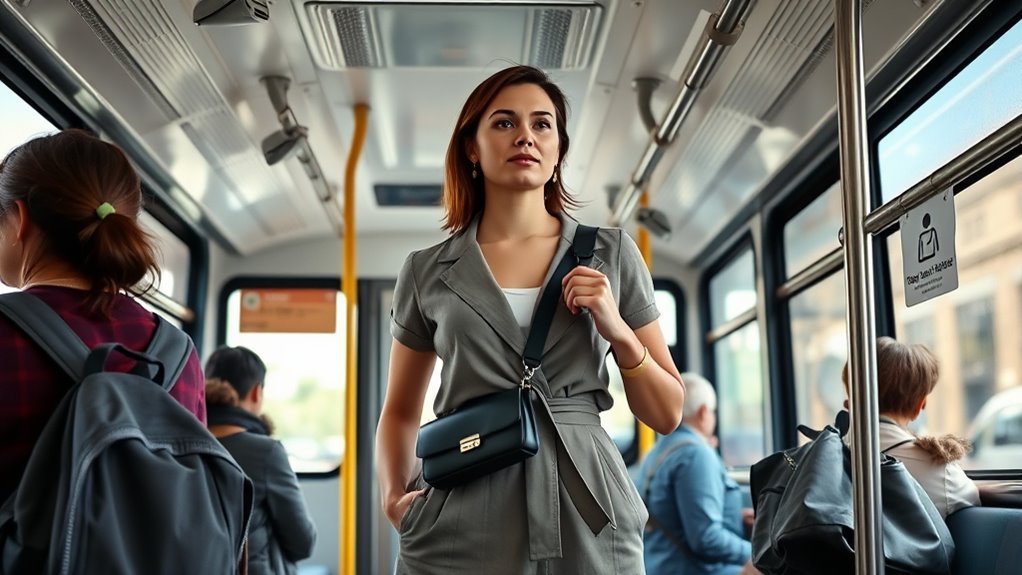
Handbags and small day bags are allowed on virtually all buses, trams and trains. Rules differ mainly for large luggage, so check with your local operator if you are carrying more.
The shared rule everywhere is courtesy. Keep your bag on your lap or close against your body, and keep aisles and doorways clear.
At rush hour, a soft, compact bag is much easier to manage than a large or rigid one. Take a backpack off and hold it low or in front of you in a crowded carriage.
Do not put your bag on an empty seat when the vehicle is filling up. If someone needs the seat, move the bag before they have to ask.
Choosing the Right Handbag for Public Transport
The right bag makes commuting easier and safer. Look at three things: size, material and layout.
A bag that survives daily commuting needs strong straps, good zippers and a material that copes with rain and rubbing.
The layout matters for security. You should be able to reach your ticket or transit card without opening the main compartment.
Bag Size Considerations
Choose a bag that fits on your lap and does not stick out far from your body. A small or medium crossbody, a slim tote with a zip or a compact backpack-style bag all work.
Soft-sided bags squeeze into tight spaces and sit comfortably on your lap. Very large totes are awkward in a crowd and easy for a thief to reach into.
Carry less if you can. A lighter bag is easier to hold while you stand, and it leaves a hand free for the rail.
Material and Durability
Nylon and polyester are light, tough and shed rain, which makes them practical for commuting. Coated canvas is another good choice.
Leather works too, though it is heavier and marks more easily from rain and rubbing. Whatever the material, check for strong stitching at the strap anchors and smooth, sturdy zippers.
A water-resistant bag protects your phone and papers from sudden showers and spilled drinks.
Dark colors and wipe-clean surfaces hide the dirt that bags pick up on public seats and floors.
Organization and Accessibility
A slim bag with a few well-placed pockets is ideal. It keeps you from digging around in public with the bag wide open.
Look for a main compartment that zips fully shut, an inner zip pocket for your wallet and an outer pocket for your transit card only. Open-top bags and loose magnetic snaps are easy targets.
An adjustable crossbody strap lets you shorten the bag so it sits high and in front of you in a crowd.
Keep keys on a clip inside the bag so they cannot fall out when you reach for something else.
Best Practices for Keeping Your Bag Secure
Most theft on public transport is opportunistic. Thieves look for open bags, distracted people and phones held loosely near the doors. These habits make you a harder target:
- Choose the Right Bag: Opt for a crossbody or anti-theft bag that keeps your belongings close and secure. Look for zippers and secure closures to deter pickpockets.
- Mind your position: Keep the bag off the floor. Hold it on your lap or tucked against your body, where you can see it.
- Stay Aware: Keep an eye on your surroundings and avoid displaying valuables, like expensive electronics.
Wear a crossbody bag in front of your body with the zipper pull toward the front, and rest a hand on it in a crush. Do not hang your bag on the back of a seat or leave it on the seat beside you. Take extra care when doors open and close, since that is when snatch thefts happen.
Maintaining Hygiene While Carrying Your Handbag
Bags pick up dirt from seats, floors and handrails. A quick wipe now and then keeps it from reaching your home surfaces. Wipe nylon, polyester and coated bags with a damp cloth and a little mild soap. On leather, use a barely damp cloth, and avoid disinfecting or alcohol wipes, which strip the finish.
Keep the bag on your lap or beside your hip, not on the floor, where the base collects the most grime. Clean your hands before you reach inside. At home, hang the bag on a hook instead of putting it on a table or bed.
Keep the bag closed while you travel. It protects the contents from dirt and stops things from falling out when the vehicle brakes.
Navigating Crowded Spaces With Your Handbag
Crowds call for a few extra precautions. Keep the bag close and in front of you, and follow these tips:
- Choose the Right Style: Opt for a crossbody bag or one with a secure closure. This allows for easy access while minimizing theft risks in bustling environments.
- Mind the Size: A smaller bag reduces bulk and makes it easier to navigate tight spaces, helping you avoid unnecessary obstructions.
- Weather Considerations: Select a bag made from weather-resistant material to protect your belongings from spills or sudden weather changes.
Have your ticket or card ready before you reach the gate, so you are not opening your bag in the middle of a crowd. Stay off your phone near the doors.
Must-Have Items for Your Handbag on Public Transport
A few small items make commuting more comfortable.
Carry a small bottle of hand sanitizer, in a zip pouch so it cannot leak onto the lining or leather.
A pack of tissues or wipes is handy for hands and spills.
Keep your wallet and phone in an inner zipped pocket, out of sight.
Keep your transit card or ticket in an outer pocket or a card holder, so you can reach it without opening the main compartment.
Save emergency contacts in your phone and keep a written copy at home. Note your card numbers and the phone numbers of your bank somewhere other than your bag.
What to Do if Your Bag Is Stolen
If your bag is stolen, act quickly. Tell transit staff or the police right away.
Then block your cards and secure your phone. Speed limits the damage.
Report The Theft Immediately
The first minutes matter. Do these things as soon as you can:
- Report the theft: Contact the nearest transit authority or police officer to document the incident. Provide essential details about your bag and its contents.
- Note witnesses: If anyone saw the theft, ask for a name and contact details. It can support your report.
- File a police report: This is important for insurance claims and helps local law enforcement track theft patterns.
If your phone was in the bag, use its find-my-device feature from another device to locate it, lock it or erase it. A small tracker tag in the bag can also help. Do not confront a thief yourself. Give the location to the police.
Cancel Your Cards
Call your bank or card issuer, or use its app, to block your cards at once. Most banks have a 24-hour line for lost and stolen cards.
Freeze any cards stored in a mobile wallet, and change the passwords for banking and email if your phone was taken. Watch your accounts for unfamiliar charges over the next few weeks.
Report a stolen driving license or ID card to the agency that issued it and ask for a replacement. Change your locks if your keys and address were both in the bag.
Practicing Good Etiquette When Traveling With a Handbag
Good manners with a bag make the journey easier for everyone.
Three habits cover most situations:
- Placement: Keep your handbag on your lap or close against your body. This keeps the aisle clear and the bag within reach.
- Choose Wisely: Opt for a crossbody or anti-theft bag. This keeps your hands free and adds a layer of security while maneuvering through crowded areas.
- Respect Space: Avoid using extra seats for your handbag. This can frustrate others, especially during peak times.
Frequently Asked Questions
Where Should You Put Your Handbag on a Bus or Train?
On your lap when you are seated, or in front of your body when you stand. Keep it closed, and keep a hand or arm over it in a crowd.
How to Stay Safe on a Public Bus?
Sit near the driver or in a busy part of the bus, keep your bag closed and on your lap, and stay aware of who is around you. Have your stop planned, and keep your phone out of sight near the doors.
Is a Crossbody Bag Safer Than a Shoulder Bag?
Usually, yes. A crossbody bag worn in front is harder to snatch and stays in your line of sight. A shoulder bag can slide behind you, where you cannot see it.
Should You Put Your Bag on the Floor?
It is better not to. Floors are dirty, the bag can be kicked or stepped on, and it is out of your sight. If you must, place it between your feet with the strap looped around your leg or wrist.
Conclusion
A handbag is easy to carry safely on public transport with a few habits. Choose a compact bag that closes fully, wear it in front of you and keep valuables in an inner pocket. Stay alert at doors and in crowds, keep the bag off the floor and be considerate with space. If the worst happens, report it and block your cards at once.

