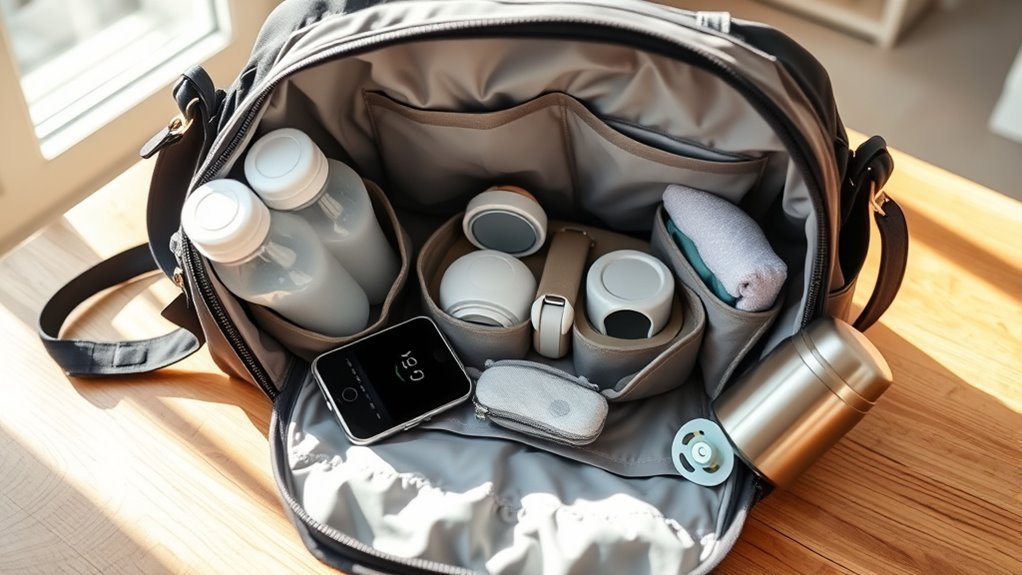
To carry formula in a diaper bag safely, keep powdered formula dry in a clean container, carry water separately, and mix each bottle just before the feed. If you carry prepared bottles, keep them cold in an insulated bag with frozen ice packs, and follow the time limits on the formula label and from the CDC. Throw away any formula that your baby has started drinking after the time limit given by the maker, and do not save it for a later feed.
Why Time Limits Matter
Prepared formula is a good place for bacteria to grow, particularly when it is warm. For this reason, makers and health agencies give short time limits. As a general guide, the CDC advises using prepared formula within about two hours of preparing it if it has been kept at room temperature, and within about one hour of the time when the baby starts to feed. Prepared formula that has been refrigerated is generally kept for a limited number of hours or up to a day, depending on the type. Always read the instructions on your formula, and ask your pediatrician, because limits can differ for different products, and for premature babies or babies with health problems.
The Safest Approach: Carry Powder and Water Separately
- Carry the powder in a clean, dry container with a tight lid, or in a pre-measured formula dispenser with separate compartments.
- Carry water in a clean bottle or a thermos. Use water that is safe for infants, and follow the formula instructions about water temperature and quality. If you are not sure about the water supply where you are going, ask your pediatrician.
- When it is time to feed, add the water to the bottle first, then the powder, as the label directs, and shake until it dissolves.
- Wash your hands, or use hand sanitizer, before you prepare a feed.
This method avoids storing mixed formula, and it takes up little space. It is also usually the best choice for long outings.
Carrying Prepared Bottles
If you prefer to carry bottles that are ready to use, follow these tips.
- Cool the bottles in the refrigerator before you leave, so they start cold.
- Pack them in an insulated bag with frozen ice packs, and keep the bag closed. See how insulated diaper bag pockets work.
- Check the time. Write the time that you prepared the bottle on the bottle, or note it on your phone.
- Keep bottles upright, with a tight lid. See whether diaper bag bottle pockets are leakproof.
- Keep the bag out of sun and hot cars.
- When the time limit has passed, throw the formula away.
Ready-to-Feed Formula
Ready-to-feed formula is sold in single-serving bottles and cartons, which can be useful for travel and as a backup. Follow the label instructions on storage after opening, and do not keep an opened bottle for a later feed beyond the time given by the maker. Unopened servings are generally easy to carry and need no mixing.
Choosing Containers
- Use containers that close tightly, and that are easy to wash.
- Choose a dispenser with separate compartments for each portion of powder, if you use one.
- Check that all parts are clean and dry before you fill them.
- Carry extra, in case of a spill.
- Keep the formula container away from wipes and creams, to avoid contamination.
Keeping Things Clean on the Go
Wash bottles and parts with hot soapy water as soon as you can after use. If you cannot wash them straight away, rinse them, put them in a sealed bag and wash them when you reach a sink. Keep clean and used bottles in separate bags. Clean and disinfect the pocket of the bag from time to time. See how to disinfect a diaper bag and how to clean insulated pockets after spills.
Flying With Formula
In the United States, the TSA allows formula, breast milk and baby food in reasonable quantities in your carry-on, and they do not have to fit the usual limit on liquids. You should tell the officer, and you may be asked to take them out for screening. Rules differ between countries and airlines, so check before you travel. See diaper bag airport security rules for milk and baby food, how to pack a diaper bag for a flight and diaper bag carry-on rules.
Formula at Daycare
Daycare centers usually have their own rules for formula. Label each bottle or container with your child name and the date, and use pre-measured portions. Ask the daycare what they allow, and how they store it. See how to pack a diaper bag for daycare.
Packing Checklist for Formula Feeds
- Powder in a dry, labeled container or dispenser
- Safe water, in a clean bottle or a thermos
- Clean bottles and nipples, in a sealed bag
- A spare bottle, and a spare nipple
- Burp cloths and bibs
- An insulated bag and ice packs, if you carry prepared bottles
- A bag for used bottles
- Hand sanitizer and wipes
- A backup ready-to-feed bottle
Frequently Asked Questions
How Long Can Prepared Formula Be Kept?
Only for a short time. Check the label, and the CDC guidance. In general, formula that your baby has started drinking should be discarded after the time limit, and not saved for later.
What if My Baby Drank Formula That Was Out for Too Long?
Stay calm, and watch your baby for signs such as vomiting, diarrhea, fever or unusual fussiness. If you are worried, or you notice symptoms, call your pediatrician.
Can I Carry a Diaper Bag and a Carry-On?
Many airlines allow a diaper bag in addition to a carry-on, but policies vary. Check your airline.
Conclusion
The simplest way to carry formula safely is to bring powder and safe water separately and to mix each bottle when needed. If you do carry prepared bottles, keep them cold, watch the time and follow the label and the CDC guidance. When in doubt, throw it out.

