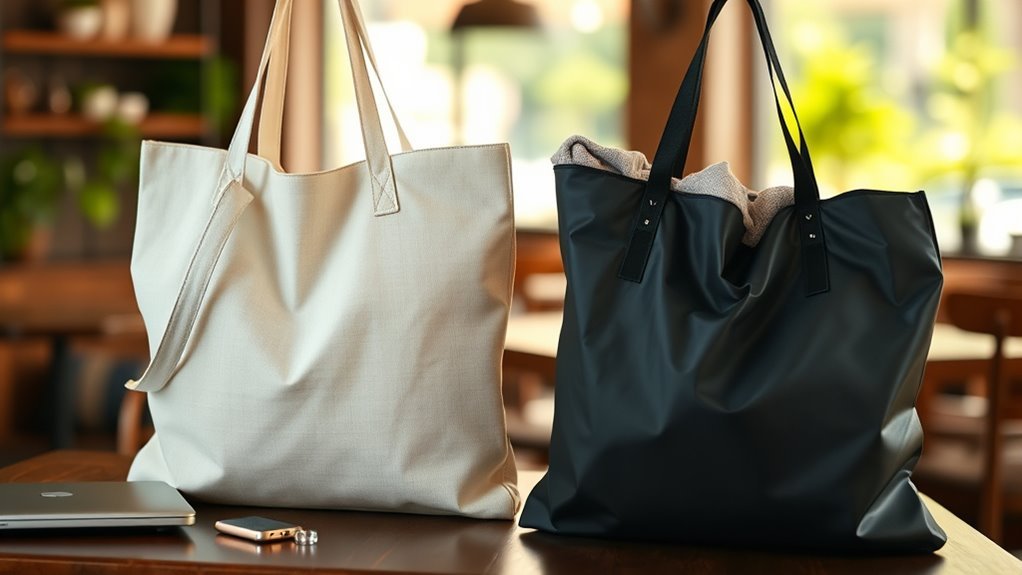
Canvas and nylon totes behave differently. Canvas is a heavy, woven cotton fabric that is strong, easy to repair and softens with use, but it absorbs water and dries slowly. Nylon is a lighter synthetic fabric that resists water better, dries quickly and packs small, though it can weaken with long sun exposure and is harder to repair neatly.
Which Bag Is Best for Your Needs?
Choose by use. If you want a sleek, light and weather-ready bag for travel or commuting, nylon is usually the better choice. If you want a sturdy bag for heavy loads such as books and groceries, with a natural look that wears in, canvas is often better. Think about weather, too. A nylon bag copes with rain and dries fast, while an untreated canvas bag gets damp and heavy. Think about where the materials come from. Canvas is made from cotton, a natural fiber, while nylon is a synthetic made from petroleum-based chemicals, so each has a different environmental footprint, which depends on how it is produced and how long you use it. The longest-lasting bag is often the most sustainable one.
How Long Do They Last?
There is no fixed lifespan, because it depends on the quality of the fabric, the stitching, how heavily you load the bag and how you care for it. Heavy canvas with reinforced handles can last for many years of regular use. High-quality nylon, especially in a dense weave, is also very durable and resists abrasion well. In both cases, the weak points are usually the straps, the seams and the hardware, not the fabric itself. See canvas weight for tote bags for how canvas weight affects durability.
Water Resistance: Canvas Versus Nylon
How Each Fabric Handles Water
Untreated canvas soaks up water. It becomes heavy, takes a long time to dry and can develop mildew if it stays damp. Waxed or coated canvas resists water much better, but it still has limits. Nylon is a synthetic fiber that absorbs very little water, and many nylon fabrics are also coated, so they shed rain and dry quickly. Neither fabric is automatically waterproof, though, because seams, zippers and openings can still let water in. See whether nylon bags can get wet and water-resistant versus waterproof bags for details.
Wet Conditions and Durability
In wet weather, nylon generally copes better. Canvas can be treated, though, and a waxed canvas bag handles rain well, as waxed versus unwaxed canvas bags explains. Coatings on nylon can peel with age, which is covered in why waterproof bag coatings peel.
How They Age
Canvas softens with use and develops creases and a lived-in look that many people like. It can fade, stain and wear at the folds. Nylon tends to keep its shape and its look for a long time, although strong sunlight can weaken and fade it, and a scratched coating can show. Choose the aging you prefer: canvas for character, and nylon for a consistent appearance.
Which Is Easier to Repair?
Canvas is usually simpler to repair. A sewing machine or a needle and thread can mend seams and handles, and a patch blends in well, as shown in how to patch a canvas tote bag. Nylon can also be repaired, but it is slippery, so it needs a suitable needle, a strong thread and often a repair tape or an iron-on patch, and the repair may be more visible. For a nylon patch, see how to patch a nylon purse.
Weight and Portability
Nylon is lighter and folds flat, so it works well for a bag that lives in your pocket or luggage. Canvas is heavier, which adds to the weight of the load. A heavy-duty canvas bag can feel stiff and bulky when empty, but it holds its shape.
Cost
Prices vary widely for both. Basic canvas totes are often inexpensive, and basic nylon totes are as well. At the higher end, both can be expensive, depending on the maker, the finish and any customization. It is more helpful to compare cost per use than the price tag, since a bag that lasts for years costs less over time.
How to Maintain Canvas and Nylon Bags
- Canvas: spot clean stains early, wash gently in cold water if the label allows, and air-dry. See how to wash a canvas tote bag.
- Nylon: wipe with mild soap and lukewarm water, and air-dry in the shade. See how to wash a nylon bag.
- Both: keep them out of direct sunlight, dry them fully before storing and do not overload the straps.
Best Uses for Each Fabric
- Canvas: groceries, books, market shopping and everyday carrying, where its strength matters. See how to use a tote bag for groceries safely.
- Nylon: travel, commuting, gym bags and rainy days.
- Wet environments: nylon, or waxed canvas.
- A bag that develops character: canvas.
Frequently Asked Questions
What Type of Fabric Is Best for Tote Bags?
It depends on the purpose. Canvas is strong and classic, and nylon is light and water-resistant.
Which Is Better, a Nylon or a Canvas Bag?
Neither is better for everyone. Nylon suits lightness and weather, and canvas suits heavy loads and a natural look.
What Are the Downsides of Nylon Bags?
Strong sun can weaken them over time, coatings can peel, and repairs can be less neat than on canvas. They are also made from petroleum-based materials.
Conclusion
Canvas offers strength, an easy repair and a look that improves with age. Nylon offers lightness, weather resistance and quick drying. Choose according to how you will use the bag, and look after it, and either one will serve you well.