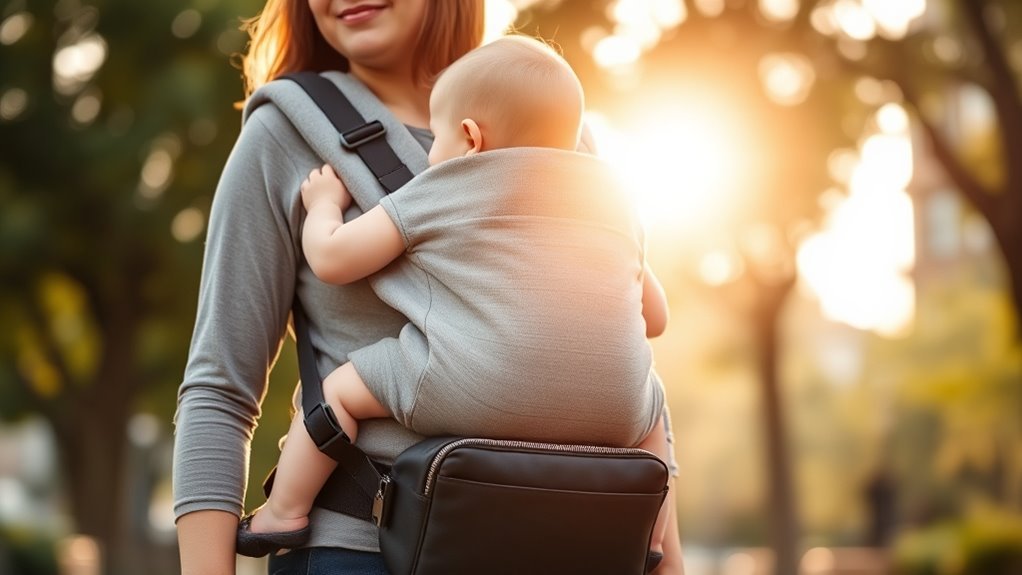
To carry a bag with a baby carrier without strap clashes, choose a light bag that sits on the opposite side or on your back, wear a crossbody on the side that does not press on the carrier straps, and keep the baby’s face and airway clear at all times. Always follow the carrier maker’s guidance on how much weight you may add and how to wear it.
Safety Comes First
When you wear a baby, the carrier needs to stay snug, the baby must stay in view, and the baby’s airway must be clear. A commonly used checklist from babywearing safety guidance is that the baby should be held tight, in view, close enough to kiss, with the chin off the chest and the back supported. Any bag you add must not push the baby, loosen the carrier or hide the baby’s face. Follow the weight and age limits of your carrier, and ask your pediatrician if you have questions about carrying a newborn. If you are unsure whether your arrangement is safe, simplify it.
Choosing the Right Carrier for Your Needs
Different carriers handle extra bags differently. Structured carriers with wide, padded shoulder straps and a waist belt move weight to your hips, which leaves your shoulders freer for a bag strap. Wraps and slings place the straps across your shoulders and back, so a second strap on top is harder to manage. Whatever type you choose, look for adjustable straps, a secure fit for your baby’s size and age, and fabric that is breathable and easy to clean.
Best Bags to Wear With a Baby Carrier
Crossbody Bags
A crossbody spreads the weight across the body, and you can adjust the length so the bag sits at your hip, behind the carrier. It works best if the strap rests on the opposite shoulder from the carrier strap you find most crowded. A light, slim crossbody is the easiest to manage. For ways to wear one, see how to style a crossbody bag.
Backpacks
A small backpack leaves both hands free and carries weight on the back, which suits a front carrier. Keep it small and light, because a heavy backpack can pull you backward and add strain. Put it on before the carrier, and adjust the straps so they do not push into the carrier straps.
Belt Bags
A belt bag can sit at your hip or lower back, under or beside the carrier, and works for a phone, keys and a card. Check that it does not press on the carrier waist belt. See belt bags for how they are worn.
Diaper Bags With Adjustable Straps
A diaper bag with a long strap can be worn across the body, but it is usually larger and heavier. Keep it light, and see what a diaper bag is for how to choose a size.
How to Prevent Strap Clashes
- Put the carrier on first, then add the bag, and check that the bag strap does not sit on top of a carrier buckle or clip.
- Wear a crossbody with the bag at your hip and the strap crossing away from the carrier strap that rubs the most.
- Shorten or lengthen the bag strap, so that the bag does not bump against the baby’s legs or body.
- Keep the bag behind or beside you, never in front of the baby’s face.
- Avoid hanging a bag from the carrier itself, unless the maker allows it.
Adjust the Carrier for Comfort
Comfort affects how well you can carry anything else. Adjust the shoulder straps so that they are snug but do not pinch, and use the chest clip or back strap, if the carrier has one, at mid-back height to share the load. Keep the baby high and close to your body, so that their weight is carried near your center of gravity. Tuck loose strap ends away so that they do not catch on the bag strap. Check the fit again after you have put on a bag. For a baby, the legs should be supported with the knees higher than the bottom, in a natural seated position, and the baby should not feel too warm. Babies in carriers can overheat, so check their temperature and dress them lightly.
Pack Light and Smart
A bag worn with a carrier should hold only what you need for the outing. Carry a diaper or two, a pack of wipes, a small change of clothes, a feeding item and your phone and keys. Keep heavier items, such as a full water bottle, at the bottom, and leave bulky extras in the car or stroller. If you need more, use a stroller basket, as explained in how to fit a diaper bag in a stroller basket. Overpacking is the most common mistake, and it adds weight that moves around as you walk.
Common Mistakes to Avoid
- Wearing a heavy bag on one shoulder, which pulls the carrier sideways.
- Letting a bag strap press on the baby, or cover their face.
- Leaving the carrier loose because the bag strap is in the way.
- Not checking on the baby while rearranging the bag.
- Using a bag with a strap that rubs against light clothing. Some dyed straps can transfer color, and why purse straps stain clothes explains how to limit it.
Safety Tips for Using Bags and Carriers Together
Put the bag on and take it off while you stand still, and use a mirror or a helper to check the fit. Bend at the knees, not the waist, so the baby does not shift. Never place a bag between you and the baby. In a crowd, keep the bag close, because snatching or a bump from a stranger is harder to manage when you are carrying a baby. If your baby is asleep, make sure their airway is clear and check on them often.
Frequently Asked Questions
How Do I Set Up a Baby Carrier?
Follow the manual for your model. In general, you adjust the straps to fit your body, place the baby in an upright position that is supported and snug, tighten the straps and check that the baby’s face is visible and their airway is clear.
When Can I Start Using a Baby Carrier for a Newborn?
It depends on the carrier. Check the minimum weight or age in the manual, and ask your pediatrician if you have any concern about your baby’s health or size.
What Is the Best Bag to Wear With a Baby Carrier?
A light crossbody, a small backpack or a belt bag, depending on your carrier and your comfort.
Conclusion
Carrying a bag with a baby carrier works best when the bag is small, light and placed where it does not press on the baby or the carrier straps. Put the carrier on first, keep the baby’s airway clear and pack only what you need.