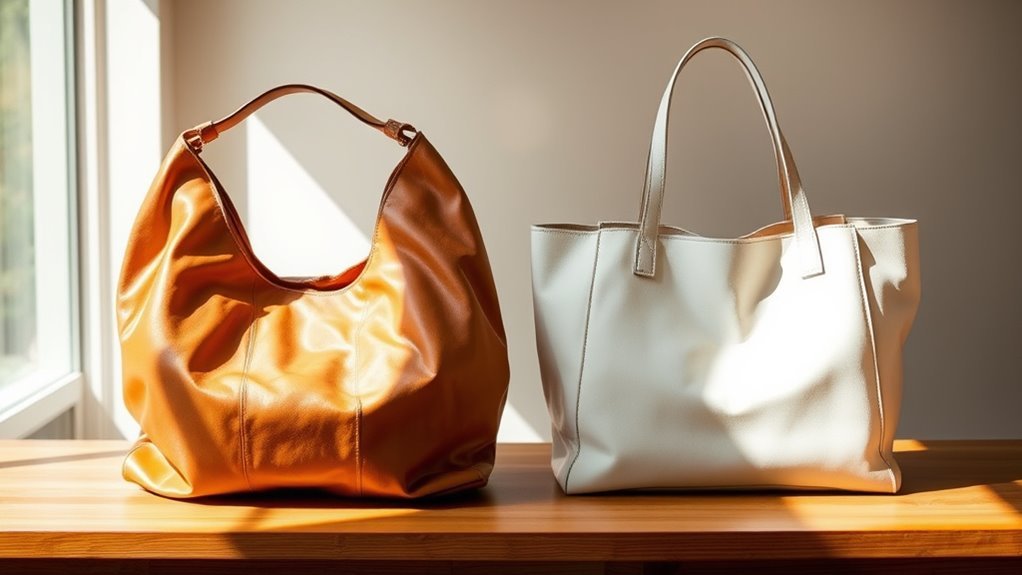
Hobo and tote bags are both roomy bags with one main compartment. The difference is shape and straps. A hobo is soft and crescent-shaped, hangs from a single strap, and slouches against your body. A tote is rectangular with two handles, a flat base, and usually an open top. Choose a hobo for comfort and a casual look. Choose a tote for flat items, such as a laptop, and for the most space.
What Defines a Hobo Bag and Its Unique Features
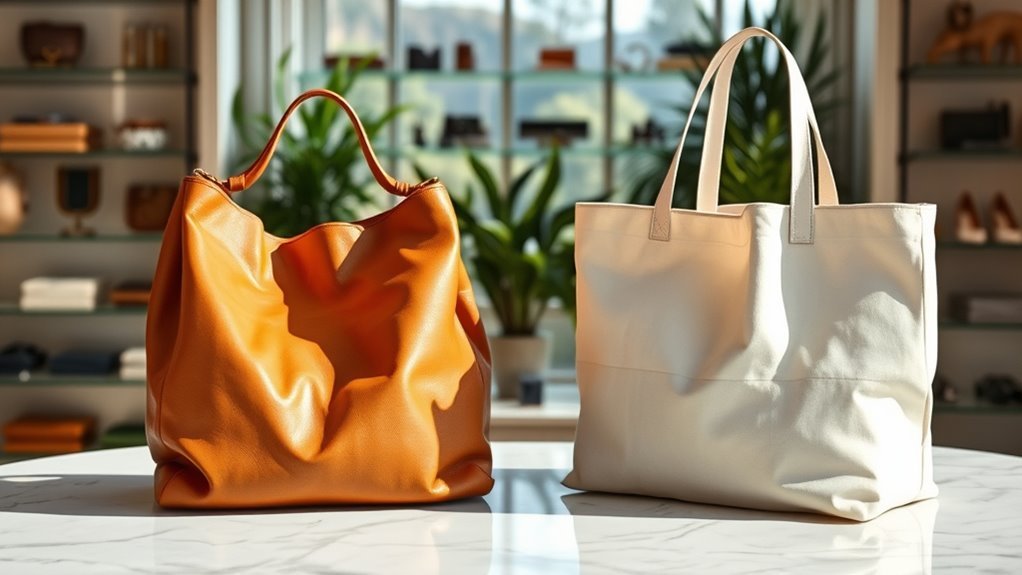
A hobo bag is a soft shoulder bag with a curved top. The name comes from the cloth bundle on a stick that hobos were pictured carrying, which the slouchy shape resembles.
The body has no stiff frame, so it folds into a crescent when you carry it. That lets it wrap around odd shapes, such as a scarf, a water bottle, or a light sweater. Most are made of soft leather, suede, canvas, or nylon.
A hobo has one strap, usually wide, that sits on the shoulder. The bag tucks under your arm and stays close to your side. Inside is one large space, often with a zip pocket, and the top usually closes with a zip.
The look is relaxed. A hobo goes easily with jeans, knits, and dresses.
Key Characteristics of Tote Bags
A tote is a large rectangular bag with two parallel handles. You can carry it by hand, on the forearm, or over the shoulder.
It has straight sides and an open top, so you can see and reach everything at once.
Totes are used for work, shopping, the gym, and travel.
Versatile Carrying Options
The tote is built to carry a lot. The wide opening takes a laptop, folders, a lunch box, or groceries without a struggle.
Many totes have a flat base, and firmer ones stand up on their own. The two handles let you switch between hand and shoulder. Check the handle drop if you want shoulder carry. About 9 to 11 inches fits over most shoulders.
Materials range from canvas and nylon to leather. A leather tote in a dark color looks smart enough for most offices.
Structured Interior Design
Inside, a tote is simple. The straight sides and flat base make a box shape that suits flat and rectangular things.
A laptop, books, and files stand upright and stay put. But most totes are one open space with at most a small pocket, so small items sink to the bottom. A pouch or a bag organizer fixes that.
Many totes have no top closure, or only a single snap. That makes them quick to use but less secure in crowds.
Comfort and Carrying Experience: Which Is Best for You?
Comfort depends on how the bag hangs and how much you load into it.
A hobo sits under the arm and molds to your side, so it does not swing much. A tote hangs lower on longer handles and can swing or slip off the shoulder, especially when it is full. Here is how the hobo compares:
Consider these points:
- Weight Distribution: A hobo sits close under the arm, so it swings less than a full tote.
- Body Adaptability: Their soft, slouchy design conforms to your shape, improving comfort.
- Hands-Free Convenience: Ideal for those who value freedom of movement.
For light to medium loads and long walks, a hobo is usually more comfortable. For heavy loads, neither is ideal on one shoulder, so switch sides often or lighten the bag.
Choose wisely and enjoy the journey!
Usability Comparison: What You Need to Know About Hobo vs. Tote Bags
The right bag depends on what you carry.
A hobo suits soft and small items. A tote suits flat, large, or heavy ones.
The points below compare how each one works day to day.
Usability Factors Explained
Three things shape how easy each bag is to live with.
Here is how they compare:
- Shape: Hobo bags mold to your items, perfect for casual outings, while tote bags offer structured space for organization.
- Comfort: Hobo bags rest easily on your hip, while totes can swing, causing discomfort if heavily loaded.
- Organization: Totes usually have a large compartment for easy access, while hobos may have multiple pockets but lack structure.
In both bags, small items benefit from a pouch.
Best Uses for Each
Each bag has settings where it works best.
| Bag Type | Best Uses | Ideal For |
|---|---|---|
| Hobo Bag | Casual outings | Soft, rounded items |
| Tote Bag | Work or travel | Structured items |
| Hobo Bag | Sightseeing | Long walks |
A hobo works well for weekends, errands, and sightseeing, when you carry little and walk a lot. A tote works well for work, study, shopping, and travel, when you carry a laptop, books, or extra layers.
Item Compatibility Considerations
Shape decides what fits. A hobo curves, so soft and small things sit well in it.
Flat, rigid items are awkward in a hobo. A laptop may fit a large one, but it will poke at the curve and pull the bag out of shape.
A tote has straight sides, so rigid items fit neatly. As a quick guide:
- Hobo bags: Great for wallets, keys, and sunglasses.
- Tote bags: Perfect for laptops, books, and gym gear.
- Everyday tasks: Totes excel in holding multiple items.
If your daily load includes a laptop or folders, choose the tote. If it is a wallet, phone, keys, and a few extras, the hobo is enough.
How Hobo and Tote Bags Enhance Your Wardrobe Style
The two bags also set a different tone. A hobo softens an outfit and looks casual, which suits errands and weekends.
It pairs well with fitted or tailored pieces, such as straight jeans or a blazer, which balance the slouch.
A tote looks neater and more businesslike, especially in leather. It suits office clothes and holds its line next to a coat or suit.
Neither is an evening bag. For dinner or a formal event, a smaller bag works better.
Durability: How Hobo and Tote Bags Hold Up Over Time
How long each bag lasts depends on the material and the load. Keep these points in mind:
- Material Matters: Hobo bags, often crafted from soft leather or canvas, show character with age, while totes made from full-grain leather develop a stunning patina, improving both durability and look.
- Shape Evolution: Hobo bags adapt their shape gracefully over time, creating a relaxed vibe, whereas tote bags maintain a structured form, ideal for carrying heavier items like laptops.
- Maintenance is Key: Regular care—like conditioning leather and cleaning fabric—can greatly extend the lifespan of both styles, ensuring they remain functional and stylish through the years.
Choosing the Right Bag for Your Lifestyle?
To choose, think about a normal day.
If you carry a light load and want the bag close to your body, a hobo is the comfortable pick. The zip top also keeps things secure.
If you carry a laptop, papers, or a change of shoes, a tote is the practical pick. The two handles and wide opening make loading easy.
Watch the weight. A tote invites you to fill it, and a heavy tote strains the shoulder and stretches its handles.
Many people keep one of each and choose by the day.
Frequently Asked Questions
Are Hobo Bags Out of Style?
No. The hobo is a classic shape that comes and goes in popularity but never fully leaves. A plain leather hobo in a neutral color is a safe, long-term choice.
What Is the Difference Between a Tote Bag and a Hobo Bag?
A tote is rectangular with two handles and an open top, and it suits flat or bulky loads. A hobo is crescent-shaped with one strap and a slouchy body, and it suits lighter, softer loads.
Conclusion
Both bags give you one roomy compartment. The hobo is soft, curved, and comfortable for light loads. The tote is boxy, open, and better for laptops and big loads. Pick the one that matches what you carry most days.