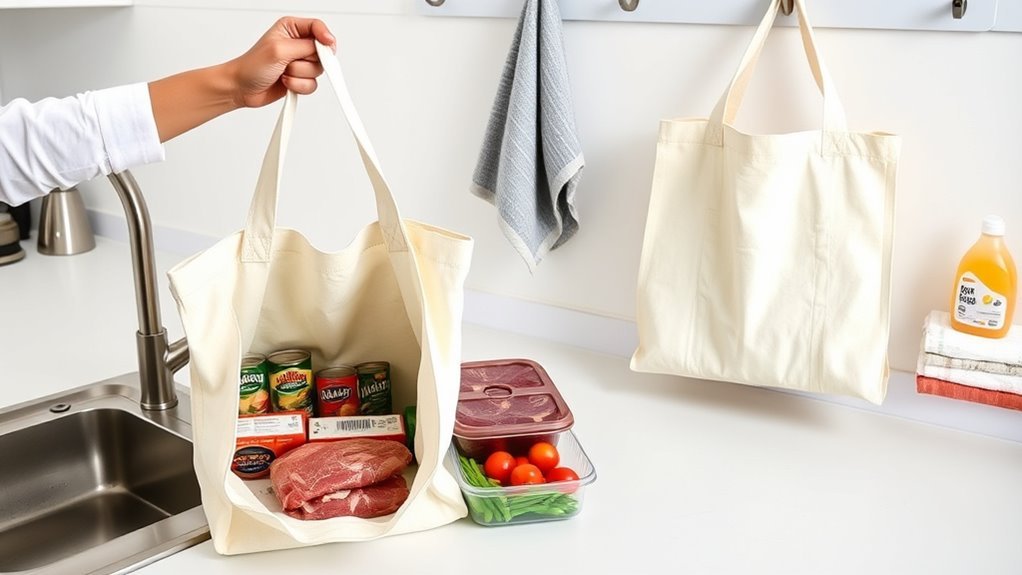
To use a tote bag for groceries safely, you should clean it regularly to avoid germs. Wash fabric bags in hot water after each use, especially after handling raw meat. For plastic bags, wipe them down with disinfecting wipes or wash with soapy water. Always guarantee they’re completely dry before storage to prevent bacteria growth. Separate bags for different food types, and check for damage regularly. You’ll discover even more tips for maintaining hygiene and safety with your bags.
Why It’s Essential to Clean Your Reusable Tote Bags

Cleaning your reusable tote bags is essential if you want to guarantee food safety and hygiene. Studies show that about 30% of bags tested had elevated bacteria levels, including harmful germs like E. coli and Salmonella.
Cleaning your reusable tote bags is crucial for food safety, as studies reveal 30% harbor harmful bacteria like E. coli and Salmonella.
When you wash your bags after each grocery run, especially those used for raw meat, you help prevent cross-contamination and reduce the risk of foodborne illnesses.
Different materials require specific washing methods; for instance, cotton bags can usually be machine washed in hot water, while nylon bags need a gentler hand wash.
Also, be sure to completely dry your tote bags before storing them to prevent mold and further bacteria growth.
Best Practices for Cleaning Fabric Tote Bags
Maintaining the cleanliness of your fabric tote bags is essential for food safety. Wash your bags after each use, especially if they’ve touched raw meat or produce. This prevents bacterial growth and cross-contamination.
For cotton or canvas tote bag materials, machine wash in hot water and air dry to eliminate bacteria effectively.
Regularly inspect your bags for damage, like holes or frayed seams, as these can trap food particles and harbor germs. Air-drying is vital—moisture can lead to mold growth and further bacterial proliferation.
Consider using eco-friendly alternatives like plant-based detergents, such as Mozi Wash, to enhance cleaning efficacy. These options not only help remove dirt and odor but also leave no harmful residues on your tote bags.
Cleaning Plastic and Synthetic Tote Bags
When it comes to cleaning plastic and synthetic tote bags, you’ve got a couple of effective options.
You can either wipe them down with disinfecting wipes or wash them in warm soapy water.
Whichever method you choose, make sure they’re completely dry before storing them away to keep bacteria at bay.
Cleaning Techniques Overview
To keep your plastic and synthetic tote bags safe and hygienic, it’s essential to adopt effective cleaning techniques. Start by wiping down your bags with disinfecting wipes or spray right after use, especially after handling raw meat or produce.
For a deeper clean, wash plastic bags in warm, soapy water, scrubbing all surfaces and rinsing thoroughly before air-drying. Regularly inspect your bags for wear, as holes or frayed seams can trap food particles and harbor germs.
Establish a cleaning routine that includes washing synthetic bags at least once a month, or more often if they’ve carried raw items. By embracing these cleaning methods, you can guarantee your tote bag innovations remain both functional and sustainable material options for your grocery trips.
Best Products to Use
Proper cleaning of your plastic and synthetic tote bags starts with choosing the right products. Here are some effective options:
- Disinfecting Wipes or Spray Cleaners: Use products with at least 70% alcohol to eliminate germs.
- Plant-Based Detergents: Try eco-friendly options like Mozi Wash, which tackles food spills gently on tote bag materials.
- Warm Soapy Water: Hand wash your bags, paying special attention to seams and corners.
Always rinse thoroughly and allow your bags to air dry completely to prevent moisture retention.
Regularly inspect your tote bags for signs of wear, as holes can trap food particles and lead to contamination.
Keeping your bags clean helps you shop safely and sustainably!
Choosing the Best Detergents for Odor-Free Tote Bags
Choosing the right detergent for your tote bags can make all the difference in keeping them odor-free and fresh. Opt for plant-based options like Mozi Wash; they’re gentle on fabrics while effectively tackling food spills and odors. When making your detergent selection, choose formulas free from phosphates, parabens, and phthalates. Enzyme-based detergents excel in odor elimination by breaking down organic stains.
Avoid heavily scented products, as they can leave residues. Instead, pick those with a light scent. Always check your tote bag’s care label to verify compatibility with your chosen detergent.
| Key Features | Recommended Detergents | Notes |
|---|---|---|
| Plant-Based | Mozi Wash | Gentle and effective |
| Enzyme-Infused | Eco-Friendly Options | Great for organic stains |
| Low Fragrance | Unscented Variants | Avoids overwhelming scents |
Storage Tips to Prevent Bacterial Growth in Your Bags
To keep your tote bags safe from bacteria, always make sure they’re completely dry before storing them.
It’s also important to separate bags for raw meat from those used for fruits and veggies to prevent cross-contamination.
Finally, store your bags in a designated cool, dry area to minimize any risk of mold or bacteria growth.
Ensure Complete Dryness
Ensuring your reusable tote bags are completely dry is essential for preventing bacterial growth. Moisture retention can create a breeding ground for germs, so take these steps to maintain hygiene:
- Always inspect your bags after use for dampness.
- Store them in a cool, dry place to minimize mold risk.
- For insulated tote bag materials, keep them open until fully dry to promote air circulation.
Separate Food Categories
Keeping your food safe during grocery trips is essential, and using separate tote bags for different food categories is a smart strategy. Designate bags specifically for raw meat, produce, and ready-to-eat foods to prevent cross-contamination and enhance food safety.
Always wash bags used for raw meat after each use to eliminate any residual bacteria. Store your bags in a cool, dry place, ensuring they’re completely dry before folding to minimize mold and bacteria development.
Implement a labeling system for easy identification, which helps maintain cleanliness and safety. Regularly inspect your tote bags for any damage, as holes or frayed seams can trap food particles and promote bacterial growth, making bacteria prevention vital in your grocery routine.
Designated Storage Areas
After organizing your tote bags by food categories, the next step is to focus on how you store them. Creating designated zones for your bags helps maintain bag organization and reduces the risk of bacterial growth.
Here are some tips to keep your bags safe and clean:
- Confirm bags are completely dry before storing to prevent moisture buildup.
- Designate separate storage areas for bags used for raw meat and produce.
- Use breathable storage solutions like hanging hooks or mesh bins to promote air circulation.
Store your bags in a cool, dry place, away from direct sunlight, and regularly inspect them for wear and tear.
This way, you can enjoy using your tote bags without worrying about germs.
Efficiently Organize Your Tote Bags for Grocery Shopping
Organizing your tote bags for grocery shopping can make a significant difference in maintaining food safety and efficiency. Start by designating specific tote bags for different food categories—like raw meat, produce, and ready-to-eat items. This prevents cross-contamination and guarantees everything stays fresh.
Consider using color-coded or labeled bags to quickly identify their uses, enhancing your grocery shopping efficiency. Keep insulated bags separate for perishables, and always pack them with ice packs when necessary.
Regularly inspect your tote bags for any holes or frayed seams that could trap food particles, as damaged bags can compromise hygiene.
Finally, create a cleaning schedule to wash your tote bags after each trip, especially after transporting raw meat. This proactive approach minimizes bacterial growth and promotes a safer shopping experience.
Embrace these strategies for effective tote bag organization and enjoy a healthier way to shop!
Signs Your Tote Bag Needs Immediate Cleaning?
If you notice visible stains or spills on your tote bag, it’s time to clean it immediately to prevent bacteria buildup.
An unpleasant odor is another clear sign that your bag needs washing, as it indicates moisture and possible mold.
Keeping your tote in good condition guarantees it’s safe for your groceries.
Visible Stains or Spills
Visible stains or spills in your tote bag signal an urgent need for cleaning. These blemishes can harbor harmful bacteria, risking cross-contamination with your groceries.
To guarantee your bag stays hygienic, keep an eye out for:
- Food residue or moisture inside
- Signs of past transport, especially raw meat
- Any visible dirt or spills
Immediate action is essential for stain prevention and effective spill management. Washing your tote bag right away eliminates potential pathogens like E. coli and Salmonella.
Regular inspections help maintain hygiene and prolong your tote’s life. Remember, a clean bag means safer grocery shopping and a healthier you!
Don’t let stains linger; take charge and keep your tote in top condition.
Unpleasant Odors Present
Unpleasant odors coming from your tote bag signal that it’s time for an immediate cleaning. These smells often indicate odor sources like food residue or bacteria growth, which can lead to hygiene issues.
A study found that 30% of reusable bags have elevated bacteria levels, increasing the risk of cross-contamination. Regular exposure to moisture from groceries can create a breeding ground for bacteria, resulting in musty odors that shouldn’t be ignored.
If you’ve transported raw meat or experienced spills, consider this a red flag for immediate cleaning. To keep odors at bay, wash your tote bag after each use, especially when it’s come into contact with perishable items or absorbed moisture.
Your health deserves it!
Understanding Cross-Contamination Risks With Grocery Bags
While reusable grocery bags offer an eco-friendly alternative, they can pose significant cross-contamination risks if not managed properly. Here are some key points to keep in mind:
- Separate bags for raw meats and produce: This minimizes the transfer of harmful bacteria.
- Regular washing: A study revealed that 30% of reusable bags had elevated bacteria levels, so clean them frequently.
- Avoid dampness: Wet bags can create a breeding ground for germs, leading to bacteria growth.
Failing to address these germ hotspots can lead to foodborne illnesses. The warm, moist environment in unwashed bags allows harmful bacteria like E. coli and Salmonella to thrive.
How to Educate Your Household on Tote Bag Hygiene
To keep your household safe from foodborne illnesses, it’s essential to educate everyone about tote bag hygiene. Start by explaining the importance of washing reusable bags after each grocery trip, especially after handling raw meat. Designate specific bags for different food types to minimize cross-contamination, reinforcing tote bag etiquette.
Here’s a simple guide to help:
| Action | Details |
|---|---|
| Washing Method | Cotton: Machine wash; Nylon: Hand wash |
| Inspection | Check for holes or frayed seams regularly |
| Cleaning Schedule | Establish a regular cleaning routine |
| Family Involvement | Guarantee everyone participates in maintenance |
Fostering a culture of shared responsibility will empower everyone to be proactive in maintaining hygiene, making grocery shopping safer for all.
Maintaining Safety Standards for Reusable Bags
Maintaining safety standards for reusable bags is essential to ensuring your family’s health during grocery shopping. By staying vigilant, you can maximize the reusable bag benefits while extending your tote bag lifespan. Here are some key practices to follow:
Ensuring safety standards for reusable bags is vital for your family’s health while grocery shopping. Stay vigilant for maximum benefits.
- Wash your bags regularly, especially after transporting raw meat, to eliminate bacteria and prevent cross-contamination.
- Use separate bags for different food categories—raw meat, produce, and ready-to-eat items—to maintain hygiene and reduce foodborne illness risks.
- Inspect bags frequently for damage, like holes or frayed seams, which can trap food particles and harbor bacteria.
Implementing a cleaning schedule and educating your household members on these practices will help you uphold safety standards.
Frequently Asked Questions
Can You Wash an Insulated Grocery Bag in the Washing Machine?
You can’t wash an insulated grocery bag in the washing machine. Instead, hand wash it with warm water, focusing on bag materials to maintain insulation. Regular care extends its lifespan and keeps it safe for food storage.
What Are the Benefits of Using Cloth Bags?
Using cloth bags offers eco-friendly choices that help reduce plastic waste and provide cost savings over time. They’re durable, washable, and promote hygiene, making your grocery shopping both responsible and efficient.
How Do You Store Your Reusable Grocery Bags?
Store your reusable grocery bags in a cool, dry place, ensuring they’re completely dry. Use bag organization solutions like designated areas for different types to prevent cross-contamination and maintain cleanliness for your next shopping trip.
Are Reusable Produce Bags Hygenic?
Reusable produce bags can harbor bacteria, with 30% showing elevated levels. To guarantee hygiene, choose breathable materials, wash bags after each use, and follow germ prevention tips to keep your produce safe and fresh.
Conclusion
To keep your tote bags safe and germ-free, regular cleaning and proper storage are essential. For instance, imagine a family that used the same tote for groceries and gym clothes without washing it. They ended up spreading bacteria, leading to a nasty bout of food poisoning. By adopting good hygiene practices, like washing your bags weekly and educating your household, you can prevent such risks. Stay proactive, and your tote bags can be both eco-friendly and safe!