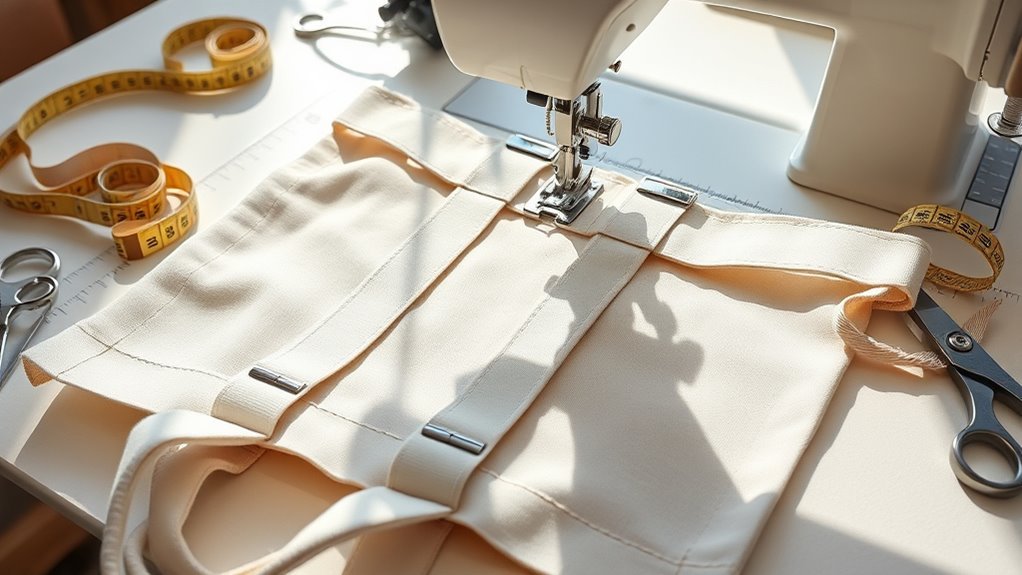
To sew a tote bag with strong handles and neat seams, start by choosing a durable fabric like cotton canvas or denim. Gather essential tools, ensuring your sewing machine’s ready. Cut your fabric precisely, making sure to mark seam allowances clearly. Create strong handles using heavy-duty cotton webbing, and consider French seams for a professional finish. Assemble your bag, box the corners for structure, and add pockets for functionality. Keep going to discover more tips for customization and finishing touches!
Choose the Right Fabric for Durability
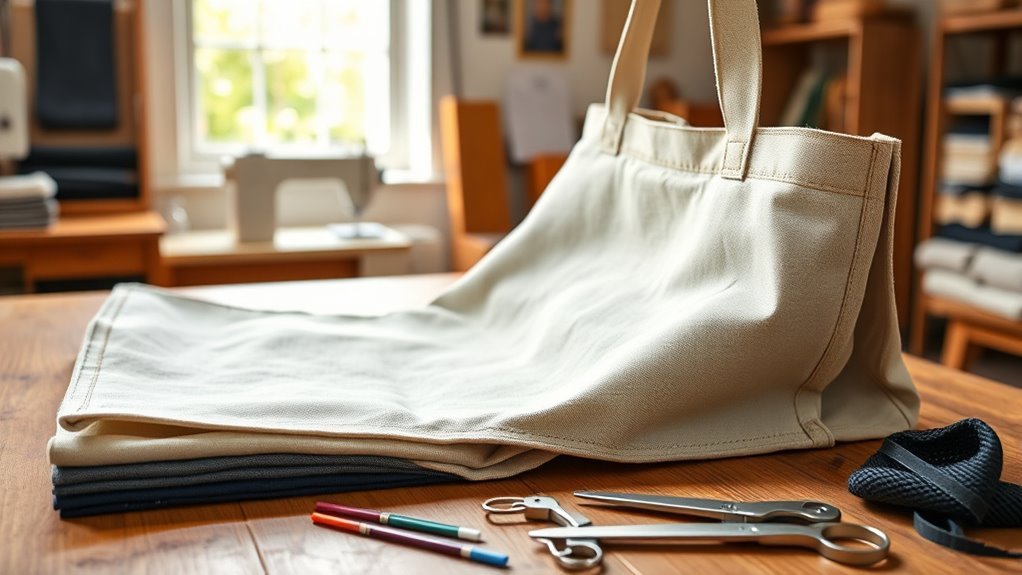
When you’re ready to sew a tote bag, choosing the right fabric is essential for durability. Opt for medium to heavyweight fabrics like cotton canvas, duck cloth, or denim. These material types provide the strength you need to carry everyday items without worry.
Lightweight or stretchy fabrics won’t hold up under the weight, so steer clear of those.
For extra toughness, consider heavy-duty options like upholstery or outdoor fabric, designed to withstand wear and tear. If you’re looking to enhance sturdiness, adding fusible interfacing is a great idea, especially for the handles and bottom panels.
Before you start, always test your fabric with a sewing machine. This guarantees it can handle multiple layers and maintain consistent tension for neat seams.
Gather Essential Sewing Tools and Supplies
Gathering essential sewing tools and supplies is a crucial step in creating your tote bag. With the right materials at your fingertips, you’ll set yourself up for success and enjoy the process of crafting something uniquely yours.
Here’s what you’ll need:
- Sewing machine (make sure it’s set up and ready)
- Standard needles for your fabric type
- Matching thread for a cohesive look
- Cotton webbing (3 yards of 1¼-inch wide for strong handles)
- Fabric shears and pins for precise cutting
Don’t forget to prepare your fabric with care—choose durable options like medium-weight cotton canvas.
Having tools like a marking tool, seam ripper, and an iron will help you achieve neat seams and professional finishes. Equip yourself with these essentials, and you’re on your way to sewing a tote bag that reflects your creativity!
Prepare Your Fabric: Cutting Tips
Choosing the right fabric is essential for your tote bag’s durability, so opt for medium to heavyweight options like cotton canvas.
Once you’ve selected your fabric, use a rotary cutter for precise cuts, ensuring you follow the measurements closely.
Don’t forget to mark your seam allowances clearly to keep your stitching neat and professional!
Fabric Selection Criteria
To create a sturdy and stylish tote bag, you’ll want to start with the right fabric. Focus on medium to heavyweight options like cotton canvas or duck cloth for durability and support.
Here are some selection criteria to take into account:
- Fabric weight: Choose a weight that can handle daily use.
- Color options: Pick shades that reflect your style and personality.
- Print patterns: Explore fun designs that make your tote unique.
- Texture choices: Opt for textures that add interest but remain functional.
- Eco-friendly fabrics: Evaluate sustainable materials for a guilt-free creation.
Don’t forget to pre-wash and iron your fabric to prevent shrinking and guarantee smooth edges.
With these tips, you’ll craft a tote bag that’s both beautiful and resilient!
Cutting Techniques Overview
Start by preparing your fabric with precision to confirm a smooth sewing experience.
Begin by pre-washing and ironing your fabric, which helps prevent shrinkage and assures accuracy in your cutting dimensions.
Use cutting techniques like a rotary cutter on a self-healing mat for straight, clean edges.
Always measure and mark your fabric carefully with a ruler and fabric chalk or a marking pen to avoid mistakes.
Cut your fabric pieces in a single layer to maintain accuracy and prevent shifting.
For curved shapes or angles, opt for sharp scissors to enhance control and achieve smoother edges.
With these tips, you’re well on your way to a beautifully crafted tote bag!
Create Strong Tote Bag Handles: Step-by-Step Guide
Creating strong tote bag handles is essential for guaranteeing your bag can carry heavy items without wearing out. Follow these steps to master your handle design and maximize weight capacity:
- Choose sturdy fabric: Opt for materials like duck-cloth or canvas.
- Cut strips: Make them at least 2 inches wide and 34 inches long for better grip.
- Fold and press: Fold the strips in half lengthwise, then tuck raw edges inward before topstitching.
- Secure attachment: Use an X box stitch at the top of the handles to anchor them firmly to the bag.
- Reinforce stitching: Sew a second line along the sides to enhance strength.
These steps won’t only guarantee your tote bag handles are durable but also empower you to carry your essentials with confidence.
Enjoy the freedom of creating something functional and stylish!
Assemble the Tote Bag: Side and Bottom Seams
With strong handles securely attached, you’re ready to assemble the main body of your tote bag. Start by aligning the fabric edges for the side seams using seam alignment techniques, and pin them securely.
Sew with a consistent seam allowance, typically ½ inch, to keep everything neat. Consider using French seams to hide raw edges, giving your bag a clean, professional finish.
Next, focus on the bottom seam. Pin the raw edges of the bag and bottom panel together, making sure the corners align perfectly.
Focus on the bottom seam by pinning the raw edges together, ensuring perfect alignment at the corners for a sturdy finish.
Sew to create a flat, sturdy base. To enhance durability, trim any excess fabric and apply stitch reinforcement methods by sewing a second line of stitching along the bottom seam.
This extra step will guarantee your tote is both functional and stylish, ready to carry whatever you choose with confidence!
Finish the Edges Neatly: Techniques Explained
Neatly finishing the edges of your tote bag is essential for durability and aesthetics, and there are several effective techniques to achieve this.
Consider these methods to elevate your project:
- Zigzag or overlock stitch to prevent fraying in high-stress areas.
- Apply bias tape for a clean finish that adds a decorative touch while reinforcing edges.
- French seams encase raw edges within the seam, offering a polished look and preventing fraying.
- Topstitch along seams to enhance visual appeal and reinforce edges, making them resilient.
- Press seams open or to one side to maintain crisp edges and improve overall appearance.
Box the Corners for Structure
Boxing the corners of your tote bag adds structure and enhances its overall shape, making it more functional.
To start, flatten each corner by aligning the bottom seam with the side seam, creating a triangular shape. Use a fabric pen to mark a line across the corner, typically 4 to 5 inches long; this guides your corner stabilization techniques.
Pin the corner flat to guarantee stability while you sew across the marked line. Secure your stitches with backstitching at each end to prevent unraveling.
This triangular shaping method not only reinforces the bag’s structure but also reduces bulk inside. Once sewn, trim the excess fabric beyond the stitching line for a cleaner finish.
With these techniques, you’re not just creating a bag; you’re crafting a tool for freedom, ready to carry your essentials in style.
Enjoy the process and the functional beauty of your completed tote!
Add Optional Pockets to Your Tote Bag
Adding pockets to your tote bag can greatly boost its functionality, giving you easy access to smaller items like your phone or keys. You can choose between external and internal pockets, depending on your needs.
- External pocket: Cut a piece of fabric measuring 5″ x 6″ and sew it to the front of the outer shell before assembly.
- Internal pocket: Use the same dimensions and attach it to the lining fabric for added organization.
- Zigzag stitch: Finish pocket edges to prevent fraying, especially with lightweight fabrics.
- Pocket placement: Think about where you want your pockets for maximum convenience.
- Fabric contrast: Consider using a contrasting fabric to make your pockets pop and easy to spot.
With these simple additions, you’ll enhance your tote bag’s usability and style.
Enjoy the freedom of keeping your essentials organized and accessible!
Final Assembly: Join the Lining and Exterior
Now it’s time to bring your tote bag to life by joining the lining and exterior. Start by aligning the top edges of both pieces, ensuring the handles are tucked inside to prevent twisting.
Use effective seam alignment techniques to match side seams and corners for a polished finish. Don’t forget to leave a gap of about 4 to 6 inches in one side seam of the lining; this will allow you to turn the bag right side out later.
Ensure precise seam alignment for a polished finish, and remember to leave a 4 to 6 inch gap in the lining for turning.
Pin the layers together securely, then sew around the top edge with a consistent seam allowance of 5/8 inch. This uniformity is key for a sturdy bag.
After sewing, carefully turn your tote right side out through the opening in the lining. Finally, press the top seam for a crisp, professional look. Your tote bag is shaping up beautifully—you’re almost there!
Customize Your Tote Bag: Personalization Ideas
With your tote bag nearly complete, it’s time to make it truly yours. Personalization transforms your creation into a unique expression of your style.
Here are some ideas to inspire you:
- Use embroidery techniques to stitch your initials or a favorite quote.
- Add vibrant fabric paint designs that showcase your personality.
- Create custom pockets with coordinating fabric for added organization.
- Experiment with appliqués—sew on fun shapes or motifs that resonate with you.
- Adjust the dimensions to fit your needs, making it the perfect companion for any occasion.
Frequently Asked Questions
How to Make a Heavy Duty Tote Bag?
To make a heavy-duty tote bag, choose durable materials like canvas, and use reinforced stitching for strength. Incorporate sturdy handles and finish seams properly to guarantee your bag can handle any load you throw at it.
How to Make Tote Bag Straps Stronger?
Want your tote bag straps to last longer than a flip phone? Use sturdy fabric choices, like canvas, and employ reinforced stitching at attachment points. Wider straps also enhance comfort and durability during heavy use.
What Are Some Good Sewing Patterns for Tote Bags?
For great tote bag styles, explore patterns that suit your fabric choices—like sturdy canvas or flexible foam. Try beginner-friendly options for a fun project, and embrace your creativity while enhancing your sewing skills!
Are Tote Bags Hard to Sew?
Tote bags aren’t hard to sew; about 80% of beginners succeed on their first try! Focus on sturdy tote bag materials and follow simple sewing tips to release your creativity and boost your confidence.
Conclusion
You might worry that sewing a tote bag is too complicated, but with the right tools and techniques, you’ll find it’s quite manageable! By choosing durable fabric and following the steps for strong handles and neat seams, you can create a bag that not only looks great but lasts. Plus, personalizing your tote makes it uniquely yours. So roll up your sleeves and give it a try—you’ll be proud of what you create!