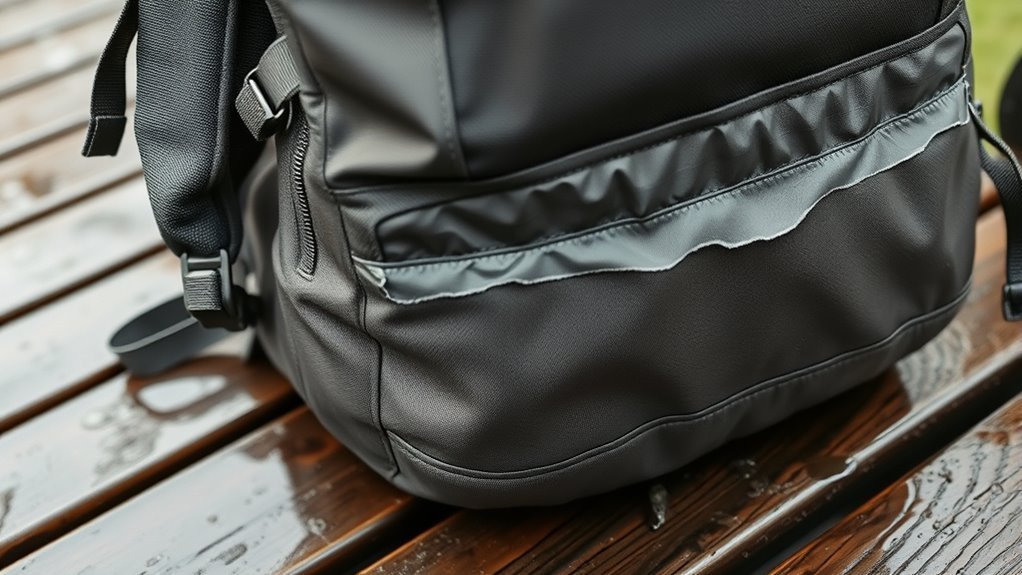
Waterproof bag coatings peel and lose their protection mainly due to environmental degradation, like prolonged UV exposure and heat. Over time, physical wear causes cracks and micro-tears that weaken adhesion. Improper storage in humid conditions accelerates breakdown and promotes mold growth. Regular cleaning and timely maintenance can help mitigate these issues, preserving your bag’s integrity. To better understand how to maintain waterproof coatings, including effective repair strategies, look into specific maintenance tips and causes of failure.
The Science of Waterproof Coatings
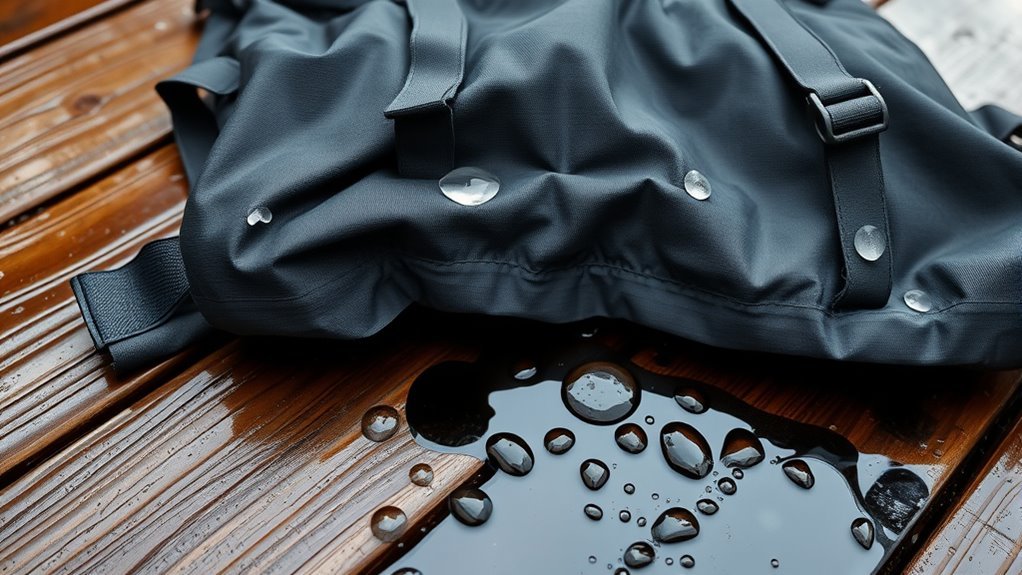
When you consider waterproof coatings, it’s essential to understand their chemical composition and how they function. Coatings like polyurethane (PU) and polyvinyl chloride (PVC) create a moisture barrier through a carefully structured molecular arrangement. This molecular structure is important for coating durability, as it determines how well the coating resists water penetration and environmental stressors.
However, exposure to UV light, heat, and abrasion can lead to degradation. The hydrostatic head rating measures how much water pressure the coating can withstand before leakage occurs, highlighting its effectiveness.
Improper application or inadequate surface preparation can compromise adhesion, resulting in peeling or a loss of protective qualities. Additionally, chemical reactions with contaminants can accelerate degradation.
Regular maintenance, including thorough cleaning and proper storage, is essential for prolonging the lifespan and functionality of waterproof coatings, ensuring they remain effective in their protective role.
Signs of Waterproofing Failure
Waterproof coatings, while designed to offer protection, can exhibit signs of failure that compromise their effectiveness. One of the primary peeling indicators is visible peeling, often a result of prolonged UV exposure or heat that degrades the chemical bonds within the material.
Waterproof coatings can fail, with visible peeling often indicating damage from UV exposure or heat degrading their chemical bonds.
As these coatings age, you may notice adhesion loss, particularly with polyurethane types, which can lead to layers detaching from the substrate. Regular use can create micro-tears, further weakening the coating’s integrity. If you observe a sticky texture on the surface, it’s a clear sign of degradation.
Additionally, improper storage conditions—like high humidity or direct sunlight—can accelerate these issues. During exposure to moisture, reduced water resistance becomes apparent, signaling that your protective layer is failing.
Recognizing these symptoms early can help you take corrective actions before the situation worsens.
Top Causes of Coating Failures
While many factors contribute to coating failures, prolonged exposure to UV rays and heat consistently ranks as a primary cause. This exposure leads to material degradation, compromising coating adhesion and resulting in peeling.
Understanding the top causes can help you safeguard your waterproof bags:
- UV Rays and Heat: These elements break down waterproofing materials like polyurethane.
- Improper Storage: Humidity and direct sunlight accelerate coating breakdown, diminishing protective qualities.
- Physical Wear: Regular use subjects coatings to abrasion, creating cracks that lead to peeling.
- Chemical Reactions: Substances stored inside your bag can interact negatively with the coating, weakening adhesion.
Environmental Factors Impacting Waterproof Bag Coatings
Understanding the environmental factors that impact waterproof bag coatings is essential for maintaining their functionality and longevity. Various conditions can accelerate degradation, leading to peeling and loss of protection.
| Factor | Impact on Coatings |
|---|---|
| UV Degradation | Breaks down chemical bonds, reducing effectiveness. |
| Humidity Impact | Moisture infiltration compromises integrity. |
Heat and temperature fluctuations can exacerbate these effects, while improper storage conditions—especially in damp environments—can promote mold growth. Additionally, chemical interactions with cleaning agents may cause further breakdown of the coating. Frequent abrasion and wear from rough surfaces can physically damage the waterproof layer, increasing susceptibility to peeling. By recognizing these environmental influences, you can take steps to protect your waterproof bags and guarantee they remain functional over time.
How to Keep Your Waterproof Coating Working
To keep your waterproof coating effective, regular maintenance is essential. Implementing these maintenance tips can greatly enhance coating longevity:
- Clean Regularly: Wash your bag as needed, ensuring it’s completely dry before storage to prevent moisture buildup.
- Proper Storage: Store your waterproof bags in cool, dry environments. Avoid heat and direct sunlight, which can degrade coatings like polyurethane and DWR.
- Inspect for Damage: Periodically check seams and zippers. Even minor damage can compromise waterproofing, allowing water to seep in.
- Reapply Waterproofing: After extensive use, consider applying a waterproofing spray, such as Fabsil Gold, to refresh the coating and restore its efficacy.
Frequently Asked Questions
What Makes Raincoats Waterproof?
Raincoats are waterproof due to durable coatings like PU or PVC, combined with breathable materials. Their effectiveness relies on the coating’s durability and features like sealed seams, enhancing moisture resistance and overall performance in wet conditions.
How to Prevent a Bag From Peeling?
To prevent peeling, store your bag in a cool, dry place, clean it regularly, and apply waterproofing spray. These bag maintenance tips enhance coating longevity, ensuring your gear remains reliable and ready for action.
Are Waterproof Bags Worth It?
Yes, waterproof bags are worth it if you prioritize durability concerns and material quality. Investing in high-quality options guarantees better protection against moisture, enhancing your experience and freedom during outdoor activities. Choose wisely for long-lasting performance.
Why Is My Raincoat Lining Peeling?
Your raincoat lining’s peeling occurs due to inadequate coating durability, often from poor materials or exposure to moisture and sunlight. Regular maintenance and proper storage are essential to extend the lifespan of your raincoat.
Conclusion
To maintain your waterproof bag’s effectiveness, you need to recognize the signs of failure, understand the causes, and address environmental impacts. By regularly inspecting for peeling, applying protective treatments, and storing your bag properly, you can extend its life. Remember, consistent care, informed choices, and proactive measures guarantee your bag’s resilience. Keep it dry, keep it protected, and keep it functional—these steps are essential in preserving the integrity of your waterproof coating.