
A country of origin label on a handbag states where the bag was made, for example Made in Italy or Made in China. In the United States, imported bags must carry this marking by law. When a bag is made in stages in more than one country, the label names the last country where it was substantially transformed, which usually means where it was cut, sewn and finished. The label does not tell you where the leather, fabric or hardware came from, and it is not a grade of quality.
What Is a Country of Origin Label and Why Does It Matter?
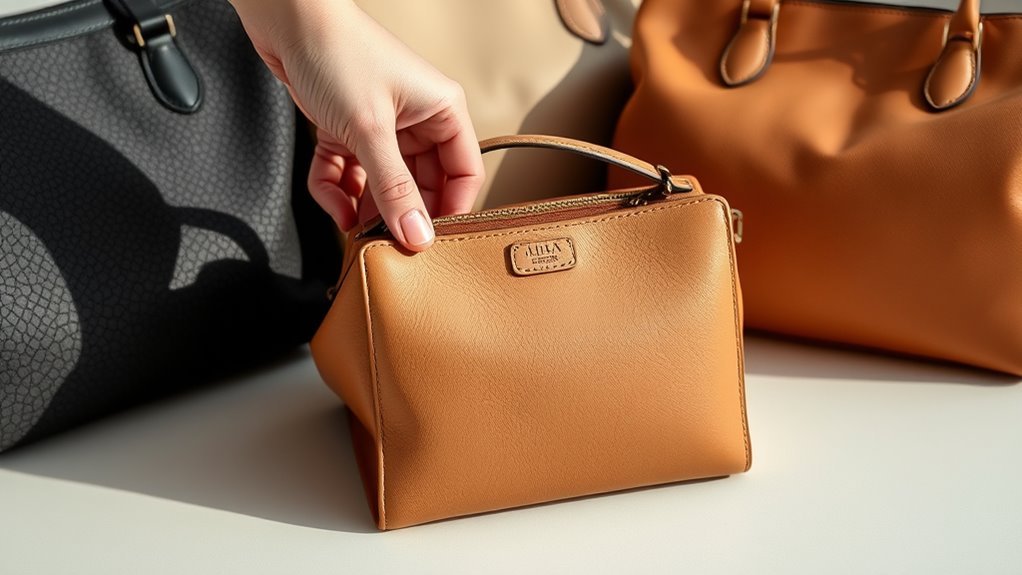
A country of origin label is a marking that names the country where a product was made. On a handbag it is usually a small stamp or sewn-in tag inside the bag, often under the brand name or inside a pocket. It may read Made in Italy, Made in France, Made in China and so on.
In the United States the marking is a legal requirement for imports. Federal law (19 U.S.C. 1304) says that every imported article must be marked with the English name of its country of origin. The marking must be conspicuous, legible and as permanent as the article allows. US Customs and Border Protection (CBP) enforces the rule.
For shoppers, the label is a piece of factual information about the supply chain. It helps you compare bags, check the claims a seller makes and spot some counterfeits. It should not be read as a guarantee of quality.
Why Country of Origin Signals Quality to Consumers
Many shoppers treat a label such as Made in Italy or Made in France as a sign of quality.
There is some basis for this. Certain countries and regions have long traditions of leatherwork, with skilled workshops, tanneries and suppliers close together.
Even so, the label describes a place, not a standard. Excellent and poor bags are made in every producing country.
Perceived Craftsmanship Quality
Italy, France and Spain are known for luxury leather goods, and brands use these origins in their marketing. A bag from a well-known region can command a higher price for that reason alone.
Workmanship depends on the factory, the materials and the price point more than on the country. Many respected brands produce well-made bags in China, Vietnam, India and elsewhere, and low-cost workshops also exist in countries with famous names. Judge the stitching, edges, lining and hardware of the bag in front of you.
Trust in Manufacturing Standards
Origin can still tell you something useful. Labor laws, environmental rules and enforcement differ between countries, and some shoppers prefer bags made where standards are known to be strict.
- Origin shows where final manufacture took place, which is where most of the sewing labor was done.
- It does not prove good working conditions. Brand audits and certifications are better evidence.
- A brand that also names its tannery, material sources or factory is giving you more than the law requires.
Treat the label as one clue among several. The materials, the construction and how open the brand is about its production tell you more.
Key Regulations Governing Country of Origin Labels
The rules for origin labels differ from country to country. The United States has some of the clearest.
Under US law, the marking has to be on the bag itself, in a place where the buyer can find it without difficulty, and it must stay legible until the bag reaches the buyer. If a bag is made from parts or in stages across several countries, its origin is the last country where a substantial transformation took place. That means work which turns the materials into a new article with a different name, character and use. Sewing cut leather into a finished handbag qualifies. Minor steps such as attaching a strap or packaging generally do not.
Goods that arrive without proper marking can be held, and the importer may have to mark them and pay an additional duty of 10 percent of their value. Deliberately false marking carries heavier penalties. A Made in USA claim is governed separately by the Federal Trade Commission. To be labeled Made in USA without qualification, a product must be all or virtually all made in the United States. In the European Union, origin marking is mostly voluntary for consumer goods such as handbags, although a Made in claim must not mislead.
Common Misconceptions About Manufacturing Locations
The most common mistake is to think that a Made in label covers everything in the bag. It refers to the place of final manufacture. The leather may have been tanned in one country, the zipper made in a second and the bag sewn in a third.
Keep these points in mind:
- The “country of origin” often reflects where the last substantial transformation occurred, not where all materials originated.
- Global supply chains mean even high-end brands may source materials from countries with lower labor costs.
- Phrases such as Designed in, Italian leather or Imported by describe something other than where the bag was made.
Rules on how much work must be done in a country to earn its label also vary. A bag can be largely prepared in one country and finished in another, and it may legally carry the name of the second. That is why the label alone says little about the full story.
Verifying the Authenticity of Country of Origin Claims
A country of origin stamp is easy to print, so it is worth checking it against other evidence.
Compare the label with what the brand says on its website and with listings for the same model from authorized sellers. Many brands make different lines in different countries, so one model may be made in Italy and another in China. Check that the stamp is spelled correctly, evenly spaced and in the style the brand uses.
Counterfeit bags often carry a prestigious origin stamp, so the stamp alone proves nothing. A mismatch can be a useful warning, though. If a brand makes a model only in Spain and the bag says Made in Italy, be careful. For an expensive purchase, use a professional authentication service.
Future Trends in Handbag Country of Origin Labels
Origin labeling is slowly becoming more detailed. These are the main developments:
- More brands publish lists of their factories, tanneries and material suppliers.
- QR codes and chips in bags link to digital records of where and when a bag was made.
- Qualified claims, such as Made in Portugal of Italian leather, are becoming more common.
Regulation is moving in the same direction. The European Union is introducing digital product passports for several product groups, including textiles, which will carry information on materials and origin.
For shoppers, this means more information than a two-word stamp can give.
Expect clearer wording too. Assembled in and Made in do not mean the same thing, and labels increasingly separate the two.
Until such information is standard, the best approach is to read the label, check it against what the brand publishes and judge the bag itself.
Frequently Asked Questions
What Are the Rules for Country of Origin?
In the United States, imported goods must be marked with the English name of their country of origin in a conspicuous, legible and permanent way. Where several countries are involved, origin is the last country of substantial transformation. Other countries have their own rules, and in the EU the marking is mostly voluntary.
Does Made in Italy Mean the Whole Bag Was Made in Italy?
Not necessarily. The label refers to where the bag was substantially made or finished. Leather, linings and hardware can come from other countries, and some preparation work may be done elsewhere.
Where Is the Country of Origin Label on a Handbag?
Look inside the bag. It is usually stamped into the leather below the brand name, printed on a sewn-in tag or placed inside an inner pocket. On some bags it is on a small tab along a side seam.
Is Country of Origin the Same as Made in the USA?
No. Country of origin marking is required for imported goods and is enforced by customs. Made in USA is a voluntary claim regulated by the Federal Trade Commission, and it requires that all or virtually all of the product is made in the United States.
Conclusion
A country of origin label tells you where a handbag was made or finished, and little more. It does not show where the materials came from, and it does not grade quality. Use it as one piece of evidence. Check it against what the brand publishes, look closely at the materials and workmanship, and be wary of any bag whose label does not match its maker.
Sources: U.S. Customs and Border Protection: Marking of Country of Origin on U.S. Imports, U.S. Federal Trade Commission: Complying with the Made in USA Standard.

