
A worn-out handbag made of mixed materials cannot go in a household recycling bin. To recycle it, take it apart. Remove the metal hardware for scrap metal recycling, and take the fabric and other textile parts to a textile recycling point. Many textile banks also accept whole handbags, as long as they are clean and dry. Leather and faux leather are harder to recycle, so reuse them for small projects where you can. Some brands and retailers run take-back programs as well.
Assess Your Handbag’s Condition
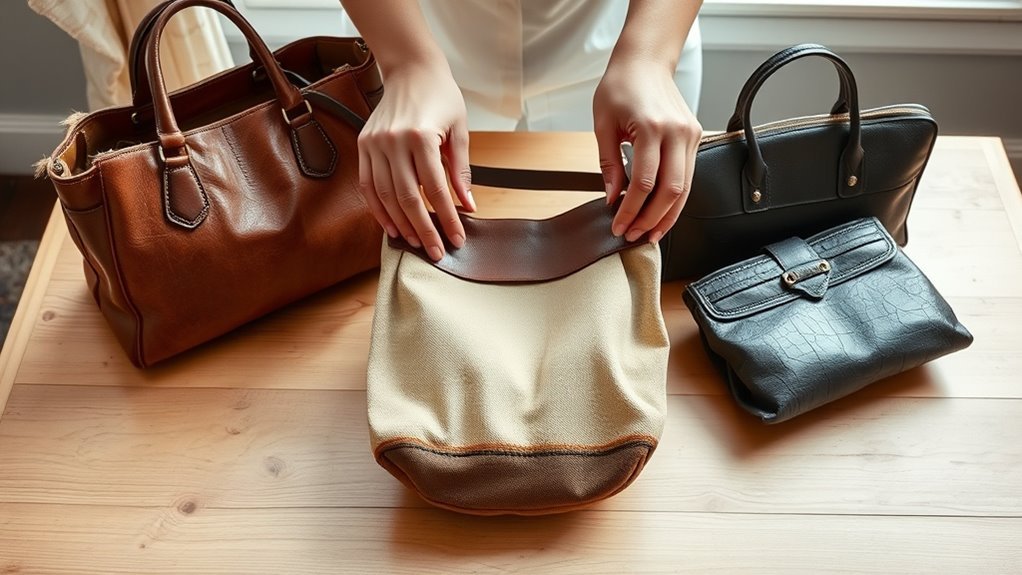
Before you recycle a bag, check whether it really is at the end of its life. Look at the handles, strap anchors, zippers, corners and lining.
A bag with a sound body and one fault, such as a broken zipper or a torn lining, can often be repaired. Repair and reuse keep more value in the bag than recycling does.
If the bag is still usable, donate or sell it. Recycling is for bags that nobody would want to carry: those with peeling surfaces, broken frames, torn bodies or deep stains.
Check the label or brand before you cut anything. Vintage and designer bags can be worth restoring even in poor condition, and a specialist repairer can advise.
Once you are sure the bag is finished, empty every pocket and move on to taking it apart.
Separate Your Handbag’s Components for Recycling
Mixed materials are the reason handbags are hard to recycle. A single bag can combine leather or plastic-coated fabric, a polyester lining, foam, cardboard stiffeners, glue and several metals.
Recycling plants need clean, single materials. Separating the parts yourself is the only way to get most of them recycled.
Identify Material Types
Start by working out what the bag is made of. The main groups are leather, faux leather, woven fabric, metal and plastic.
- Check for labels: Look for tags that specify material composition.
- Remove hardware: Carefully detach zippers and buckles, as metals can often be recycled separately.
- Look inside the layers: Stiffeners made of cardboard, foam or plastic sit between the outer material and the lining. Glued layers that will not come apart go in the general waste.
Use a seam ripper or small scissors to open the seams, and pliers to remove rivets and rings. Work on a covered table, and wear gloves if the bag is moldy or the hardware has sharp edges.
Sort for Recycling Options
Sort the pieces by material once the bag is apart.
Rules vary between areas, so check what your local council or waste service accepts. Do not put textiles or bag parts in a household recycling bin unless your service says so, because they can jam sorting machines.
Zippers, buckles, clasps and straps in good condition are worth keeping. Craft groups, sewing classes and repair cafes often welcome them.
Ask whether the brand or the shop where you bought the bag runs a take-back or recycling program. Some mail-in recycling services also accept bags and accessories for a fee.
Whatever cannot be reused or recycled, such as glued layers, foam and peeling faux leather, goes in the general waste.
Sorting takes about half an hour, and it keeps the recyclable parts out of landfill.
Where Each Material Can Go
- Metal hardware: Scrap metal collection or the metal container at a household recycling center.
- Cotton, canvas and other fabrics: Textile banks or textile collections, clean and dry.
- Whole bags: Many textile banks accept handbags and belts. Check the list on the bank or the council website.
- Leather: Reuse for small projects. Few public programs recycle it.
- Faux leather, foam and glued layers: General waste, unless a take-back program accepts them.
If you are unsure about an item, ask your waste service before you put it in a bin.
Clean and Repair Usable Parts
Parts that you plan to reuse or pass on should be clean. Set aside the zippers, clasps, rings, straps and any large pieces of sound leather or fabric.
Follow these three steps:
- Clean: Use specialized leather cleaners for leather sections to remove dirt and restore their look. For fabric parts, wash them gently and verify any tears or seams are repaired.
- Maintain: Use suede cleaning tools to rejuvenate suede elements, keeping them fresh for new applications.
- Store: Keep small parts in labeled bags or jars, and roll leather pieces instead of folding them.
Simple Upcycling Projects for Leather and Fabric
Leather and fabric from an old bag are useful for small projects, because the pieces are already finished and softened by use.
You need only basic tools: sharp scissors or a craft knife, a strong needle, waxed or polyester thread and a ruler.
A coin purse is a good first project.
Unique Leather Coin Purses
A coin purse uses one flat piece of leather about the size of a postcard, plus a zipper or snap from the same bag. Here is how to start:
- Cut and Repurpose: Use leather sections from the handbag, ensuring minimal waste.
- Incorporate Fabrics: Add contrasting fabrics from the lining for visual interest and durability.
- Improve Functionality: Use zippers or snap closures from the original bag to maintain the aesthetic.
Sew the sides by hand with a saddle stitch or a simple running stitch, with the stitches a few millimeters from the edge. Thick leather is easier to sew if you punch the holes first with an awl.
Avoid leather that is cracked or flaking. It will keep breaking down in the new item.
Transforming Handbags Into Stylish Accessories
Smaller offcuts can become accessories.
These three ideas need very little material:
- Patchwork Clutches: Sew together different handbag pieces to form unique clutches that reflect your personal style.
- Upcycled Keychains: Cut smaller sections into fun shapes for eye-catching keychains, adding flair to your everyday essentials.
- Embellished Hair Accessories: Transform remnants into hair clips or headbands, using leather flowers or appliqués for a fashionable touch.
Reusing Handbag Hardware
Hardware is the most reusable part of a handbag. Zippers, rings, buckles, swivel clips, magnetic snaps and chain straps often outlast the bag itself.
Keep them as spares for repairing other bags. A swivel clip or a D-ring from an old bag can replace a broken one on a bag you still use.
They also work in new projects. A chain strap can become a key chain or a strap for a smaller bag, and rings and clips are useful for key holders and lanyards.
Check each part before you keep it. Discard clips with weak springs and zippers with missing teeth.
Hardware that you do not want can go to scrap metal recycling, since most of it is steel, brass or zinc alloy.
Practical Uses for Recycled Handbag Materials
Almost every part of a handbag has a second use if it is in fair condition.
Here are three practical examples:
- Zippers and Clasps: Use them to create stylish new bags or accessories that show your unique flair.
- Fabric Lining: Transform the lining into patches for clothing repairs or quilt squares, adding character to your wardrobe.
- Leather and Suede: Clean and upcycle these elements into chic coin purses or keychains, turning everyday essentials into fashion statements.
Finding Community Support for Your Upcycling Journey
You do not have to do this alone. Local groups can help with tools, skills and places to pass materials on.
Repair cafes and sewing groups often have the tools to take a bag apart and the experience to tell what is worth saving.
Online swap and free-sharing groups are a quick way to give away hardware, straps and leather pieces to people who will use them.
Schools, theater groups and craft charities sometimes accept fabric, leather and hardware for projects. Ask before you drop anything off.
Your local council or waste service can tell you where the nearest textile bank and scrap metal point are.
Frequently Asked Questions
Are Old Purses Worth Anything?
Some are. Vintage and designer bags can have resale value even when worn, so check the brand and condition before you recycle. Ordinary worn-out bags have little resale value, but their hardware and materials can still be reused.
Can Handbags Go in the Recycling Bin?
Not in the household recycling bin. Bags are made of mixed materials, and textiles can jam sorting machines. Take clean, dry bags to a textile bank or collection that lists handbags, or separate the parts yourself.
What Should I Do With My Old Purses?
Donate or sell bags that are still usable. Repair those with small faults. Take apart bags that are worn out, reuse the hardware and good material, and send the rest to textile or metal recycling where it is accepted.
Can Leather Be Recycled?
Only in a limited way. Industry can shred leather scraps and bind them into bonded or recycled leather, but few public programs accept used leather goods. Reusing the leather for small projects is the most practical option at home.
Conclusion
A worn-out handbag does not have to go straight to landfill. Take it apart, send the metal to scrap recycling and the textiles to a textile bank, and keep the hardware and good leather for repairs or small projects. Check local rules first, since they differ from place to place. Only the glued and peeling parts need to go in the general waste.
Sources: City of Boston: textile recycling, City of Cambridge: textiles recycling.

