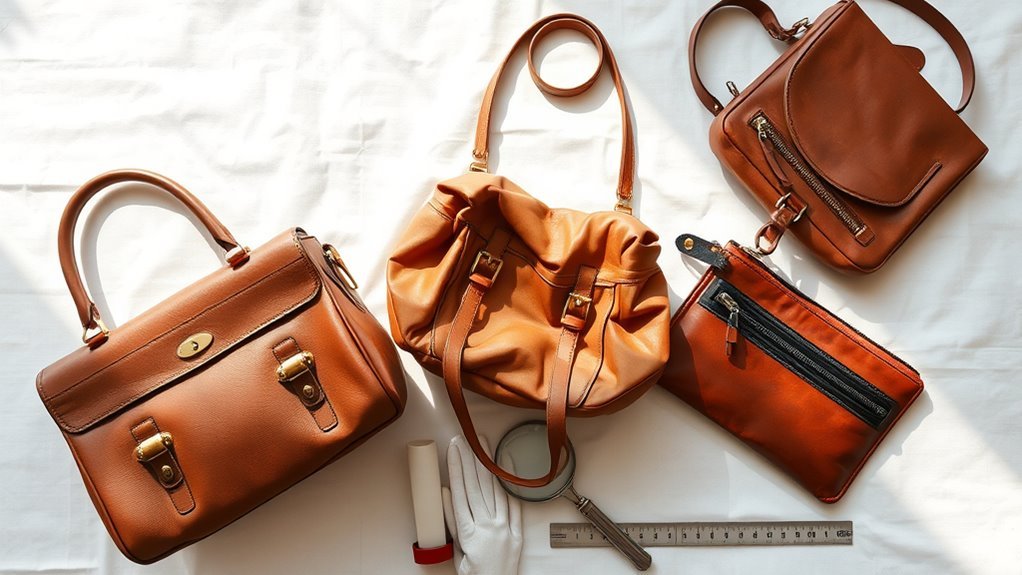
To date a vintage handbag, look at how it was made and what it was made of. Zippers, clasps, linings, stitching, labels and materials all changed over the decades, and each one narrows the range. Maker stamps, country of origin marks and brand date codes can narrow it further. No single detail is proof, because parts were sometimes replaced and old stock was used later. A reliable date comes from several clues that agree.
Understanding the Importance of Construction in Dating Vintage Handbags

Construction is the best starting point, because it is hard to fake and rarely altered. Look at the frame or base, the seams, the corners and the way the handles are attached.
Bags from the early and middle decades of the twentieth century often have metal frames with kiss-lock or push clasps, piped seams and handles held by metal loops or rings. Later bags rely more on zippers, magnetic snaps and glued, turned edges.
Open the bag as well. The lining fabric, the pockets and any label or stamp inside often say more about the date than the outside does.
Then study the hardware. The style and maker of the zipper, the finish of the metal and the type of clasp are some of the most useful dating clues.
Identifying Key Materials Used in Different Eras
Materials follow fashion and technology, so they point to broad periods.
Beaded and metal mesh bags are typical of the 1920s. Leather and fabric bags with early plastic frames and clasps appear in the 1920s and 1930s. During the 1940s, wartime shortages of leather and metal led makers to use fabric, cord, wood and plastic.
Rigid plastic box bags, often in clear or marbled acrylic, are a hallmark of the 1950s. Vinyl and patent finishes became common in the 1950s and 1960s. Nylon and canvas with printed or woven logos spread from the 1970s onward.
Reptile skins such as alligator, crocodile and lizard were popular for structured day bags in the 1940s and 1950s. They are a sign of an expensive bag, though not of an exact date.
Treat materials as a guide to the era, then confirm with hardware and labels. Styles were revived many times, so a 1970s bag can look like a 1930s one at first glance.
How Stitching Styles Reveal the Age of Vintage Bags
Stitching offers supporting evidence. Most factory-made bags of the twentieth century were machine stitched, so machine stitching alone does not make a bag recent. Hand saddle stitching, with slightly angled, even stitches made with two needles, points to a traditional leather workshop in any decade.
What changes over time is the thread and the finish. Older bags usually have cotton or linen thread, which fades, frays and can rot. Bags from about the 1960s onward increasingly use nylon or polyester thread, which stays bright and has a slight sheen.
Look at the stitch length and regularity too. Very even, fine stitching with synthetic thread on a bag sold as 1930s deserves a second look. It may be a later bag or a later repair.
Reading Date Codes in Vintage Bags
Some brands stamp codes inside their bags that record when, and sometimes where, a bag was made. Louis Vuitton is the best-known example, and its system shows how such codes work:
- Early 1980s: Three or four digits, giving the year and the month.
- 1990 to 2006: Two letters for the factory, then four digits for the month and year.
- Before the early 1980s: No date code at all, so its absence on an older bag is normal.
- Worn or missing codes: Codes rub off soft linings. A faded code does not prove a fake, and a clear code does not prove a bag is genuine.
Other brands have used serial numbers, stickers or style codes at different times. Check a guide for the specific brand, and remember that counterfeiters copy codes as well.
What Interior Stamps and Linings Reveal About Vintage Bags
The inside of a bag holds some of the best evidence. Maker stamps, labels and lining fabrics all changed over time.
Compare what you find with dated examples of the same brand in museum collections, auction archives or collector guides.
Interior Stamp Variations Over Time
A stamp or label names the maker, and its wording and style can narrow the date.
Look for these details:
- The logo and typeface, which most brands redesigned several times.
- Whether the stamp is gold or silver foil, blind embossed or printed on a fabric label.
- A country of origin line, such as Made in Italy or Made in West Germany. Some of these names were used only in certain years.
- Patent numbers, union labels and retailer labels, which can often be traced to a period.
Lining Fabric Significance
Lining fabric follows the same broad timeline as other textiles. Silk, rayon satin and moire are typical of bags from the first half of the twentieth century. Leather and suede linings appear in better bags of all periods.
Vinyl and plastic-coated linings point to the 1950s and later. Nylon and polyester linings, often woven with a logo, are common from the 1970s onward.
The condition of the lining is a clue as well. Old silk shatters and splits along folds. Aged vinyl turns sticky or cracks.
A lining that looks much newer than the outside may have been replaced. That affects value, and it removes one of your dating clues.
Recognizing Signs of Wear: Genuine Aging vs. Artificial Distress
Genuine age leaves marks that are difficult to copy. Learning to read them helps you date a bag and avoid artificially aged pieces.
Check these signs:
- Patina variations: Look for natural color changes that tell a story.
- Wear characteristics: Observe softening leather corners and slight fraying, which add character.
- Texture differences: Authentic pieces exhibit uneven textures, unlike the uniformity of artificial bags.
- Aroma: The rich scent of aged leather is a telltale sign. Artificial bags may smell chemical.
How Provenance Assists in Dating Vintage Handbags
Provenance is the documented history of an object. For a handbag it can include a receipt, a box, a care card, a dated photograph or a note of who owned it.
Paperwork with a date gives you a latest possible date of manufacture. A shop label inside the bag can help too, if the shop traded under that name for a known period.
Family history is useful but less reliable than documents. A bag said to be from the 1920s may turn out to be from the 1950s once the zipper and lining are checked.
Good provenance adds value as well as confidence, so keep any paperwork with the bag.
When to Consult an Expert for Vintage Handbag Dating
Some bags are hard to date from details alone, especially valuable designer pieces and bags that have been repaired.
Consider an expert in these cases:
- The date code is unclear or faded.
- Unique construction features, like stitching patterns, don’t match known timelines.
- Significant wear or restoration might affect dating.
- Doubts about the handbag’s provenance arise, especially with inconsistent details.
Auction houses, specialist vintage dealers and authentication services see many examples and know the small changes each maker introduced.
For a costly purchase, a paid opinion is worth the fee.
Maintenance Tips for Preserving Vintage Handbag Value
Dating a bag often means handling it closely, so handle it with care. Store vintage bags in a cool, dry, dark place.
Use a breathable dust bag, and stuff the bag lightly with acid-free tissue so it keeps its shape.
Dust leather with a soft, dry cloth. Condition smooth leather sparingly, and test first, since old finishes can darken.
Do not polish hardware with abrasive products. The original finish and its natural patina are part of the evidence of age.
Leave repairs to a specialist, and keep any original parts that are replaced. Replaced zippers, linings and handles make a bag harder to date and usually lower its value.
Never remove labels, stamps or codes, even if they are loose or worn.
The Role of Hardware: Identifying Era-Specific Features
Hardware is often the most precise dating tool, because makers marked it and its design changed frequently.
Zippers are especially helpful. The brand on the pull, the material of the teeth and the shape of the slider all carry information.
Key Hardware Indicators
Start with the maker name on the zipper pull or slider. Zipper makers such as Talon in the United States, Lightning in Britain, Eclair in France, Riri in Switzerland and Lampo in Italy were prominent in their home markets in the mid twentieth century, so the name also hints at where the bag was made.
Then look at the other hardware:
- Clasps and frames: kiss-locks and push clasps are typical of framed bags from the first half of the century.
- Brand markings: engraved or stamped logos on hardware changed style over time.
- Aged brass hardware develops a patina, showing genuine wear.
- Screws and rivets: slotted screws and solid rivets are older features than hidden or molded fixings.
Weight and finish help too. Solid brass with plating feels heavy and wears through to yellow metal at the edges. Lighter zinc alloy castings are more common on later and cheaper bags.
Check that all the hardware matches. A different finish or maker on one zipper suggests a repair.
Zipper Types By Era
Zippers came into use on handbags in the 1920s and 1930s, so a bag with an original zipper is unlikely to be older than that.
Early zippers have metal teeth, usually brass, nickel or aluminum, on a cotton tape. Metal zippers remained standard through the 1950s.
Plastic and nylon coil zippers became common in the 1960s. A nylon coil zipper on a bag sold as 1940s is either a replacement or a sign that the bag is later.
From the 1970s onward, many brands fitted zippers with their own engraved pulls. Remember that a zipper gives the earliest possible date, not an exact one. Makers used old stock, and zippers were often replaced.
Metal Finish Characteristics
The finish of the metal gives one more clue.
Pay attention to these features:
- Gold-tone finishes: Popular in many periods. Bright, heavy gold-tone hardware is especially typical of the 1980s.
- Chrome and nickel: Silver-tone finishes are common on Art Deco bags of the 1920s and 1930s and again from the 1960s.
- Metal oxidation: Older pieces may show patina, a sign of authenticity and age.
- Hardware weight: Heavy, solid parts suggest a better bag, though not a particular decade.
Frequently Asked Questions
Is There an App That Identifies Handbags?
Image search tools and resale apps can suggest a brand or model from a photo, and they are a useful starting point. They cannot confirm the age or authenticity of a bag. For that, compare the construction details yourself or ask a specialist.
Does a Missing Date Code Mean a Bag Is Fake?
No. Many brands never used date codes, and those that did started at different times. Codes also wear off. Judge the bag on its construction, materials and hardware as a whole.
How Old Does a Handbag Have to Be to Be Considered Vintage?
There is no official rule. In the resale trade, vintage usually means at least 20 years old, and antique means 100 years or more.
Can You Date a Handbag by Its Zipper?
A zipper is one of the best clues. The maker name, the material of the teeth and the style of the pull can point to a decade. It only gives the earliest possible date, though, and zippers are often replaced, so confirm it with other details.
Conclusion
Dating a vintage handbag is a matter of gathering clues. Construction and materials give the broad era. Hardware, linings, labels and codes narrow it down. No single detail is proof, so look for several that agree, and allow for repairs and replaced parts. When a bag is valuable or the clues conflict, ask a specialist.

