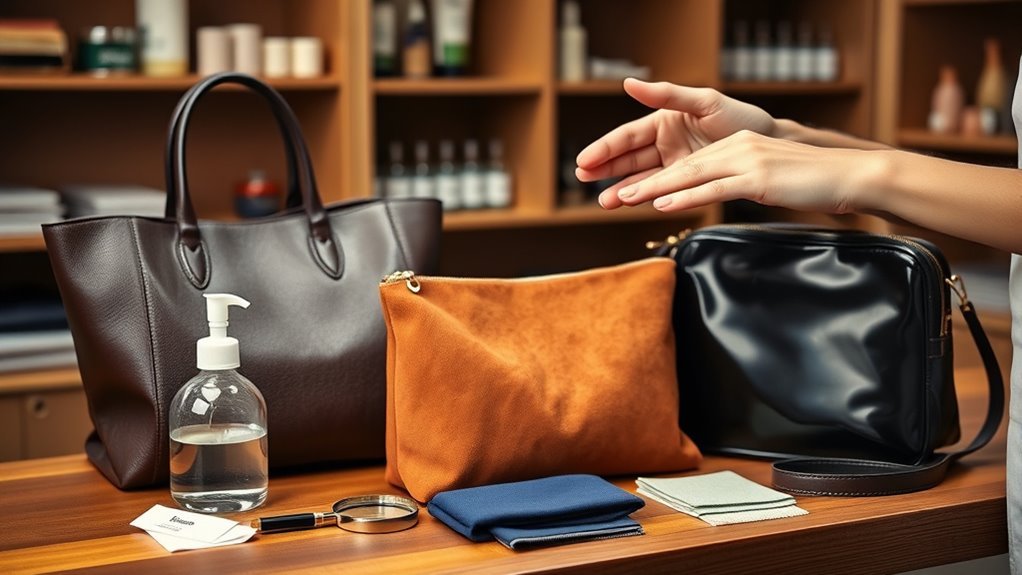
Most handbags should not go through ordinary dry cleaning. The solvents and tumbling can strip leather, dissolve glue, crack coatings, and warp the stiffeners that give a bag its shape. A plain fabric bag with a care label that allows dry cleaning is the main exception. For leather, suede, and structured bags, use spot cleaning or a specialist handbag or leather cleaner instead.
Can You Safely Dry Clean Your Handbag?

Dry cleaning washes items in a chemical solvent instead of water, usually in a large rotating drum. That works for clothes. A handbag is built differently, with layers of leather or fabric, glue, cardboard or foam stiffeners, and metal hardware. Solvent can strip the natural oils and dyes from leather and leave it dry, faded, and prone to cracking.
Check the care label first. A circle symbol means professional cleaning is allowed, and a crossed-out circle means it is not. Bags with beading, sequins, glued trims, or painted details are at extra risk, because solvent can loosen or discolor them.
If you want a professional clean, look for a handbag or leather specialist, not a general dry cleaner. Specialists clean by hand, with products matched to the material, and many can also recolor and recondition leather.
Many dry cleaners will refuse handbags for these reasons, or send them out to a specialist.
Which Handbag Materials Can Be Dry Cleaned?
It depends on the material and on how the bag is built. Soft, unstructured bags in cotton, polyester, or nylon can sometimes be dry cleaned if the label allows it, but most of them can simply be hand washed or machine washed instead.
Satin, silk, and velvet evening bags are often labeled dry clean only. Take these to a cleaner who handles delicate items by hand, and ask how they will treat the frame and lining.
Leather and suede should never go through a standard dry-cleaning machine. They need a leather cleaning process. Coated canvas, faux leather, and vinyl should not be dry cleaned either, because solvents can make the coating stiff, sticky, or cracked. Straw and raffia bags are cleaned dry, with a brush and a barely damp cloth.
Potential Risks of Dry Cleaning Your Handbag
The risks fall into a few groups, shown in the table.
| Risk | Impact |
|---|---|
| Material Sensitivity | Damage to leather, suede, or delicate fabrics |
| Structural Integrity | Weakened stitching and seams |
| Water Resistance Issues | Loss of protective coatings, increasing stains |
| Risk of Color Bleeding | Uneven fading or color transfer |
| Potential for Shrinkage | Altered shape, affecting usability and aesthetics |
Damage from solvent is usually permanent. Faded color, cracked coating, and a collapsed shape cannot be reversed, so when in doubt, choose a gentler method.
Alternatives to Dry Cleaning: What Are Your Options?
For most bags, spot cleaning is the safer route. Use a soft cloth barely dampened with water and a drop of mild soap, and work on one mark at a time.
For a deep clean, use a professional handbag cleaning service. They clean inside and out by hand and can treat stains, odors, and worn corners.
Be careful with steam. A little steam from a distance can freshen a fabric lining, but heat and moisture can loosen glue and mark leather, so keep it away from leather and structured bags.
Fabric bags can be cleaned with a foam upholstery cleaner made for delicate fabrics, after a patch test. Nylon and polyester bags clean up well with mild soap and water. Leather needs a cleaner and conditioner made for leather.
Whatever you use, test it on a hidden spot first, and let the bag air dry away from heat.
Signs Your Handbag Needs Professional Cleaning
Some problems are worth handing to a professional. Stains that do not lift with gentle spot cleaning are one. More scrubbing at home tends to spread them or damage the surface.
Odors are another. Smoke, mildew, and spilled perfume soak into linings and stiffeners, and airing alone may not shift them.
A stained or sticky lining, peeling edge paint, and dark, greasy handles also respond better to professional treatment.
For designer and vintage bags, ask before you try anything. A good specialist can clean and restore color without hurting the value, while a failed home attempt can.
Ask the cleaner what method they will use, and get a quote first.
Tips for Maintaining Your Handbag Between Cleanings
Regular light care keeps a bag from needing a deep clean at all:
- Wipe it down: Use a soft, dry microfiber cloth to remove dust and keep dirt at bay.
- Store wisely: Keep your handbag in a cool, dry place, using dust bags for protection while allowing air circulation.
- Rotate regularly: Switch up your handbags to minimize wear on straps and seams, extending their lifespan.
- Condition leather: Treat leather bags every 3-6 months to keep them moisturized and prevent cracks.
Frequently Asked Questions
Can You Clean a Leather Bag?
Yes, but not with water and soap alone, and not by dry cleaning. Wipe it with a soft, slightly damp cloth, use a cleaner made for leather on marks, and condition it every 3 to 6 months.
What Should You Not Use on Leather?
Avoid vinegar, alcohol, bleach, household sprays, and most wet wipes. They can strip the finish and dry out the leather. Use products made for leather.
How Do You Clean the Lining of a Handbag?
Empty the bag and vacuum or lint-roll the lining. Wipe marks with a cloth barely dampened with mild soapy water, keeping moisture away from the outside. Leave the bag open to air dry fully.
Conclusion
Dry cleaning is the wrong tool for most handbags. Check the care label, spot clean where you can, and use a handbag or leather specialist for anything more. Regular wiping, conditioning, and good storage will keep a bag from needing heavy cleaning in the first place.

