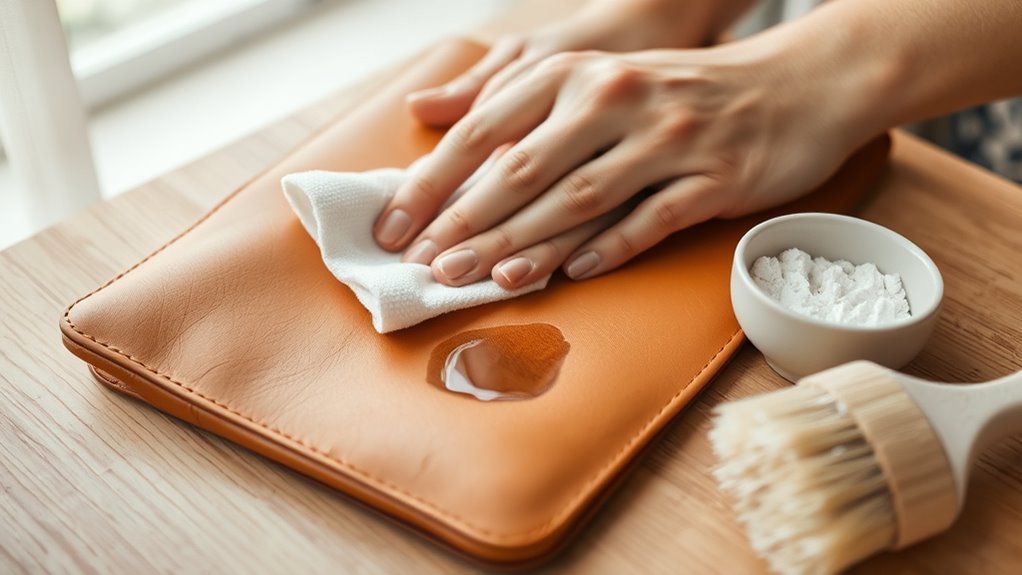
To remove an oil stain from a leather purse, blot it at once with a clean, dry cloth, without rubbing. Cover the stain with cornstarch or talcum powder and leave it for at least six hours, or overnight. Brush the powder off and repeat if the mark is still there. Do not use water, alcohol, or household cleaners on a fresh oil stain. When the stain has lifted, condition the leather. Old or large stains, and stains on suede, are best left to a professional.
Understanding Oil Stains and Why Timeliness Matters
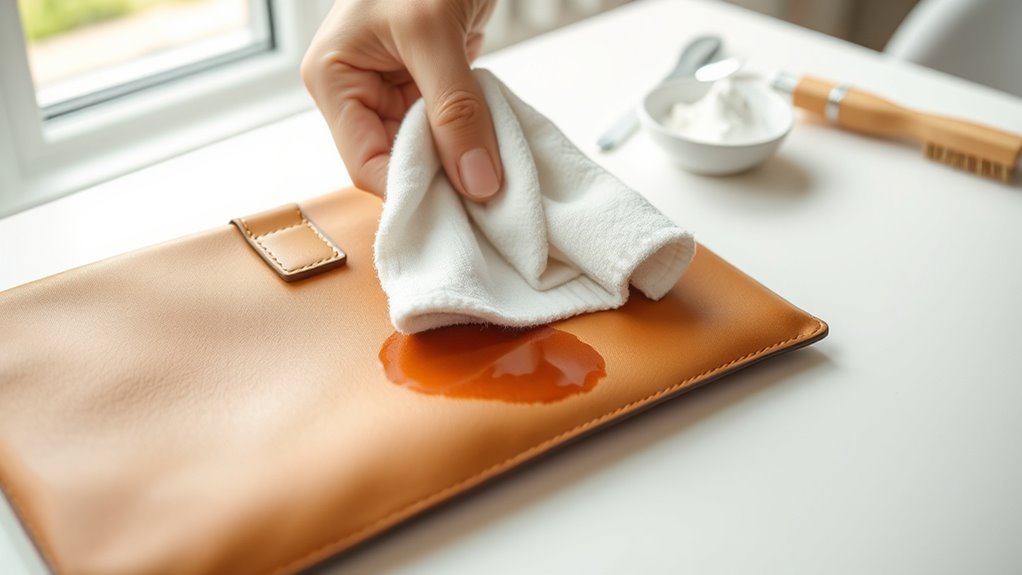
Oil soaks into leather the way it soaks into skin. The longer it sits, the deeper it goes, so speed matters more than anything else. A stain treated in the first few minutes comes out far more easily than one left for days.
Blot gently with a clean, dry cloth or paper towel. Press and lift. Do not rub, because rubbing pushes the oil deeper and spreads it sideways.
Then use an absorbent powder to draw the oil back out. This is the safest home method, because it adds no liquid and does not touch the finish.
Essential Tools You’ll Need to Tackle Stains
You need only a few simple things.
Cornstarch or talcum powder absorbs the oil. A clean, lint-free cloth is for blotting.
A soft brush removes the powder afterward. A leather cleaner and a leather conditioner finish the job.
Recommended Cleaning Products
Gentle products are enough for most oil stains.
Cornstarch, talcum powder, or plain baby powder all work as absorbents. Pile the powder on so the stain is fully covered, and do not rub it in hard. Leave it for at least six hours.
If a faint mark remains after two or three rounds of powder, use a cleaner made for leather, following its directions. Test it on a hidden spot first. Skip rubbing alcohol, which can strip the dye and finish.
Finish with a leather conditioner. Cleaning and powder both dry the leather a little, and conditioner puts moisture back.
Absorbent Materials Needed
The absorbent step does most of the work, so set it up properly.
Here is what you need for it:
- Cornstarch or Talcum Powder: Apply generously to the stain, letting it sit for at least six hours before brushing away.
- Clean, Dry Cloth: Use a lint-free cloth to gently blot the stain, preventing further oil spread.
- Soft-Bristled Brush: This tool is perfect for removing dried powders without damaging the leather surface.
- Distilled Water: Key for any cleaning, distilled water avoids mineral deposits from regular tap water.
Lay the purse flat with the stain facing up, so the powder stays in place.
Application Tools for Precision
A few small tools give you more control. The table shows what each is for.
| Tool | Purpose |
|---|---|
| Lint-free cloth | Blot excess oil to prevent spreading |
| Soft-bristled brush | Apply cornstarch/talcum powder for absorption |
| Cotton swabs | Targeted application of leather cleaner |
| Microfiber cloth | Buff leather for a smooth finish |
Use light pressure with all of them. Scrubbing can scuff the finish and leave a pale patch that looks worse than the stain.
Your Step-By-Step Plan to Remove Oil Stains From Your Leather Purse
Here is the full method in order:
- Blot the stain: Use a clean, dry cloth to absorb excess oil immediately.
- Apply absorbent powder: Sprinkle cornstarch or talcum powder on the stain and leave it for at least six hours to absorb oil before gently brushing it away.
- Use mild soap: For stubborn stains, use a leather cleaner, or a drop of mild, clear soap in warm water. Dampen a cloth with it, ensuring it’s not soaked, and gently wipe the area.
- Patch test: Always conduct a patch test on an inconspicuous spot before applying any cleaning method.
Be patient. Each round of powder pulls out a little more oil, and a stain often keeps fading for a day or two as the last traces spread out and blend in. Condition the leather once you are done.
Avoid These Harmful Products for Leather
Some products make an oil stain worse or damage the leather around it.
Avoid bleach, ammonia, and nail polish remover. They strip color and finish and can leave a permanent pale spot. Baby wipes and household sprays can also dull or dry the surface.
Avoid vinegar and other acids, which can damage the finish. Do not use dish soap straight from the bottle, and do not soak the area with water. Water does not dissolve oil, and it can leave a ring of its own.
Use products made for leather, and test each one on a hidden spot before you put it on the stain.
Conditioning Your Leather Purse After Stain Removal
Once the stain is out, condition the leather. The treated area may look slightly dry or lighter than the rest.
Choose a conditioner suited to your type of leather. Finished leather takes most standard conditioners. Suede and nubuck must not be conditioned with creams. Use a suede brush and a suede protector on them instead.
After that, conditioning every 3 to 6 months keeps the purse supple.
Importance of Conditioning Leather
Conditioning does several useful things after stain removal.
The main benefits are:
- Restores the leather’s natural finish, improving appearance.
- Prevents dryness, cracking, and fading over time.
- Seals the leather, reducing the risk of future stains.
- Keeps your purse supple and resilient with regular application.
Condition the whole panel, not just the treated spot, so the color and sheen stay even.
A well-conditioned surface is also a little more resistant to the next spill.
Choosing the Right Conditioner
The wrong conditioner can darken leather or leave it greasy, so choose with care.
Pick a product made for handbags or fine leather goods. Heavy oils such as mink oil or neatsfoot oil, which are meant for boots, can darken a purse for good.
Put a small amount on a soft cloth and spread it thinly and evenly. Let it soak in for about 15 minutes, then buff with a clean cloth.
Test first on a hidden area, especially on light-colored leather.
Use less than you think you need. Too much conditioner leaves a sticky film that attracts dirt.
When to Seek Professional Help for Leather Care?
Stop and see a professional in these cases:
Here are some key indicators:
- You’ve attempted two or three at-home cleaning methods with no improvement.
- Your leather item is high-value or antique, needing specialized knowledge and equipment.
- The stain has set for an extended period, risking irreversible damage.
- Cumulative damage from your cleaning attempts exceeds the original stain issue.
A leather specialist can use degreasers made for leather, and can recolor the area if the stain or the cleaning has changed the shade.
Suede, nubuck, and untreated leathers such as vachetta are the hardest to treat at home.
Common Leather Care Questions
A few questions come up often. First, does the type of leather matter? Yes. Finished leather has a protective coat, so oil sits near the surface and lifts more easily. Unfinished and aniline leathers absorb oil quickly and may keep a faint shadow.
Second, what about old stains? Powder still helps, but you may need several rounds over a few days. An old stain may lighten without disappearing.
Third, can you prevent oil stains? Keep hand cream, makeup, and food in a pouch, and handle the purse with clean hands. A leather protector spray adds some resistance.
Frequently Asked Questions
How Do I Clean a Vintage Leather Bag?
Go gently. Dust it with a soft cloth, clean it with a leather cleaner after a patch test, and condition it lightly. Old leather can be dry and fragile, so avoid soaking or scrubbing. For a valuable bag, ask a specialist first.
What Should You Not Use on Leather?
Do not use bleach, ammonia, vinegar, alcohol, or nail polish remover on leather. They damage the finish and can remove color.
How to Remove Oil From a Purse?
Blot it, cover the stain with cornstarch or talcum powder, and leave it for six hours or overnight. Brush it off and repeat as needed. Then clean with a leather cleaner if a mark remains, and condition the leather.
Conclusion
Act fast, blot without rubbing, and let an absorbent powder draw the oil out. Repeat the powder before you reach for any liquid, avoid harsh products, and condition the leather afterward. If the stain is old, large, or on suede, a professional gives the best chance of a clean result.

