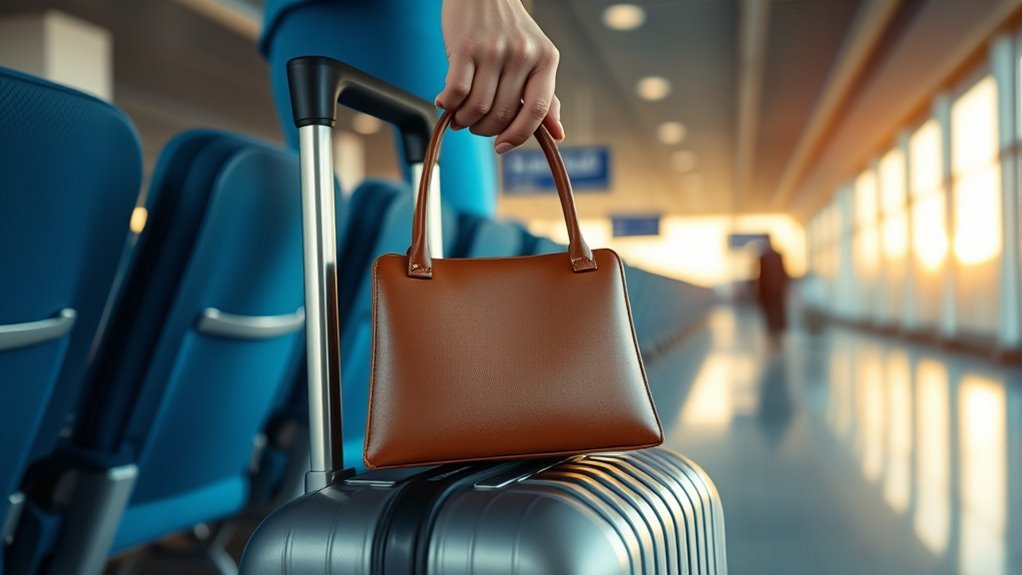
Yes, a purse usually counts as a personal item on a domestic flight, as long as it fits under the seat in front of you. American Airlines publishes a limit of 18 x 14 x 8 inches, Delta publishes no size and only requires that the bag fit under the seat, and other airlines set their own limits, so check your airline before you fly. If your purse is too big, switch to a smaller bag or pack it inside your carry-on.
Does a Purse Qualify as a Personal Item for Airlines?
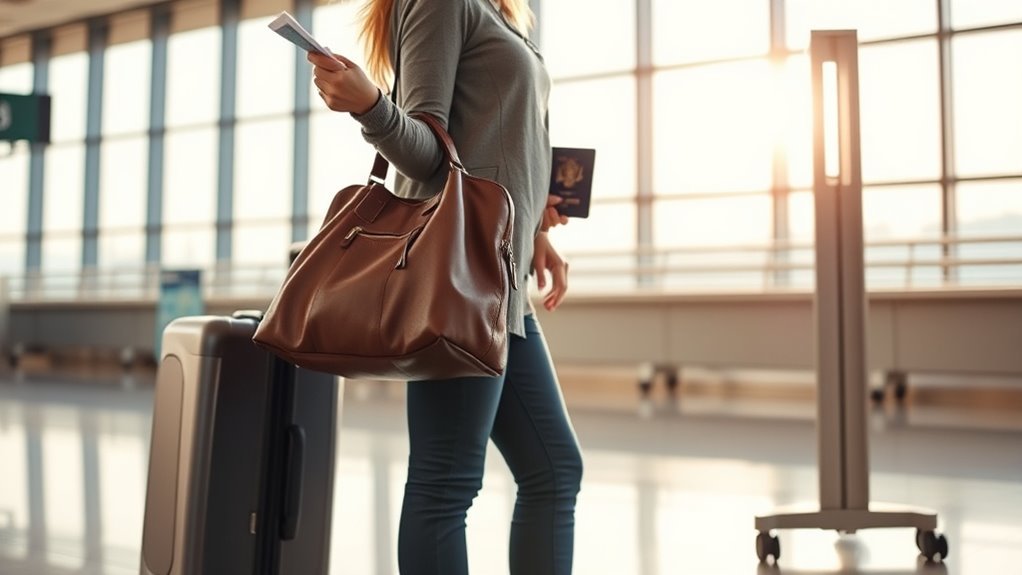
Most airlines allow a purse as your personal item, provided it fits under the seat in front of you.
Many major carriers let you bring one personal item and one carry-on, although the fare type can change this. If you are also bringing a baby bag, see our guide to diaper bag carry-on rules.
A roomy handbag or tote that stays within the size limit lets you carry more in your personal item.
Budget carriers may enforce limits more strictly, so check the airline policy and measure your purse against its dimensions.
Do Airlines Have Different Rules for Personal Items?
Size limits vary between airlines, especially between budget carriers and major airlines, so a purse that is fine on one flight can be too large on another.
Airline-Specific Size Restrictions
Airlines set their own personal item limits, and some publish no size at all. For example, American publishes 18 x 14 x 8 inches, while Delta only requires that the bag fit under the seat. Policies change, so confirm on your airline’s website before you pack.
Budget Carrier Regulations
Budget carriers often charge for carry-on bags and give you only one free personal item, so they are more likely to measure it at the gate.
Points to keep in mind:
- Frontier publishes 18 x 14 x 8 inches for its free personal item and uses sizers at the gate.
- You usually cannot bring anything beyond your single personal item without paying.
- Purses may qualify, but they must fit completely under the seat.
- Policies can vary greatly, so check each airline’s personal item guidelines before flying.
- To avoid fees, pack efficiently and leave room for air in your purse.
Personal Item Definitions
A personal item is a small bag that fits fully under the seat in front of you. Most major airlines allow a purse as a personal item, although low-cost carriers can be stricter.
How to Measure Your Purse for Personal Item Compliance
Measuring your purse for personal item compliance is a straightforward process that can save you from unexpected hassles at the airport.
To check your purse against a limit such as 18 x 14 x 8 inches, follow these steps:
- Use a flexible measuring tape for accuracy.
- Measure the length, width, and height, including handles, wheels, or straps.
- Confirm your purse can fit comfortably under the seat in front of you.
- If it’s larger, consider packing it inside a larger bag to maximize space.
- Always check your airline’s specific policies, as some may have stricter size regulations.
What If Your Purse Is Too Big?
If your purse is too big, check the airline’s dimensions and see whether you can downsize. If not, switch to a smaller bag that fits under the seat.
Alternatives that usually fit under the seat include a slim backpack, a compact tote, or a crossbody bag. A flat travel organizer inside a larger bag also helps.
Packing pouches help you use the space well, and a smaller bag helps you avoid extra fees.
Tips for Efficient Packing With Your Personal Item
Pack your personal item so the essentials are easy to reach and the bag stays within the size limit.
Here are some tips to streamline your packing:
- Choose a larger handbag or tote: It gives you more space for your essentials.
- Keep everyday items accessible: Place travel documents and electronics at the top for easy access.
- Avoid overstuffing: Leave some space to prevent exceeding size limits at the gate.
- Check the size limit: American publishes 18 x 14 x 8 inches, and other airlines differ.
- Pack a collapsible bag: This can be handy for unexpected extra items.
Are Extra Personal Items Allowed on Some Airlines?
Whether you can bring a second item depends on the airline and the fare. Many full-service carriers allow one carry-on and one personal item, such as a purse.
However, low-cost airlines usually include only one free personal item in the base fare and charge extra for a carry-on bag.
Personal items must fit under the seat in front of you, so check your airline’s size limit before you pack.
If you need more space, check whether the airline sells a carry-on option for your fare, and confirm the policy before you travel.
How Knowing These Rules Can Make Your Travel Easier
Here are five key points to keep in mind:
- A purse usually qualifies as a personal item if it meets size restrictions (around 18 x 14 x 8 inches).
- Check your airline’s policies to avoid unexpected fees or gate-checking your bag.
- Pack efficiently to keep essentials easily accessible during the flight.
- Remember that low-cost airlines may impose stricter size limits.
- Knowing the rules can streamline your boarding experience and boost your comfort.
Frequently Asked Questions
Does a Purse Count as a Personal Item?
Yes, in most cases. Make sure it fits under the seat in front of you and stays within your airline’s published size, which is 18 x 14 x 8 inches at some airlines and unpublished at others.
Conclusion
Your purse can count as a personal item on a domestic flight if it fits under the seat, but limits vary by airline, so check yours before you travel. Measure the purse, pack the essentials on top, and leave a little room so it is not overstuffed. Limits above were checked against published figures in 2026; confirm on your airline’s own page.
Sources: GearUp Travel, Personal Item Size by Airline (2026); Seatmap, What fits under an airplane seat.