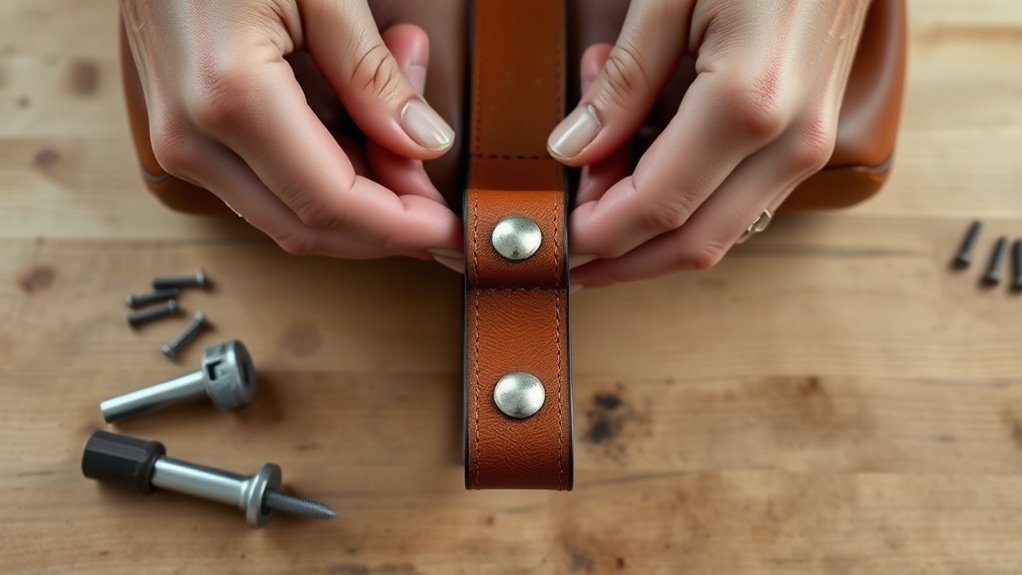
To fix loose handbag rivets, first check the strap for cracks and fraying, then remove the loose rivet, reinforce the hole with a patch or washer, and set a new double-cap rivet, a screw rivet or a stitched attachment in the reinforced spot. Test the strap under a normal load before you rely on it.
Why Handbag Rivets Come Loose
Rivets loosen from repeated flexing and heavy loads, which gradually work the rivet and the material around it. Moisture can make leather and fabric softer and weaker, so the hole stretches. Over time, normal wear at stress points wears out the material, so the rivet no longer has anything solid to grip. Spotting a loose rivet early lets you repair the area before the strap tears away. For a strap that has already torn away, see how to fix a torn bag strap attachment.
Check the Strap Strength First
A new rivet in a weak strap will not last, so inspect the strap before you repair anything. Run your fingers along its length and look for cracks, deep creases, thinning, fraying and loose stitching. Press and bend it gently, and check how the material behaves near the rivet. Hang the bag by the strap and see whether it holds a normal load without stretching or creaking. If the strap is brittle, cracked or badly worn, replacing it is a better option than repairing the rivet.
Tools for Rivet Repair
- A drive punch or hole punch, sized for the rivet
- A rivet setter and anvil, designed for the rivet type, with a hammer or mallet
- New rivets of the right size and length, which are usually copper, brass or steel
- Leather or fabric washers and a patch, for backing
- A small screwdriver and a removable thread-locking compound, for screw rivets
- A flat, hard work surface
How to Reattach a Double-Cap Rivet
- Place the bag on a hard, flat surface, with the strap tab laid over the attachment point.
- Remove the old rivet, if it is still in place, by cutting or drilling off the cap carefully. Do not damage the surrounding material.
- Check the hole. If it has stretched or torn, reinforce it, as described below, and punch a new hole in the reinforced area.
- Push the post, or male cap, through the layers from the inside of the bag, so that the head sits neatly against the lining.
- Place the female cap over the post, set the rivet setter on top and strike it with a few firm, even taps, until the rivet is tight and flat.
- Check that the cap is straight and the strap does not move.
Choose a rivet whose post length suits the thickness of all the layers. If the post is too long, it will bend, and if it is too short, it will not hold.
How to Tighten Screw Rivets
Screw rivets, which are made of a post and a screw, can be tightened with a screwdriver, until they sit flush and do not turn. Do not overtighten, since this can strip the thread or crush the material. If a screw keeps loosening, clean the threads, and use a small amount of a removable thread-locking compound. If the thread is stripped, replace the whole rivet.
Reinforce Worn Rivet Holes
When a hole has stretched or torn, a rivet alone will not stay. Reinforce it first.
- Cut a strip of leather or heavy fabric to cover the weak area on the inside of the strap or bag.
- Place it behind the rivet position, and set the rivet through all the layers.
- Add a few stitches around the patch with heavy thread, to hold it in place.
- Use rivets of a material that resists corrosion, such as brass or copper.
Check the area from time to time, and fix any loosening early.
Test the Strap Under Real Weight
Load the bag with a light weight first, and add more in small steps, up to your normal load. Hang the bag by the strap, and look at the rivets, the stitching and the material around them. Tug the strap gently, and check that nothing shifts. After a few days of normal use, check the rivet area again for signs of loosening. If a rivet moves, redo it, with stronger reinforcement.
Repair or Replace the Strap?
- Repair if the strap is in good condition and only the rivet has loosened.
- Add stitching along with the rivet, for a stronger attachment.
- Replace the strap if it is cracked, stretched, brittle or worn thin.
- Choose a replacement strap that suits the design of the bag and the load that you carry.
For straps that slip through a buckle, see how to fix a slipping bag strap buckle, and for squeaking hardware, see why a handbag strap squeaks. If you wear the bag with a baby carrier, check the strap and rivets regularly, as how to carry a bag with a baby carrier explains.
Frequently Asked Questions
How Do I Make Bag Straps Stronger?
Use strong materials, such as leather or heavy webbing, reinforce the attachment points with a backing patch and use heavy thread or quality rivets.
How Do I Fix My Handbag Strap?
Check the rivets, tighten or replace them, reinforce the area and test the strap under load.
How Do I Make a Leather Bag Stiff Again?
Stuff it, add a base insert and condition dry leather lightly. For deeper structural wear, see a repair specialist.
How Do I Make a Bag Strap Tighter?
Shorten it through its buckle or slider, and add friction if it slips.
Conclusion
Loose rivets are simple to fix when you check the strap first, reinforce the hole and set a new rivet properly. Test the repair under a normal load, and check it regularly, and the strap will hold.