
To open a purse with one hand without dropping items, steady the bag first. Brace it against your hip or thigh, rest it on a surface or wear it crossbody so it cannot tip. Then open the closure with your thumb and fingers, and take out one item at a time. A bag with a magnetic snap or a zip with a large pull, a wide opening and a firm base is the easiest to manage. Keeping things in pouches and fixed pockets stops them from spilling.
How to Open a Purse With One Hand
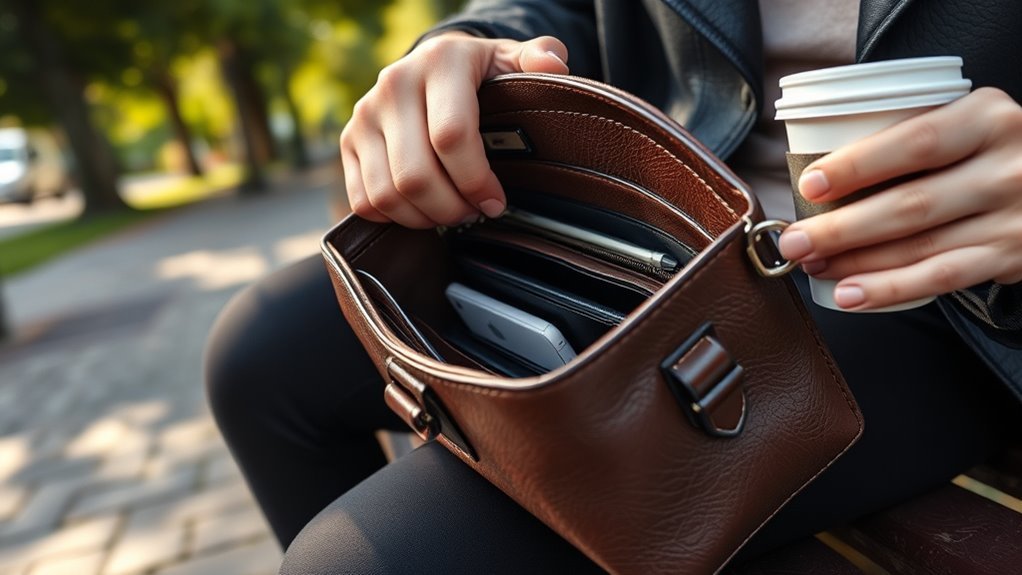
Opening a bag with one hand is a common need. You may be holding a child, a coffee, a phone or a handrail, or you may have the use of one hand only. The method is the same in each case: steady the bag, open it, then reach in.
Start by giving the bag support, because a bag that swings or tips is what causes spills. If you are standing, press it against your hip or the front of your thigh with your forearm. If you are sitting, rest it on your lap. If there is a counter or table, set it down. A crossbody bag is the easiest, since the strap holds it against your body for you.
Next, open the closure. For a zip, hook a finger through the pull and draw it along while your forearm keeps the bag pressed to your body. If the zip sticks, pin the end of the zipper against your body with your palm to give it tension. For a magnetic snap, slide your thumb under the flap and lift. For a turn lock, twist it with your thumb and forefinger. Open the bag only as far as you need.
Then reach in for one item at a time. Keep the things you use most, such as your phone, cards and keys, in the same pocket near the top, so you can find them by touch. Close the bag again before you walk on.
Tips for Preventing Spills While Opening
Most spills happen when the bag tips or when loose items ride up with the thing you are pulling out. The habits in the table below prevent both.
| Tip | Benefit | Example |
|---|---|---|
| Use spill proof closures | Keeps items secure | Opt for magnetic snaps or zippers |
| Organize with pouches | Minimizes loose items | Store makeup in a small pouch |
| Hold steady against body | Provides better control | Use your elbow to brace the purse |
| Regularly declutter | Reduces weight and potential spills | Toss out old receipts and wrappers |
Organizing Your Purse for Quick Access
A well-organized bag is much easier to use with one hand. Group small items in pouches: one for cosmetics, one for cables and one for anything loose. A pouch comes out in one piece, so nothing scatters.
A purse organizer insert gives a soft bag fixed pockets and keeps it open at the top, so you can see inside. Give each everyday item its own pocket and always put it back there. After a few days you will reach for it without looking.
Clip your keys to an inner ring or a key leash. They are easy to find, and they cannot fall out when you take out your wallet. A phone pocket on the outside or just inside the opening saves the most digging.
Empty the bag once a week. Fewer loose items mean less to spill, and a lighter bag is easier to hold steady.
Key Features of an Ideal Purse for One-Handed Use
Some bags are much easier to open with one hand than others. If you often need a free hand, check these features before you buy. The first is a wide opening that stays open by itself, so you do not have to hold the sides apart.
The second is structure. A bag with a firm base and sides stands up when you set it down and does not collapse around your hand. A light bag is also easier to brace against your body.
The third is the strap. A crossbody strap, adjusted so the bag sits at your hip, holds the bag in place while your hand works. A top-handle bag has to be put down or hooked over your forearm first.
Inner pockets matter as well. A zip pocket for valuables and slip pockets for a phone and cards keep the main compartment clear.
Finally, look at the closure. A magnetic snap is the quickest to open and close with one hand. A zip with a long pull or a ring is easy too, and it is more secure. Drawstrings, buckles and twist locks on soft flaps usually need two hands. A zip-top bag with an outside slip pocket for your phone gives a good balance of security and access.
A bag with these features will make daily use noticeably easier.
When One-Handed Access Helps Most
One-handed access matters most when your other hand is busy and you cannot put anything down. Travel is the obvious example. At a ticket gate or an airport check, you hold a suitcase handle with one hand and need your phone or passport with the other.
Public transport is another. You hold a rail or strap while the vehicle moves, and you still need your card or ticket. A crossbody bag worn in front, with the card in an outer pocket, solves this.
Parents know the problem well. With a baby on one hip, everything from keys to wipes has to come out with one hand. The same is true for anyone who uses a cane or crutch, or who has an injured arm.
In each case, the answer is the same: a bag that stays put, a closure that opens easily and a fixed place for the things you reach for most. In crowded places, close the bag again straight away for security.
Frequently Asked Questions
What Are the Different Ways to Hold a Handbag?
You can carry a handbag in your hand by its top handles, in the crook of your arm, on one shoulder or across your body. For one-handed use, crossbody is best, because the strap holds the bag in place and leaves both hands free.
How to Open a Clutch Purse?
Tuck the clutch under your arm or press it against your body with your forearm. Then open the clasp with the thumb and fingers of the same hand. A magnetic flap lifts with the thumb. A kiss-lock frame opens when you push the two knobs past each other. A wrist strap keeps the clutch from falling.
How to Minimize What You Carry in Your Purse?
Carry only what you use every day: phone, cards, keys and a few small essentials in one pouch. Empty the bag weekly, and remove coins, receipts and duplicates. A smaller bag also limits what you can bring.
Which Purse Closure Is Easiest to Open With One Hand?
A magnetic snap is the easiest, followed by a zip with a large pull. Twist locks are manageable on a firm flap. Drawstrings and buckles usually need two hands.
Conclusion
Opening a purse with one hand is mostly a matter of preparation. Steady the bag against your body or wear it crossbody, choose a closure you can work with your thumb and keep your everyday items in fixed places. Take out one thing at a time and close the bag again. With a little practice, it becomes automatic.

