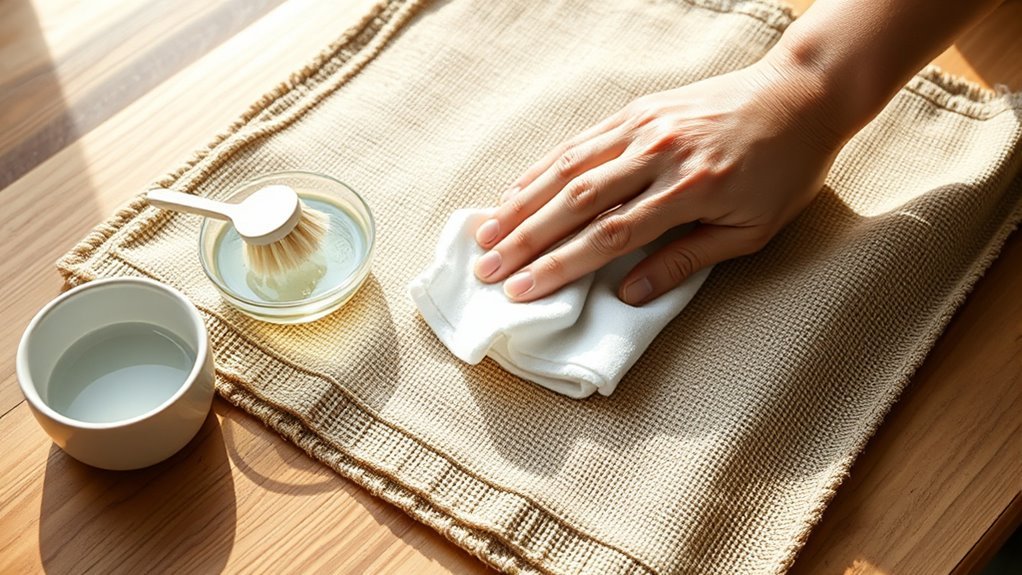
To clean a jute tote bag without soaking its fibers, brush off dry dirt, blot stains with a cloth dampened in cold water and a little mild detergent, press the cloth on the spot instead of rubbing, then let the bag dry flat in a shaded, ventilated place. Never machine wash jute, and never leave it wet, because the fibers swell, weaken and can grow mildew.
Why Jute Needs Gentle Cleaning
Jute is a coarse plant fiber that absorbs water readily. Once wet, it takes a long time to dry, it can darken or lose its shape, and damp fibers are an invitation to mildew and a musty smell. Many jute totes also have a laminated or cotton lining, glued trim or printed designs that do not like water. For these reasons, small amounts of moisture applied carefully work better than washing. For more about the fiber and its limits, see jute tote bag material explained.
How to Spot Clean a Jute Bag: Step by Step
- Empty the bag, turn it upside down and shake it out. Use a soft brush or a lint roller to remove surface dust and loose fibers.
- Mix a few drops of mild liquid detergent into a small bowl of cold water.
- Dip a clean white cloth in the solution and wring it out until it is only slightly damp.
- Blot the stain, working from the outside edge toward the center, so that it does not spread. Do not scrub, because rubbing pushes the stain deeper and fuzzes the fibers.
- Blot again with a second cloth dampened in plain cold water to lift the soap.
- Press the area with a dry towel to take up as much moisture as possible.
- Let the bag dry flat on a towel in a shaded, ventilated place.
Test the detergent first on a hidden spot, such as the inside of the bag or under a handle. Dyed jute can bleed, and printed designs can smear, so avoid the printed area as much as you can.
How to Remove Grease From Jute Bags
Grease marks are common on jute, from food, hand cream or oily bags of produce. Deal with them as soon as you can.
- Blot off any excess with a paper towel. Do not rub.
- Cover the stain with a thick layer of cornstarch or baking soda, and leave it for several hours or overnight, so that it absorbs the oil.
- Brush the powder off with a soft brush, and repeat if the mark is still visible.
- If a shadow remains, dab with a cloth dampened in cold water with a drop of mild dish soap, then blot with a clean damp cloth and dry.
Avoid hot water and strong solvents on jute, which can set the stain or damage the fibers and any lining.
Other Common Stains
- Mud or dirt: let it dry completely, then brush it off. Wet mud smears into the weave.
- Food and drink spills: blot at once, then use the spot-cleaning method above.
- Ink: ink often will not come out completely. Blot gently and avoid spreading it.
- Mildew spots: brush off dry spores outdoors, wipe lightly with a barely damp cloth and dry the bag very well in a ventilated place. If the smell or growth persists, the bag may not be worth keeping.
How to Air Dry Your Jute Bag
Correct drying is as important as cleaning.
- Reshape the bag with your hands, and stuff it loosely with clean, dry towels or paper to help it keep its shape and to absorb moisture. Replace them if they become damp.
- Set it flat or hang it by the handles in a ventilated area, out of direct sun, which can fade and weaken the fibers.
- Turn it over once, so that both sides dry.
- Do not use a dryer, radiator or hair dryer, since heat can shrink, stiffen and discolor the fiber.
- Make sure the bag is completely dry before you store or use it.
Cleaning the Lining
Jute totes often have a cotton or laminated lining. For a fabric lining, turn it out if you can, wipe it with a damp soapy cloth and rinse with a clean damp one. For a laminated lining, wipe with a damp cloth. Keep water away from the outer jute and any glue seams, and leave the bag open until the inside is dry.
Maintenance Tips to Extend the Life of Jute Bags
- Check regularly for loose threads. Trim them with scissors, and do not pull them, since pulling can unravel the weave.
- Store the bag in a cool, dry place, with airflow, and not sealed in plastic.
- Avoid carrying wet items, such as wet towels or just-washed produce, unless the bag has a waterproof lining.
- Fold the bag with care, or hang it, so it does not get sharp creases. See how to fold a tote bag without deep creases.
- Do not overload the handles, because jute is strong but can fray at the attachment points.
Why Gentle Cleaning Matters
- Harsh detergents can discolor or weaken the fiber.
- Soaking can warp the bag and leave it musty.
- Spot cleaning removes the stain without wetting the whole bag.
- Careful cleaning keeps the natural look and extends the life of the bag.
Similar care applies to other natural-fiber bags, such as woven straw, covered in how to clean a straw bag. For the broader tote style, see what a tote bag is, and for a canvas bag that can be washed, see how to wash a canvas tote bag.
Frequently Asked Questions
Can Jute Be Washed in a Washing Machine?
No. Machine washing can warp the weave, weaken the fibers and damage the lining. Spot clean instead.
How Do I Clean a Leather Tote Bag?
Wipe it with a soft damp cloth, treat marks gently, and condition it every few months. Leather needs different care from jute, as covered in how to condition leather.
How Can I Clean a Bag Without Washing It?
Brush off dry dirt, blot stains with a damp cloth and mild soap, and let the bag air-dry in the shade.
How Do I Clean the Inside Lining of a Bag?
Dampen a soft cloth with mild soapy water, wipe the lining, rinse with a clean damp cloth and dry it with the bag open.
Conclusion
Jute bags clean best with a light touch: brush, blot, dry flat and keep water to a minimum. Treat stains early, avoid soaking and heat, and the bag will keep its shape and its natural look.