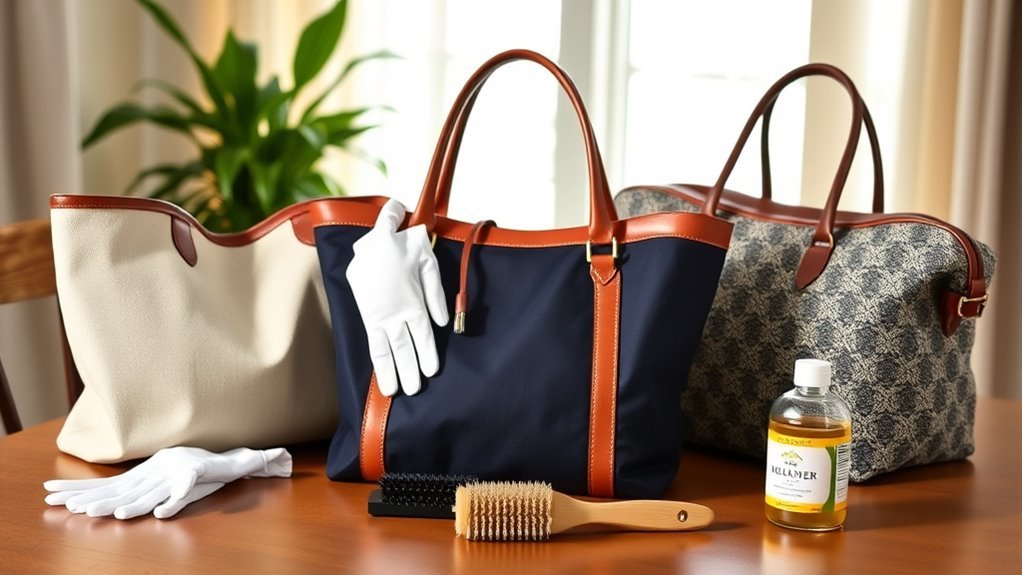
To care for a bag with leather trim and a fabric body, clean each material separately. Wipe the leather with a barely damp cloth and condition it every few months, spot clean the fabric with mild soap and lukewarm water, and keep the two from rubbing dye onto each other. Store the bag stuffed with acid-free tissue in a breathable dust bag, away from sun and damp.
Why Regular Cleaning Is Important
Dirt, skin oils and dust build up on both leather and fabric, and the longer they stay, the harder they are to remove. On a bag with leather trim, the handles and corners take the most contact, so they darken and wear first, while the fabric picks up stains from spills and the environment. A short routine prevents buildup, and it lets you notice early signs of wear, such as frayed stitching, dry patches or loose hardware, while they are easy to repair.
Cleaning the Leather Trim
- Wipe the trim with a soft, dry cloth to remove dust.
- Dampen a clean cloth with lukewarm water, wring it out until it is barely wet, and wipe the leather gently. Do not soak it, since water leaves marks and dries the hide.
- For dirt that stays, use a small amount of a leather cleaner made for the finish of your bag, following its instructions. Test it on a hidden spot first.
- Let the leather dry naturally, away from heat and sun.
- Once it is dry, apply a thin layer of leather conditioner, if the leather is a finished type that takes conditioner.
Do not use conditioner on suede or nubuck, and be careful on pale or untreated leather, which can darken. A general guide to the method is in how to condition leather and how to condition a leather bag without leaving it greasy. For a fuller cleaning method, see how to clean a leather purse without stripping its finish. Condition every three to six months, or when the leather starts to feel dry.
Cleaning the Fabric Body
For light dirt, brush the fabric with a soft brush, and wipe with a damp cloth. For a stain, mix a few drops of mild detergent into lukewarm water, dab the spot from the outside edge inward, and blot with a clean damp cloth. Keep the leather trim as dry as you can, and avoid saturating the seams where the fabric meets the leather. Test the solution on a hidden area first, because some dyed fabrics can bleed.
Let the bag air-dry, away from direct sun and heaters. Do not machine wash a bag with leather trim, since the leather can shrink, stiffen or stain the fabric. For fabrics that can be washed, such as plain canvas without trim, see how to wash a canvas tote bag.
Protect the Fabric From Leather Dye Transfer
Dark leather can sometimes transfer color to pale fabric, particularly when it is damp or rubbed. Keep the bag dry, wipe off moisture promptly and avoid leaving the bag packed against light-colored clothing. If a stain forms where the trim meets the fabric, treat it early, before it sets, with a damp cloth and a mild soap, blotting gently.
Top Storage Tips for Leather and Fabric Bags
- Stuff the bag lightly with acid-free tissue or a clean cotton cloth, so that it keeps its shape.
- Store it in a breathable cotton dust bag, and avoid sealed plastic bags and containers, which trap moisture.
- Keep it in a cool, dry place, with moderate humidity, away from windows, radiators and damp walls.
- Hang the bag by its handles only if it is light. Otherwise, store it upright on a shelf with space around it.
- Do not stack heavy items on top of it.
For more detail, see how to store handbags. If a bag has been crushed in storage, how to reshape a crushed handbag without risky heat shows a safe method.
How to Protect Your Bags From Damage
- Do not put the bag on the floor, where it picks up dirt and moisture. Use a hook or a chair back.
- Keep it out of direct sunlight, which fades fabric and dries leather.
- Avoid overfilling, which stretches the handles and strains the seams.
- Carry pens and makeup in a pouch, to keep ink and cosmetics from marking the lining.
- Let the bag dry naturally if it gets wet, and stuff it to keep its shape.
Spotting Early Wear and Repairs
Check the bag every few months. Look at the stitching where leather joins fabric, at the edges of the trim, at the corners and at the hardware attachments. Small fixes are easy: trim loose threads, re-stitch a loose seam and re-attach a strap before it fails. For deeper damage, see how to repair a leather bag tear, how to repair torn faux leather, or how to replace bag grommets without tearing fabric. Leather trim that is cracked or peeling beyond home repair may be a job for a professional.
When to Use a Professional
Consider a specialist for valuable bags, deep stains, major repairs to leather, or dye problems that you cannot solve at home. A professional can often restore the color, re-stitch worn areas and replace trim with matching material, which is safer than trying a risky method.
Frequently Asked Questions
How Do I Clean a Leather Bag With Home Products?
Use a barely damp soft cloth with a drop of mild soap, wipe gently, then wipe with a cloth dampened in plain water and dry it naturally. Avoid household oils, vinegar and strong cleaners, which can stain or dry the leather.
What Is the Best Way to Wash a Canvas Bag?
Shake out debris, spot clean stains with mild soap and cool water, and air-dry the bag. If the bag has leather trim, do not soak it.
What Should You Not Use on Leather?
Avoid alcohol-based products, bleach, harsh solvents and oils, which can strip or darken the finish. Do not apply heat, such as a hair dryer.
Conclusion
A bag with leather trim and a fabric body needs two kinds of care. Clean and condition the leather gently, spot clean the fabric, store the bag stuffed and breathable, and check it regularly, and both materials will age well.