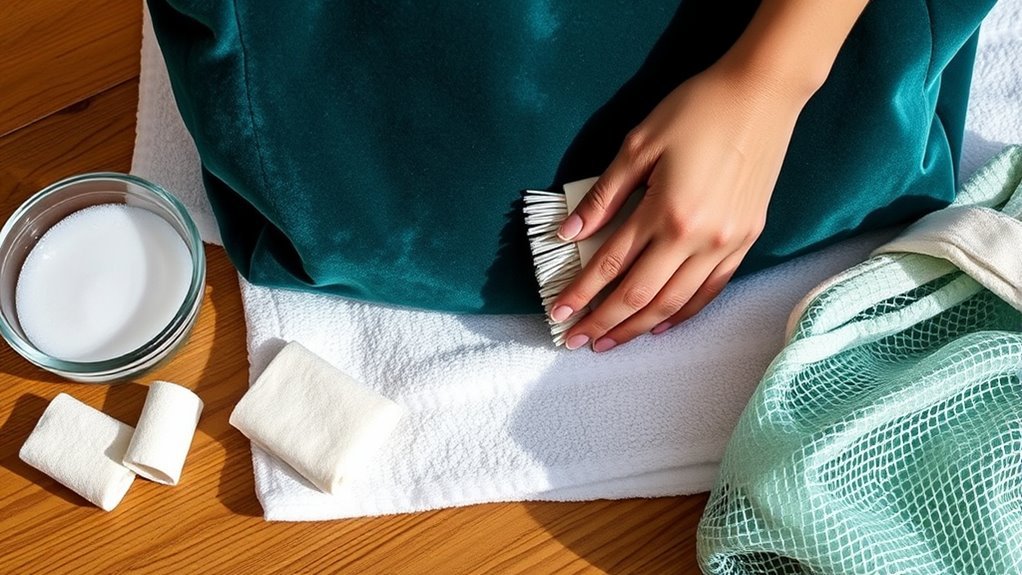
To clean a velvet bag without crushing the pile, work dry first. Lift dust with a soft brush or a vacuum on low suction. Blot spills at once, and treat stains with very little water. Never rub or press the fabric. Let the bag air dry, then brush the pile back up. One warning: silk and rayon velvet mark easily with water, so those are best left to a dry cleaner.
What You Need to Know About Velvet and Its Care
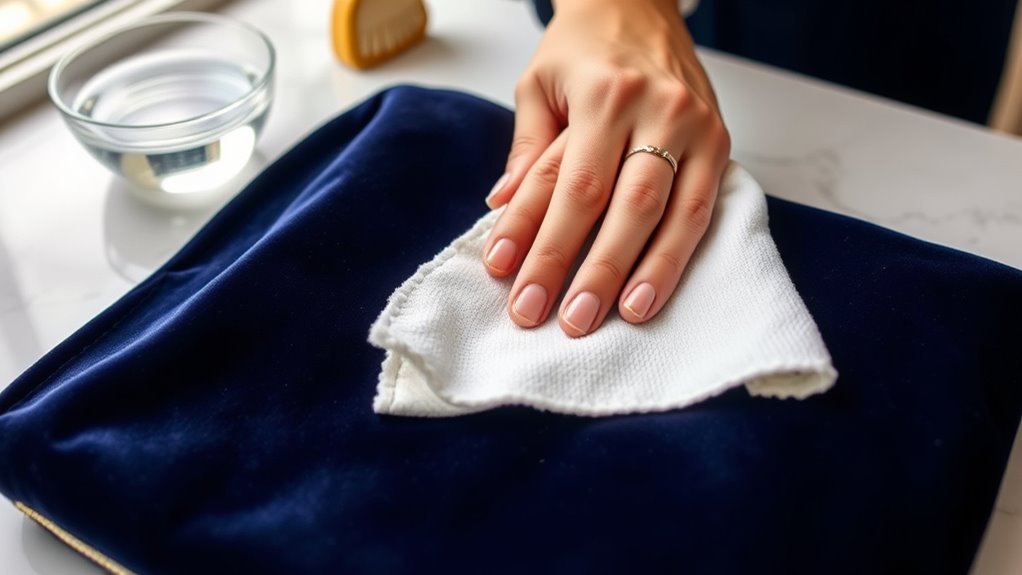
Velvet has a raised surface called the pile. Thousands of short fibers stand upright. That is what makes it soft and gives it its sheen. Pressure, rubbing, and moisture can flatten those fibers and leave dull marks.
The fiber matters. Polyester and cotton velvet can take a little water. Silk, rayon, and viscose velvet can water-spot or go stiff, so keep them dry and use a professional cleaner for real stains. Check the label inside the bag if there is one.
Two more basics. Keep velvet out of direct sun, which fades it. And never iron it. If the pile is flat or creased, hold a garment steamer a few inches away and keep it moving. Then brush the pile up while it is still slightly damp.
Preparing Your Velvet Bag for Cleaning
Before you clean, look the bag over in good light and find the spots that need work.
Then gather your supplies so you are not hunting for a cloth while a stain sets.
A few minutes of prep keeps you from using more water or pressure than the fabric can take.
Assessing the Condition First
Start with a close look at the whole bag.
Note any stains, flat patches, or worn areas. Brush the surface lightly with a soft brush to remove loose dust. Brush in the direction the pile lies.
Check for a care label. If it says dry clean only, or if the velvet is silk or rayon, do not use water on it. Take it to a cleaner who handles handbags.
Empty the bag. Shake out crumbs, and pull the lining out if it is loose enough to reach. The lining often needs a wipe too.
Gathering Cleaning Supplies Needed
You need a soft clothes brush or velvet brush, two or three white lint-free cloths, a vacuum with a soft brush attachment, and a mild soap such as clear dish soap.
Test first. Dab a little of your soap mix on a hidden spot, such as the base or under a flap, and let it dry. If the color lifts or the patch dries stiff, stop and use a dry cleaner.
Set up a clean, dry surface with good airflow. A hair dryer on the cool setting can speed up drying. Hold it well back from the fabric.
Gentle Cleaning Techniques for Velvet Bags
Always start dry. Run the vacuum brush lightly over the bag on low suction, or use a soft brush. This removes most dust without putting any water on the pile.
For a light mark, dampen a white cloth with clean water and wring it out well. Dab the mark. Do not rub in circles, because rubbing bends the pile. If water alone does not work, add a drop of mild soap to a cup of water, whisk it, and dab on the suds only. Test on a hidden spot first.
Let the bag air dry fully. Then brush the pile in one direction to lift it.
Deep Cleaning Your Velvet Bag
A deeper clean uses the same tools with a little more patience. It suits polyester and cotton velvet only.
Work on one small area at a time, and use foam rather than a wet sponge.
Then lift the soap out with a clean damp cloth and let the bag dry away from sun and heat.
Cleaning Supplies Needed
You do not need strong chemicals. Bleach, carpet stain sprays, and rubbing alcohol can strip color from velvet.
Gather these gentle basics before you start the deeper clean.
- A soft-bristled brush attachment for your vacuum to lift dust without crushing fibers.
- A mild cleaning solution made from gentle dish soap and water, properly diluted to protect the fabric.
- A clean, dry microfiber cloth for blotting excess moisture.
For pet hair or lint, use a lint roller with a light touch, or a strip of tape pressed on and lifted off.
Skip cleaners made for other materials, such as leather cleaner or coated-canvas cleaner. If you buy a product, pick one labeled for velvet or delicate upholstery fabric, and test it first.
Gentle Cleaning Techniques
Use a light hand at every step. The fibers bend easily when they are damp.
Vacuum or brush off dust first, so you are not pushing dirt into wet fabric.
Mix a few drops of mild soap into a bowl of cool water and whisk until you get suds.
Pick up only the suds with a cloth or sponge and dab them onto the stain. Work from the outside of the stain toward the middle. Never scrub.
Dab with a clean cloth dampened with plain water to lift the soap. Then press a dry white cloth lightly on the spot to take up moisture.
Let the bag dry in a cool room with moving air. When it is nearly dry, brush the pile up with a soft brush.
Drying and Air Circulation
Drying is where most velvet gets damaged, so do not rush it.
Stuff the bag with plain tissue paper so it holds its shape, and stand it on a clean towel. Keep it away from radiators, direct sun, and hot hair dryers. Heat can flatten the pile and leave a shine mark.
- Regularly check for adequate airflow to keep the soft pile intact.
- Consider using a fan to improve air circulation during the drying process.
- Make sure the bag is fully dry before storing it away.
Tips for Removing Stains Without Damage
Speed helps most with stains. Blot a fresh spill right away with a dry white cloth. Press and lift. Do not rub.
For water-based spills such as coffee or juice, dab with a cloth dampened in mild soapy water. Use as little liquid as you can. When the spot is dry, brush the pile back up.
For oily stains such as makeup or food grease, cover the spot with cornstarch. Leave it for a few hours, then brush or vacuum it off. Repeat if needed. For ink, wine, or any stain on silk or rayon velvet, go to a professional.
Protecting Your Velvet Bag From Sun Damage
Sunlight fades velvet, and dark colors show it most. One habit does most of the work:
- Use protective storage by keeping the bag in a cool, dark place to shield it from harmful UV rays.
Do not leave the bag on a windowsill, a car seat, or an open shelf that gets afternoon sun.
Store it in a breathable cotton dust bag, stuffed lightly with tissue. Do not stack anything on top of it, because weight crushes the pile.
Daily and Weekly Care for Your Velvet Bag’s Soft Pile
Velvet stays fresh with small, regular care. After every few wears, brush the bag lightly in the direction of the pile. That lifts dust and smooths out marks.
About once a month, or when the bag looks dull, go over it with the vacuum brush on low suction.
Store the bag in a cool, dry place out of the sun. Do not overfill it, and do not hang it by the strap for long periods. Both put pressure on the fabric.
Frequently Asked Questions
Does Velvet Get Ruined by Water?
It depends on the fiber. Polyester and cotton velvet can take light dabbing with a damp cloth. Silk, rayon, and viscose velvet can water-spot or dry stiff. On any velvet, too much water can mat the pile, so blot spills fast and use as little liquid as possible.
How to Clean a Velvet Handbag?
Brush or vacuum off dust first. Blot stains, then dab with suds from mild soap and water after a spot test. Air dry and brush the pile up. Use steam from a distance for creases, and never iron.
Conclusion
Velvet rewards a light touch. Clean dry first, use very little water, never rub or press, and let the bag dry on its own. For silk or rayon velvet and for stubborn stains, a professional cleaner is the safe choice.