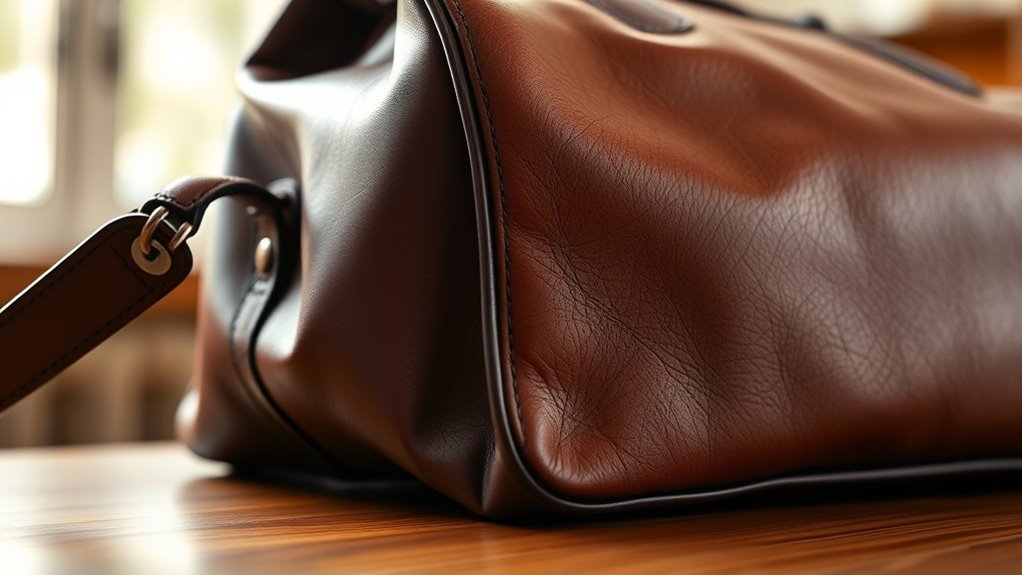
Leather patina is the change in color and shine that natural leather develops with use and age. On a handbag, it shows as a darker, warmer tone and a soft glow, strongest where you touch the bag most. It comes from skin oils, sunlight, moisture, and air acting on the leather. Full-grain and vegetable-tanned leathers show it most. Coated and heavily finished leathers barely change.
What Is Leather Patina on a Handbag?
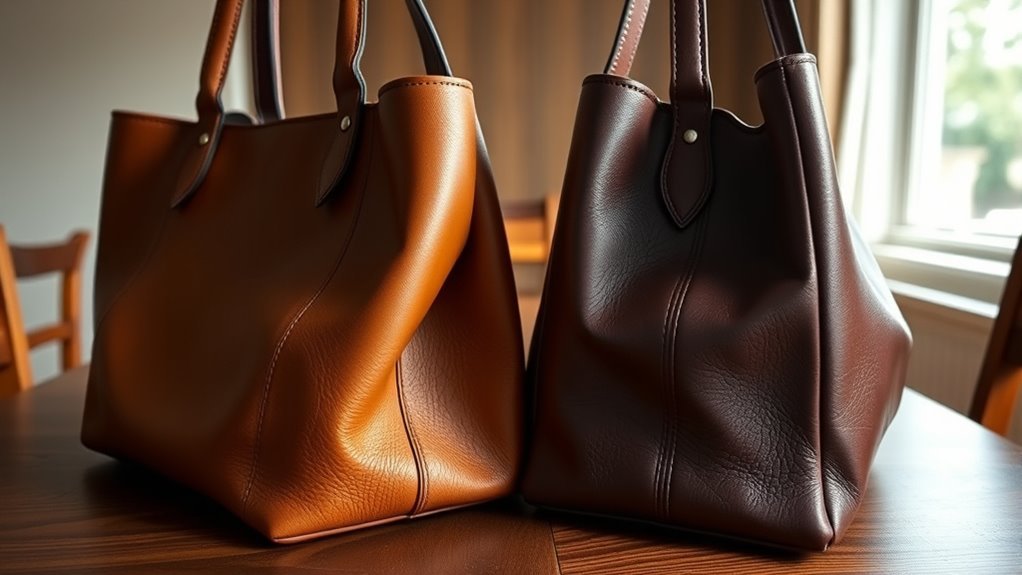
Patina is the surface character leather builds up over time. The color deepens, the surface gets smoother, and a low sheen appears.
It is not a coating or a factory finish. It forms from the way you use the bag, so no two bags age in quite the same way.
On pale, untreated vegetable-tanned leather, the first change can show within weeks. A clear patina usually takes six months to a year of regular use, and it keeps deepening for years.
Faux leather does not develop patina. It keeps its color until the surface wears or peels.
If you like the idea of a bag that changes with you, choose natural, lightly finished leather. If you want the color to stay exactly as bought, choose a coated or pigmented leather.
Neither choice is better. It is a matter of taste.
Why Does Leather Patina Change Color?
Several things change the color together. The first is oxidation. Oils and tannins in the leather react slowly with air, and the leather darkens.
The second is sunlight. Light darkens vegetable-tanned leather, much like a tan. That is why pale leather turns honey and then brown. On dyed leather, strong sun can do the opposite and fade the color.
The third is touch. Oils from your hands soak into the surface. Handles, flaps, and corners darken first and gain the most shine.
The fourth is moisture. Rain, humidity, and spills can darken leather, sometimes as a spot and sometimes evenly over time.
Friction plays a part too. Rubbing against clothes polishes the surface and raises its sheen.
Because use, climate, and care all differ, each bag ends up with its own pattern of shades.
This color change is normal aging. It is not a defect.
Patina is different from damage such as cracking, peeling, or stains from ink and grease, which do not blend in.
What Does Leather Patina Look Like Over Time?
The change is gradual. In the first weeks, untreated leather softens a little and picks up a faint sheen.
Over the next 3 to 12 months, the areas you handle most deepen in color, and the contrast with less-touched areas grows.
Color Deepening Over Time
Color moves from light to deeper, warmer shades. Natural tan leather turns honey, then caramel, then a rich brown. Darker leathers shift less, but they gain depth.
| Time | Change | Impact |
|---|---|---|
| 0–6 months | Minimal shift | Subtle warming |
| 6–12 months | Visible deepening | Richer tone |
| 1–3 years | Strong saturation | Distinct patina |
| High-contact zones | Darkens fastest | Uneven depth |
| Full-grain, veg-tan | Most reactive | Organic change |
The change is uneven at first, with handles and edges ahead of flat panels. Over time the panels catch up, and the whole bag looks more even.
Sheen And Softness Changes
Shine changes along with color. New, untreated leather is fairly matte. With handling, it takes on a soft glow that comes from within the surface, not from a coating.
Feel changes too. The fibers relax as the bag flexes, so the leather becomes softer and more supple, most of all at straps and folds.
None of this weakens good leather. A well-kept bag with heavy patina can be as sound as a new one.
Natural Marks And Character
Patina also brings out the natural marks in a hide.
Small scars, wrinkles, and grain variations become more visible as the leather darkens around them. On full-grain leather these are expected, and many owners value them.
Light scratches tend to darken and blend into the surface over time. Rubbing them with a clean fingertip speeds that up.
Water spots are common on pale, untreated leather. They usually fade into the overall patina as the bag darkens.
Real patina is hard to fake. Factory antiquing sits on top of the surface, while true patina varies with how the bag was held and carried.
Uneven tone in the first months is normal, so there is no need to worry about it.
Which Leather Types Patina Best?
How much patina you get depends on the leather. The more natural and open the surface, the more it changes.
Two labels matter most: full-grain, which describes the surface, and vegetable-tanned, which describes how the hide was tanned.
Full-Grain Leather
Full-grain leather keeps the original outer surface of the hide. It has not been sanded, so the pores and grain are intact and can absorb oils and darken.
That open surface is why full-grain shows the strongest patina, especially with a light aniline or semi-aniline finish.
The result is deeper color, a softer feel, and a worn-in look.
Wear polishes the grain instead of rubbing through a coating, so the surface gets better looking with use.
Check the finish, though. Full-grain leather with a heavy pigment coat will change far less.
Vegetable-Tanned Leather
Vegetable-tanned leather is tanned with plant tannins from bark and wood. Those tannins react to light and air, which makes this leather the quickest to darken.
It often starts out pale beige or tan and is left with little or no surface finish, so every touch and every hour of light shows.
With daily use, it moves toward honey and brown and takes on a smooth glow.
The pale leather trim on many luxury bags is this kind of leather. It is often called vachetta.
Low-Patina Leather Types
Some leathers are made to stay the same.
Pigmented and corrected-grain leathers have a colored coating on top, which blocks oils and light. Saffiano, patent, and most pebbled leathers fall in this group. They keep their color for years and suit you if you want a clean, unchanging look.
How Can You Slow Down Leather Patina?
You cannot stop patina on natural leather, but you can slow it and keep it even.
Store the bag in a dust bag, in a cool, dry place away from windows. Sunlight is the fastest driver of color change.
Condition the leather every 3 to 6 months. Be aware that most conditioners darken pale leather slightly, so test a hidden spot first.
A leather protector spray made for untreated leather helps guard against water spots and stains. Test it first, since it can also shift the color a little.
Clean with a soft, dry or barely damp cloth. Avoid alcohol wipes and household cleaners, which can strip or blotch the surface.
Handle the bag with clean, dry hands. Hand cream, sunscreen, and sanitizer leave dark marks on handles.
If you want an even patina, vary how you carry the bag, and do not leave one side facing a window for weeks.
Does Leather Patina Affect Durability?
Patina does not reduce durability. It is a surface change in color and sheen, not a breakdown of the leather.
The leathers that develop patina, such as full-grain and vegetable-tanned, are among the most durable. So a rich patina often goes with a long-lived bag.
What does shorten the life of leather is neglect: letting it dry out, soak, or stay dirty.
Gentle cleaning and regular conditioning keep the fibers flexible, so the bag can go on aging without cracking.
Dark, greasy buildup on handles is the one thing to watch. That is dirt and oil, not patina, and it should be cleaned off.
Frequently Asked Questions
Is Patina on Leather Good or Bad?
It is usually seen as good. Patina shows the leather is natural and has aged well, and many buyers of vintage bags look for it. If you prefer a bag that stays the same color, choose a coated leather.
What Is the Patina on a Louis Vuitton Purse?
Many Louis Vuitton bags have handles and trim in vachetta, an untreated cowhide. It starts pale beige and darkens to honey and then brown with light, air, and handling. That darkening is the patina.
How Long Does It Take for Leather to Develop Patina?
On untreated vegetable-tanned leather, the first change shows within weeks to a few months. A clear patina takes about six months to a year of regular use, and it keeps deepening for years. Finished leathers take much longer or barely change.
What Does Leather Patina Look Like?
It looks like a deeper, warmer color with a soft glow and a smoother surface. Handles, corners, and edges are usually darker than flat panels.
Conclusion
Patina is the natural darkening and soft shine that real leather gains with light, air, and touch. It is strongest on full-grain and vegetable-tanned leather, and it does not harm the bag. Good care keeps it even, and storage out of the sun slows it down.

