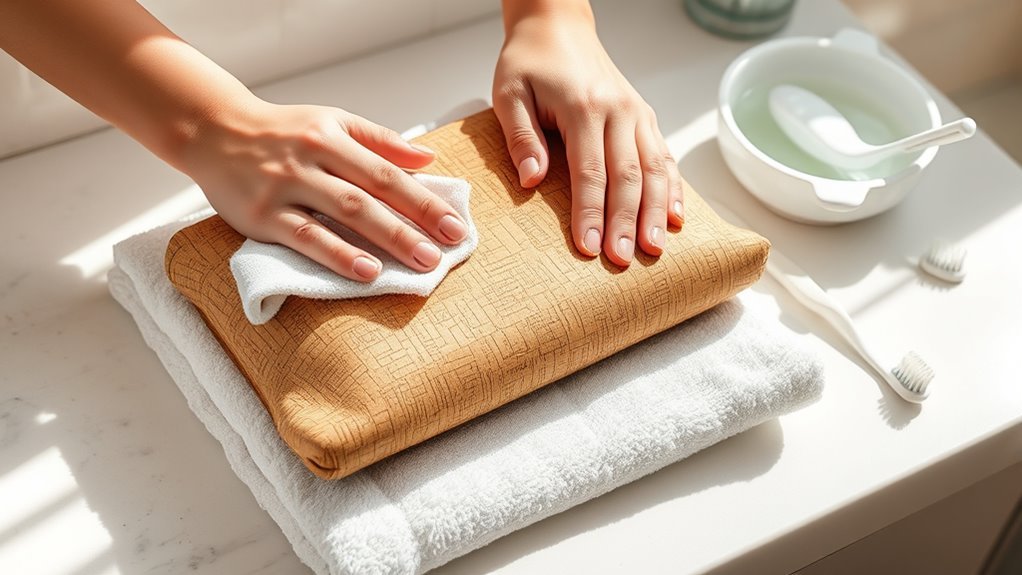
To clean a cork purse without damaging its backing, use as little water as possible. Blot fresh spills with a dry cloth. Then wipe the spot with a soft cloth dampened in mild soapy water, working from the outer edge of the stain inward. Wipe off the soap with a clean damp cloth and let the purse air dry away from sun and heat. Never soak or machine wash it, because water and heat can loosen the glue that holds the cork to its fabric backing.
Immediate Stain Removal Techniques
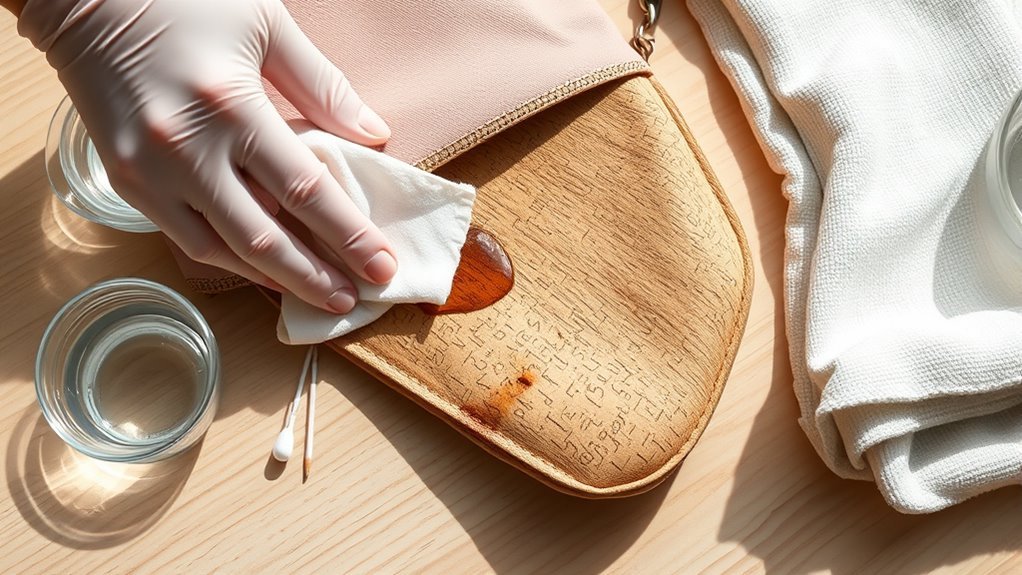
Quick action matters most. Blot a fresh spill right away with a clean, dry cloth. Press and lift so the liquid goes into the cloth. Do not rub, which pushes the stain into the tiny pores of the cork.
Next, mix a few drops of mild dish soap into a cup of lukewarm water. Dampen a soft cloth, wring it out well, and wipe from the outer edge of the stain toward the middle. This keeps the mark from spreading. For a stubborn spot, use a soft toothbrush with very light pressure.
Then wipe the area with a second cloth dampened in plain water to remove the soap. Skip harsh chemicals and anything abrasive, which can strip the sealed finish.
Pat the spot dry with a towel, and let the purse air dry away from direct sun and heaters. Do not use a hot hair dryer. Heat can soften the glue under the cork.
Get to Know Your Cork Purse
It helps to know how a cork purse is built. The cork comes from the bark of the cork oak. The bark is harvested without cutting down the tree, and it grows back. For bags, the cork is sliced into very thin sheets, and its natural mottled pattern makes every piece a little different.
A thin sheet of cork would tear on its own, so it is glued to a fabric backing, usually cotton or a polyester blend. The result is often called cork fabric or cork leather. The cork itself resists water well. The weak points are the glue and the fabric underneath. Too much water or heat can make the layers separate, which shows up as bubbles or peeling.
That is why the safe method is always a damp cloth, not a wet one. A light wipe every few weeks keeps dirt from building up, so you rarely need anything stronger.
Cork fabric is flexible, but it can crack if it is folded sharply. Avoid creasing the purse when you clean or store it.
Drying and Storing Your Purse
Drying matters as much as cleaning. After any wipe-down, let the purse air dry at room temperature. Keep it away from direct sunlight, radiators, and car dashboards. Heat can dry out the cork and weaken the glue.
Make sure the purse is clean and fully dry before you put it away. Open it so the lining can dry too. Storing it damp invites mildew in the fabric backing and lining.
Store the purse upright with the clasp or zip closed. Stuff it lightly with tissue paper so it keeps its shape and does not fold.
A breathable cotton dust bag keeps off dust while letting air through. Avoid sealed plastic bags, which trap moisture.
Pick a cool, dry spot such as a closet shelf. Avoid damp basements and humid bathrooms.
Avoid These Cleaning Products
Some products do more harm than good. Avoid bleach, ammonia, solvent cleaners, and strong stain removers. They can strip the finish on the cork and stain the fabric backing.
Do not use stiff brushes or scouring pads, which scratch the surface. Skip oils and leather conditioners too. Cork does not need them, and oil can soak through to the backing and leave dark patches or loosen the glue.
Never machine wash or soak a cork bag, unless the maker says the bag is washable. Test any new cleaner on a hidden spot first, such as the base.
Essential Maintenance Tips for Your Cork Purse
Cork is a low-maintenance material. A few habits keep it in good shape.
Wipe the purse every few weeks with a soft, damp cloth and a drop of mild soap. This stops body oils and dirt from dulling the surface, especially on handles and corners. Spot clean only, and never submerge the bag.
Most cork purses come with a sealed finish and need no moisturizer. If the maker recommends a protective spray or wax for cork, follow their directions and test it first. If not, leave the surface alone.
Keep the purse away from sharp objects, and do not overfill it. Strain at the seams can pull the cork away from its backing.
Frequently Asked Questions
Do Cork Purses Last?
Yes. Cork fabric is light, flexible, and resists water and stains. With gentle cleaning and dry storage, a well-made cork purse can last for many years. The usual signs of age are worn corners and edges.
Will Isopropyl Alcohol Damage Cork?
It can. Alcohol may dull the finish and dry out the cork, and it can weaken the glue under it. Use mild soap and water for normal cleaning. If you try alcohol on an ink mark, use a tiny amount on a cotton swab and test a hidden spot first.
Can a Cork Purse Get Wet?
Yes. Cork resists water naturally, so rain or a small spill will not ruin it. Wipe it dry soon after. What to avoid is soaking, which can reach the backing and the glue.
How to Clean the Inner Lining of a Purse?
Empty the purse and shake out crumbs. Pull the lining out if you can. Wipe it with a cloth dampened in mild soapy water, then with plain water. Leave the purse open to air dry before you use it again.
Conclusion
A cork purse is easy to keep clean. Blot spills fast, wipe with a damp cloth and mild soap, and let it air dry away from heat. Keep water, oils, and harsh cleaners to a minimum, and the cork will stay bonded to its backing.