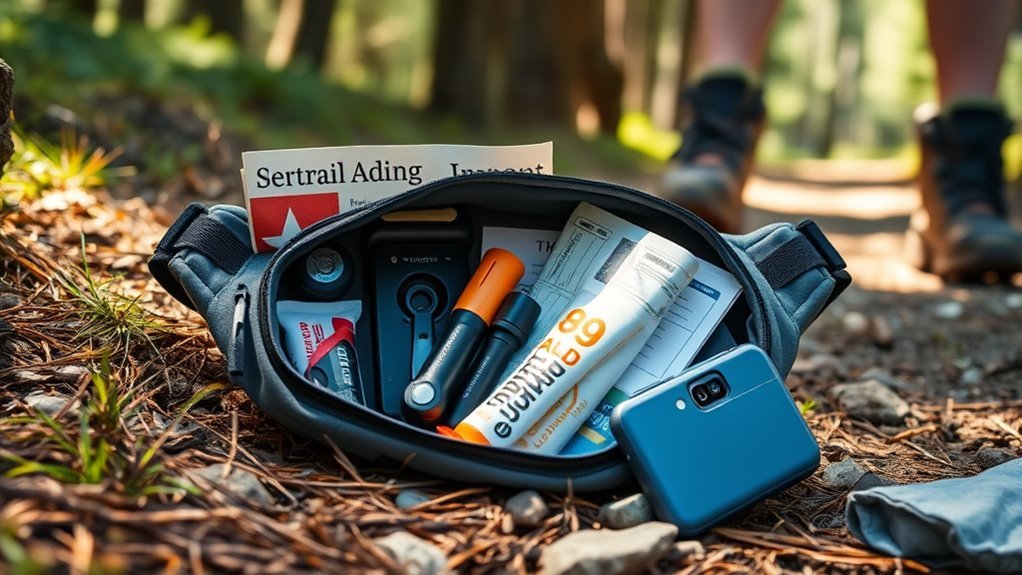
When you head out on a hike, pack your fanny pack with essentials for safety and convenience. Include navigation tools like a map and compass, a compact first aid kit for minor injuries, extra food and water, and sun protection items like sunscreen and sunglasses. Don’t forget bear spray if you’re in bear country. Having these items at hand makes your hike smoother and safer. There’s more to contemplate for an enjoyable adventure ahead!
Top Essential Items for Hiking Safety
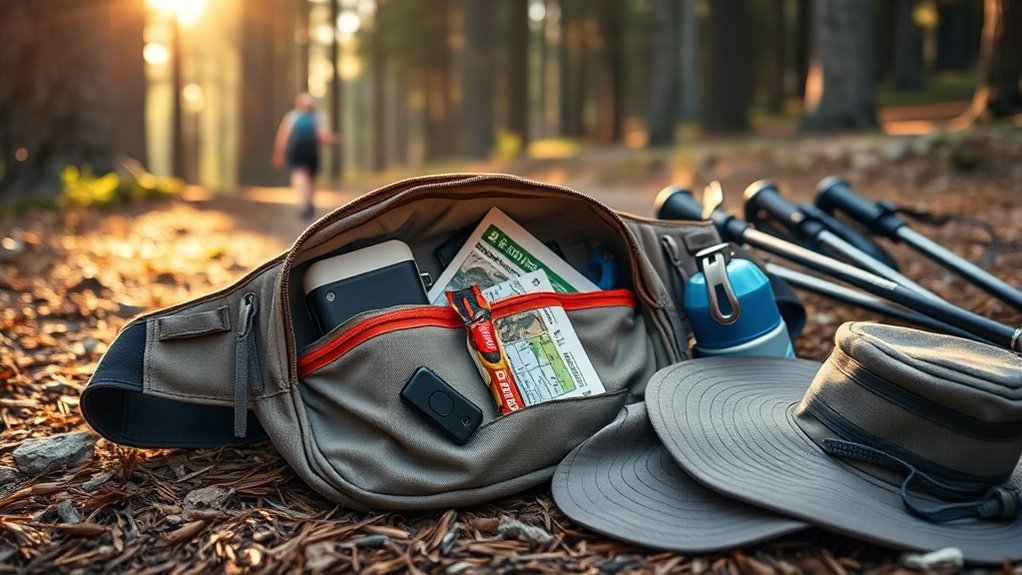
When you’re hitting the trails, having the right safety gear can make all the difference. Start with navigation tools like a map and compass; they’re important if you find yourself disoriented.
When exploring the trails, essential navigation tools like a map and compass are vital for staying oriented.
A compact first aid kit is another must-have; it addresses minor injuries like cuts and blisters before they escalate, ensuring a smoother hike. Don’t forget to pack extra food and water—hydration and energy are crucial, especially if you face unexpected delays.
Sun protection items, such as sunscreen and sunglasses, are essential to shield you from harmful UV rays and heat-related issues.
If you’re hiking in bear country, keep bear spray within easy reach—it can effectively deter aggressive wildlife encounters.
These trail safety gear essentials won’t only enhance your hiking experience but also empower you to embrace the wilderness with confidence.
Picking the Perfect Fanny Pack for Your Hike
When you’re picking the perfect fanny pack for your hike, focus on key features that suit your needs.
Look for adjustable straps, waterproof materials, and multiple compartments to keep your essentials organized and safe.
With the right pack, you’ll be ready for any adventure while staying comfortable on the trail.
Key Features To Consider
Choosing the right fanny pack for your hike can make all the difference in your comfort and convenience.
Start with design considerations: look for a volume of 1-5 liters to fit your essentials like water, snacks, and tools. Adjustable straps are essential for a secure fit, preventing discomfort as you move.
Multiple compartments allow for better organization, so you can quickly access your phone, keys, or first aid supplies. Don’t overlook material durability; selecting waterproof options or those with roll-top closures can protect your gear from sudden weather changes.
If you’re hiking with dogs, find packs with hydration bladder compatibility or extra pockets for pet essentials. These features will enhance your outdoor experience and keep you prepared!
Best Packs For Hiking
Selecting the right fanny pack can elevate your hiking experience, ensuring you’re well-equipped without feeling weighed down. Here are some top choices that balance pack weight and functionality:
- Osprey Talon 6: Lightweight and comfortable, perfect for day hikes.
- Hyperlite Vice Versa: Waterproof/insulated phone case for device protection in any weather.
- Cotopaxi Fanny Pack: Ideal for shorter hikes, fits essentials like water bottles and keys.
- Deuter Pulse 3: Multiple compartments with a hydration bladder, great for organized hiking gear.
- Patagonia Black Hole Waist Pack: Banana shape design prevents bouncing for a stable fit.
Choosing the right fanny pack not only enhances your comfort but also keeps your essentials secure, letting you enjoy the trail freely.
Fanny Pack Essentials for Trail Navigation
Maneuvering the trails requires more than just a sense of adventure; it demands the right tools. Always carry a reliable map and compass in your fanny pack. They guarantee you can navigate accurately, even in areas with poor GPS reception.
Maneuvering the trails demands the right tools; always carry a reliable map and compass for accurate navigation.
Pair these with a portable GPS device or a smartphone loaded with a hiking app for extra support.
Don’t forget a headlamp or flashlight; unexpected delays can lead to low-light conditions where visibility is essential. For emergency signaling, include a whistle in your small first aid kit; it’s critical for alerting others if you need help.
Finally, a multi-tool or knife can assist with quick gear adjustments and tackle minor navigation challenges. With these navigational tools in your fanny pack, you’re not just prepared; you’re empowered to explore the trails confidently and safely.
Must-Have First Aid Supplies for Hikers
When you hit the trails, having a well-stocked first aid kit can make all the difference in ensuring a safe and enjoyable hike. Packing essential items not only supports injury prevention but also empowers you to handle minor mishaps confidently.
Here are some must-have first aid essentials:
- Adhesive bandages for cuts and abrasions
- Antiseptic wipes to clean wounds
- Gauze pads for larger injuries
- Pain relievers like ibuprofen or acetaminophen
- Tweezers for splinters and ticks
Don’t forget a small pair of scissors for gauze or tape, and a mini first aid manual to guide you through common hiking injuries.
If you have personal medications, like an epinephrine autoinjector, keep them accessible. With these supplies, you’re not just prepared; you’re ready to tackle the adventure ahead!
Tips for Efficiently Packing Your Fanny Pack
After ensuring you’re equipped with a solid first aid kit, it’s time to think about how to pack your fanny pack for a smooth hiking experience.
Start by implementing smart packing strategies; place frequently used items like snacks and your map in easily accessible pockets. This way, you can grab what you need quickly without stopping your flow.
For ideal weight distribution, store heavier items, such as water bottles, close to your back. This balances the load and keeps you stable on the trail.
Don’t forget to pack essentials for sun protection, like sunscreen and sunglasses, in a secure pocket to shield yourself from harsh rays.
Lastly, consider the weather—include a lightweight rain jacket or windbreaker that can be stowed easily when not in use.
Adjusting Your Fanny Pack for Comfort
To guarantee a comfortable hiking experience, adjusting your fanny pack for the perfect fit is essential. Start by ensuring the pack sits snugly against your body without pulling or rubbing your skin.
Utilize strap adjustments to distribute weight evenly, which helps prevent strain on your back and hips. Position the fanny pack at your natural waistline for balance and stability, especially on uneven terrain.
Remember to regularly check the fit during your hike; movement and clothing layers may require adjustments.
Consider these features for added comfort:
- Padded lumbar support
- Breathable mesh fabric
- Adjustable straps
- Lightweight materials
- Secure buckles
Frequently Asked Questions
What Do You Carry in Your Fanny Pack?
You’ll want hydration options like a water bottle, and snack choices such as energy bars or dried fruit. Keep essentials organized, ensuring everything’s easily accessible for a smooth, enjoyable hiking experience.
What Are the 10 Essential Things to Bring When Hiking?
What’s your adventure without hiking essentials? Guarantee trail preparedness by packing navigation tools, a first aid kit, extra food and water, a headlamp, and sun protection. Stay safe and enjoy every step of your journey!
Can You Bring a Fanny Pack on a Roller Coaster?
You can often bring a fanny pack on a roller coaster, but check for fanny pack restrictions. Verify it’s snug and won’t interfere with safety harnesses to enjoy the ride without worries.
Is a Fanny Pack Safe for Travel?
A fanny pack’s fantastic for travel convenience and security. It keeps your essentials close, allowing you to explore freely while safeguarding valuables. With anti-theft features, you’ll feel secure and liberated on your adventures.
Conclusion
So, as you strut into the wild with your fanny pack—because who wouldn’t want to channel their inner 90s fashion icon?—remember that packing smart is key. You’re not just carrying snacks; you’re holding the fate of your hike in that stylish pouch. Stay safe, stay prepared, and maybe even look fabulous while you’re at it. After all, if you can’t take a selfie with your first aid kit and trail map, did you even hike?