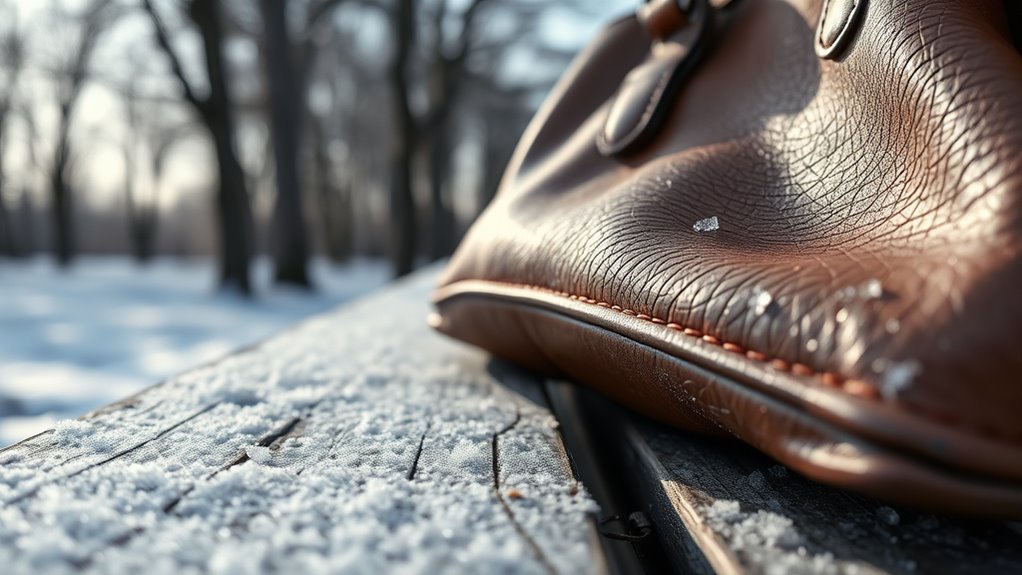
Cold weather greatly impacts faux leather bags, causing stiffness and brittleness when temperatures drop below 40°F (4°C). This increases the risk of cracking by up to 80%, reducing the material’s lifespan. Exposure to snow and slush can weaken integrity, leading to permanent damage if not cleaned promptly. Moisture from melting snow and road salt can also cause peeling and unsightly stains. Understanding these effects is vital for proper care, which you can optimize with essential maintenance tips.
How Cold Weather Damages Faux Leather Bags and What You Can Do
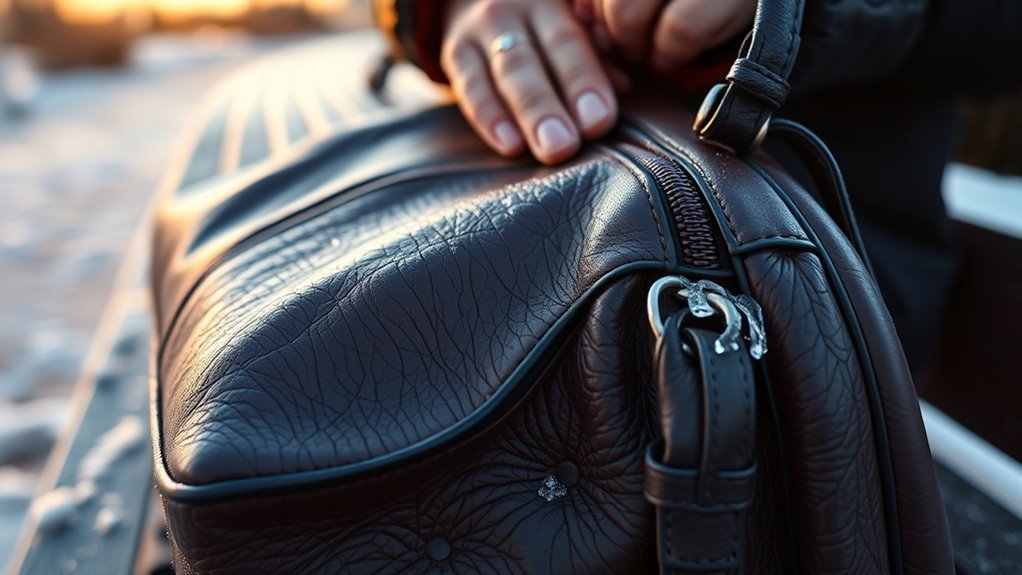
Cold weather can considerably damage faux leather bags, especially when temperatures dip below 40°F (4°C). At these chillier temperatures, faux leather durability declines; materials can become stiff and brittle, raising the risk of cracking and peeling.
The dry air exacerbates this issue, leading to a loss of suppleness that could result in permanent damage. Additionally, exposure to snow and slush introduces moisture that weakens the material, making it vulnerable to stains and structural degradation.
Road salt can leave unsightly white marks that are tough to remove if not treated promptly.
To guarantee winter protection for your faux leather bags, apply a protective waterproof spray before the season begins. Store your bags in cool, dry areas, and always clean off dirt or moisture immediately after use.
Taking these steps will greatly enhance the longevity of your faux leather accessories during harsh winter months.
Essential Care Tips for Maintaining Faux Leather in Winter
When temperatures drop, maintaining your faux leather bags becomes essential to prevent irreversible damage. Cold conditions can make faux leather stiff and brittle, increasing the risk of cracking, especially with rapid temperature changes.
To guarantee faux leather longevity, apply a waterproof spray specifically designed for the material; this provides winter protection against snow and rain.
After each use, promptly clean off dirt, salt, and snow, as these can stain and weaken the surface if left untreated.
Store your bags in cool, dry places, avoiding direct heat sources to prevent moisture buildup. This practice helps maintain their shape and integrity throughout winter.
Key Winter Hazards That Can Ruin Your Faux Leather Bags
In winter, temperature fluctuations can greatly impact the durability of your faux leather bags, making them more susceptible to cracking.
Moisture from snow and rain introduces further risks, weakening the material’s integrity if not addressed quickly.
Additionally, salt stains and residue from de-icing agents can permanently mar your bags, so immediate cleaning is essential.
Temperature Fluctuations Impact Durability
As temperatures fluctuate between the frigid outdoors and heated indoor spaces, faux leather bags face considerable durability challenges. Exposure to temperature extremes can severely impact material integrity, increasing brittleness and the risk of cracking by up to 80% when it drops below 40°F (4°C).
Here are key factors to evaluate:
- Rapid temperature changes can create structural stress, leading to permanent damage.
- Prolonged cold can deplete moisture, resulting in stiffness and reduced flexibility.
- Improper storage can exacerbate wear, making bags more prone to cracking.
To maintain your bags, think about proper storage in a climate-controlled environment. This simple step can greatly mitigate the adverse effects of temperature fluctuations and preserve the longevity of your faux leather accessories.
Moisture Damage From Snow
Moisture damage poses a significant threat to faux leather bags during winter, particularly from snow exposure. When snow accumulates on your bag, it can lead to moisture infiltration that weakens the material, resulting in cracking or peeling if not addressed quickly.
Prolonged contact with wet snow diminishes durability, compromising structural integrity over time. Additionally, high humidity levels from melting snow can exacerbate texture deterioration, making the surface feel sticky or tacky.
To mitigate these risks, it’s essential to apply a protective waterproofing spray designed for faux leather before winter weather hits. This proactive measure can shield your bag from the damaging effects of snow and moisture, ensuring it remains stylish and functional throughout the season.
Salt Stains And Residue
Snow exposure isn’t the only winter hazard for faux leather bags; road salt can also wreak havoc on their appearance and longevity.
Salt residue leaves unsightly white stains, which can degrade the material and lead to long-term damage if ignored.
To protect your bag, consider these essential cleaning methods:
- Wipe down with a damp cloth immediately after exposure.
- Use a protective spray designed for faux leather to create a barrier against salt and moisture.
- Regularly clean to prevent residue buildup that attracts dirt and grime.
Cleaning and Storing Faux Leather Bags
To maintain the integrity of your faux leather bags, proper cleaning and storage are essential.
Regularly wipe them with a damp cloth to remove dirt, and store them in a cool, dry place to prevent damage.
Implementing these practices, along with seasonal maintenance tips, will guarantee your bags withstand cold weather conditions.
Proper Cleaning Techniques
While maintaining faux leather bags may seem straightforward, employing the right cleaning techniques is essential for preserving their longevity and appearance.
To guarantee effective stain removal, follow these steps:
- Use a soft, damp cloth with mild soap; avoid harsh chemicals that could damage the finish.
- For tougher stains, mix vinegar and water to gently lift residue without compromising integrity.
- Always dry your bags with a soft, dry cloth to prevent moisture buildup, which can lead to mold or mildew.
Establish a regular cleaning frequency to keep your bags looking their best.
Ideal Storage Conditions
Proper storage is essential for maintaining the quality and longevity of your faux leather bags. To achieve effective humidity control, store them in a cool, dry environment, ideally between 60-70°F (15-21°C). Use breathable dust bags to promote air circulation and prevent mold growth. Regularly clean your bags with a soft, damp cloth, ensuring they’re completely dry before storage. Avoid direct sunlight and heat sources; prolonged exposure can cause cracking and distortion. Finally, don’t overstuff your bags during storage to maintain their shape and structure.
| Storage Aspect | Recommendation | Importance |
|---|---|---|
| Temperature | 60-70°F (15-21°C) | Prevents material degradation |
| Humidity Control | Use breathable dust bags | Avoids mold and mildew growth |
| Bag Capacity | Do not overstuff | Maintains shape and structure |
Seasonal Maintenance Tips
Maintaining faux leather bags during colder months requires specific care practices to prevent damage from harsh weather conditions. Regular cleaning and proper storage are key to ensuring longevity. Here are some essential tips for faux leather protection:
- Clean bags immediately to remove dirt, salt, and moisture, which prevents discoloration.
- Store bags in a cool, dry place, avoiding sunlight to prevent cracking and fading.
- Apply a waterproof spray designed for synthetic materials to shield against winter moisture.
After exposure to wet conditions, let your bags air dry naturally; avoid heat sources, as they can worsen deterioration.
Additionally, don’t overload your bags to maintain their shape and integrity, especially in cold weather.
Prioritizing these practices will enhance your winter storage strategy.
What Winter Elements Can Damage Your Faux Leather Bags?
Cold weather poses several risks to faux leather bags, as various winter elements can greatly compromise their integrity. Understanding these threats is essential for effective faux leather care during winter travel.
| Winter Element | Impact on Faux Leather | Prevention Tips |
|---|---|---|
| Cold Temperatures | Causes stiffness and brittleness | Store at room temperature |
| Rain & Snow | Weakens material, causes discoloration | Use water-repellent sprays |
| Salt | Leaves stains and scratches | Clean immediately with a damp cloth |
| High Humidity | Damages texture and finish | Keep in a dry environment |
| Dirt & Moisture | Leads to permanent stains | Regularly clean and dry |
Common Mistakes to Avoid When Caring for Faux Leather Bags
Though caring for faux leather bags may seem straightforward, several common mistakes can severely impact their longevity and appearance. To maintain your bags effectively, avoid these pitfalls:
- Overloading: Excess weight can strain the structure, causing cracks and deformities that are hard to repair.
- Neglecting moisture protection: Failing to apply a waterproof spray leaves your bags vulnerable to cold, wet weather, leading to peeling and discoloration.
- Ignoring immediate cleaning: Salt and snow exposure should be cleaned promptly; otherwise, long-term staining and deterioration can occur.
Incorporating proper care routines and making informed product choices are essential. Store your bags in dry environments, and avoid harsh cleaning solutions that strip protective coatings.
How to Effectively Clean Faux Leather Bags in Winter
When winter arrives, keeping your faux leather bags clean and in good condition becomes essential to prevent long-term damage. Start by immediately wiping off any snow or moisture with a soft, absorbent cloth. This step is vital to avoid staining and the harmful effects of freezing temperatures.
Keeping faux leather bags clean during winter is crucial; promptly wipe off snow and moisture to prevent stains and damage.
For regular cleaning, use a mild soap solution and a damp cloth, steering clear of harsh chemicals that can degrade the surface. To maintain flexibility and prevent cracking from cold, dry air, apply specialized conditioning products after cleaning.
If you encounter salt stains, mix equal parts water and white vinegar, gently dabbing the solution onto the affected areas. Rinse thoroughly with a clean damp cloth.
Finally, maintain a consistent cleaning frequency and conduct regular inspections for wear or moisture buildup. Addressing these issues promptly will greatly prolong your bag’s lifespan and preserve its aesthetic appeal.
Frequently Asked Questions
What Ruins Faux Leather?
Extreme temperatures, moisture exposure, and inadequate faux leather maintenance ruin your bags. Cold weather makes faux leather brittle, while humidity breeds mold; neglecting these factors accelerates deterioration, compromising both appearance and durability. Handle with care!
What Is the Downside of Faux Leather?
Over 30% of faux leather users report cracking in cold temperatures. Without proper maintenance, these bags suffer from brittleness and aesthetic decline, emphasizing the importance of understanding temperature effects on your faux leather items.
What Is the Lifespan of Faux Leather?
Faux leather typically lasts 3 to 5 years, but with proper faux leather care, including conditioning and avoiding extreme temperatures, you can enhance durability. Temperature effects can greatly impact its longevity, so mindful usage is essential.
What Happens to Faux Leather in the Rain?
Faux leather’s water resistance typically lasts about six months. In the rain, it absorbs moisture, risking cracks and stains. To maintain your bag, dry it immediately and clean any dirt or salt marks.
Conclusion
In cold weather, faux leather bags can suffer significant damage if not properly cared for. By understanding the winter hazards and following essential maintenance tips, you can prolong the life of your bags. Isn’t it worth taking a little extra time to protect your investment? Remember to clean and store your faux leather correctly to prevent cracking and peeling. With the right approach, you can enjoy your stylish bags season after season, despite the chill.