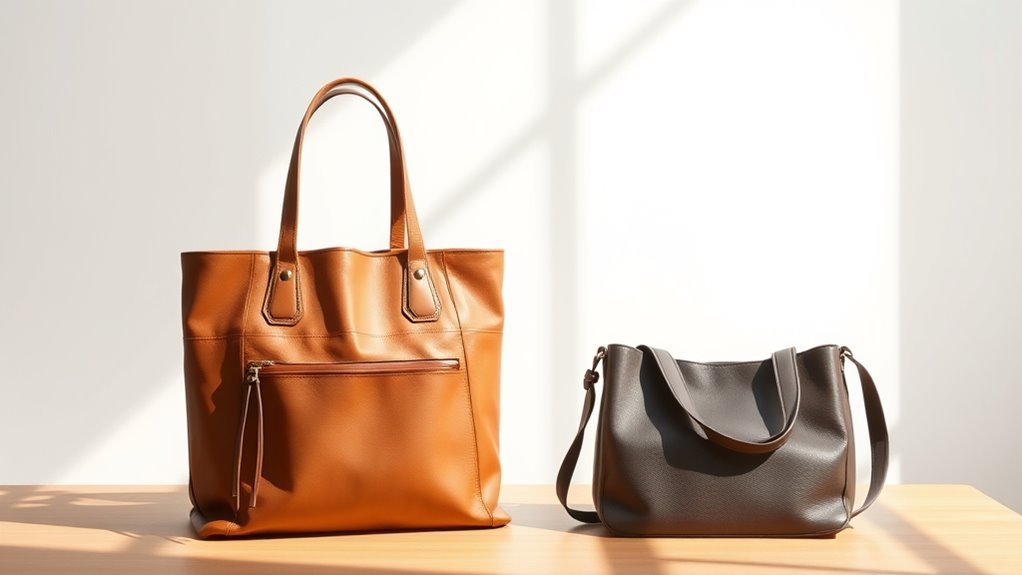
A tote has two parallel handles and one large open compartment. A shoulder bag has one or two straps and a smaller interior, often with pockets and a zip or flap. So a tote carries more and loads fast, while a shoulder bag keeps small items in order and stays closed. The right one depends on what you carry and where you are going.
Understanding Tote and Shoulder Bags: Key Features
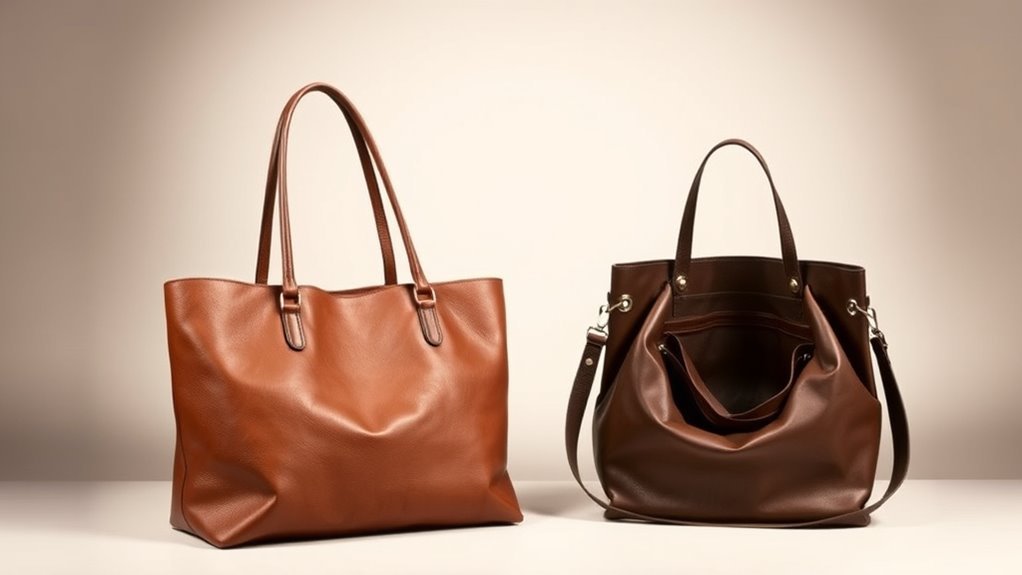
The two bags differ in three places: the handles, the opening, and the inside.
A tote is built for volume. The open interior takes a laptop, a water bottle, a sweater, and gym gear at the same time. You can drop things in and pull them out with one hand.
A shoulder bag is built to sit close to the body. The strap holds the bag under the arm or at the hip. Inside, you usually get a main compartment plus a zip pocket and one or two slip pockets.
Totes are usually bigger and look more casual. Shoulder bags are usually smaller and look neater, so they move more easily from day to evening.
Closures differ too. Many totes are open at the top or have a single magnetic snap. Most shoulder bags close fully with a zip or a flap, which is safer in a crowd.
Key Differences in Design: Tote Bags vs Shoulder Bags
Start with the handles, since they change how the bag carries.
A tote has two handles of the same length, one on each side of the opening. The handle drop is the distance from the top of the handle to the top of the bag. A drop of about 9 to 11 inches fits over the shoulder, even with a coat. With a shorter drop, the tote is carried by hand or on the forearm.
A shoulder bag has one strap, or two short ones, made to rest on the shoulder. Many straps adjust, and some are chains that can be doubled. The strap is fixed at both ends of the bag, so the bag hangs flat against your side and stays closed.
Tote handles sit close together in the middle of the bag. That is why a full tote can gape open and swing. A shoulder bag is narrower and more stable.
In short, tote handles are about load, and shoulder straps are about fit.
How Each Bag Organizes Your Essentials
The inside of each bag is planned differently.
A tote is mostly one open space, sometimes with a single small pocket. A shoulder bag divides a smaller space into sections. Here is how they compare:
Consider these organizational features:
- Tote Bags:
- Open-top for quick access
- Generous, unstructured space
- Ideal for laptops and files
- Casual organization style
- Items may shift during movement
- Shoulder Bags:
- Defined structure for better organization
- Multiple compartments for easy access
- Dedicated pockets for tech devices
- Polished appearance for a refined look
- Efficient use of space
If you carry big or odd-shaped things, the open tote wins. If you carry a wallet, phone, keys, and makeup, the pockets of a shoulder bag save you time.
Choose what frees your daily routine!
When to Use Tote Bags: Top Scenarios
A tote is the better pick when you need room.
For work, a tote holds a laptop, a notebook, and lunch. A padded sleeve or a bag organizer keeps the laptop from sliding around.
For the beach, a tote takes towels, sunscreen, and snacks, and sand shakes out of the open top easily.
For shopping, one sturdy tote can replace several plastic bags.
For the gym, the wide opening makes it quick to pack shoes, clothes, and a water bottle.
For travel, a tote works well as a personal item on a plane. Check the size limits of your airline first, and pick a tote with a zip top so nothing spills under the seat.
The trade-off is security and order. An open tote is easier for a pickpocket to reach into, and small items sink to the bottom.
When to Use Shoulder Bags: Chic and Compact Solutions
A shoulder bag is the better pick when you carry less and want it secure.
Here is when to reach for a shoulder bag:
- Urban commuting: Navigate crowded spaces easily with easy access to your belongings.
- Casual outings: Upgrade your weekend look without overwhelming your outfit.
- Evening events: Add a touch of elegance while keeping your essentials organized.
- Travel: Keep your hands free for coffee or a map while still looking stylish.
The trade-off is space. Most shoulder bags will not hold a laptop or a change of clothes.
Enjoy carrying only what you need!
Choosing the Right Style: Matching Your Outfit
With casual outfits, a tote is the easy match. Canvas works for weekends, and leather looks smarter.
For meetings and dressier plans, a structured shoulder bag looks neater and takes up less room.
Size matters as much as style. The bag should be in scale with you and with the outfit.
Casual Outfits Pairings
Both bags work with casual clothes. Here are a few simple pairings:
- Opt for a structured tote in a neutral color for a polished look.
- Choose a lightweight shoulder bag to add sophistication without overpowering your outfit.
- Add a pop of color with a seasonal tote, while a classic black or brown shoulder bag offers versatility.
- Keep it streamlined with a minimally embellished tote. A shoulder bag with unique hardware can be your statement piece.
- For brunch, go for a slouchy shoulder bag, but switch to a structured tote for errands or work.
Pick the bag by how much you need to carry that day.
Formal Events Selection
For formal events, a small structured shoulder bag is the better choice. It suits tailored clothes and does not get in the way.
Pick a plain design in black, cream, or a metallic tone. A tote is too large for an evening event. For a formal office, though, a structured leather tote in a dark color is fine.
You only need room for a phone, cards, keys, and lipstick. An inner pocket keeps them easy to find.
A little texture or polished hardware adds interest. For black tie, a clutch is still the usual choice.
Finding Your Perfect Bag: What’s Right for You?
To choose between the two, start with what you carry on a normal day.
Then weigh these five points:
- Capacity: Need to carry bigger items like a laptop? Go for a tote.
- Access: Prefer easy retrieval for errands? A tote’s open top has your back.
- Style: Want a polished look for work or social outings? Shoulder bags shine in structured elegance.
- Organization: Crave compartments for essentials? Shoulder bags often deliver on that front.
- Comfort: Looking for a hands-free option? Shoulder bags provide a convenient single strap.
If you are split, many people own both: a tote for work and travel, and a shoulder bag for errands and evenings.
Either way, keep the load light. Any bag carried on one shoulder gets tiring when it is heavy, so switch sides now and then.
Frequently Asked Questions
What Are the Key Differences Between a Tote Bag and a Shoulder Bag?
A tote has two parallel handles, an open top, and one big compartment. A shoulder bag has one or two straps, a full closure, and a smaller interior with pockets. Totes carry more. Shoulder bags organize better.
What Are the Disadvantages of Using a Tote Bag?
Small items get lost in the open interior, and an open top is less secure. A heavy tote also strains one shoulder. Most totes look too casual for formal events.
Why Do Tote Bags Never Stay on My Shoulder?
The usual causes are handles that are too short or set too wide, a slippery coat, or a heavy load. Look for a handle drop of at least 9 inches, and hold both handles together on the shoulder. Flat or rolled leather handles grip better than thin nylon ones.
What Is the Main Difference Between a Shoulder Bag and a Handbag?
Handbag is the general word for any bag carried by hand or on the arm. A shoulder bag is one type of handbag, with a strap long enough to hang from the shoulder.
Conclusion
Choose a tote when you need space and quick access. Choose a shoulder bag when you want a compact, closed bag with pockets. Check the handle drop, the closure, and the interior layout before you buy, and the choice gets simple.