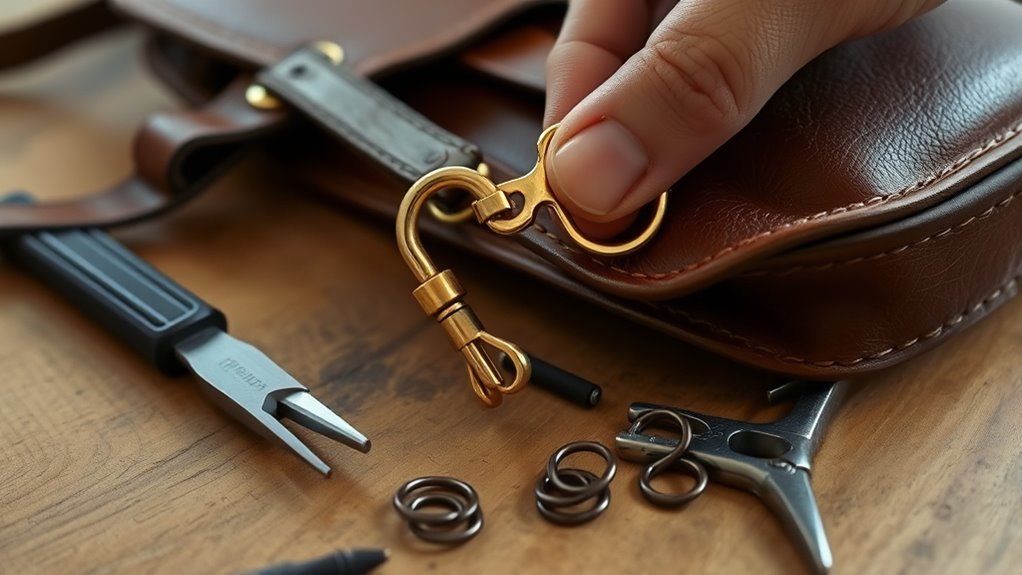
To replace a purse swivel clip securely, you first remove the old hardware with pliers or bolt cutters, then detach any stitching and inspect the strap for fraying. Measure the strap width and match it to a replacement clip with the right inner diameter and load rating. Install the new clip, reinforce the strap end with stitching, and test the swivel and pull strength. With a few more checks, you’ll avoid common fit and wear problems.
Tools You’ll Need
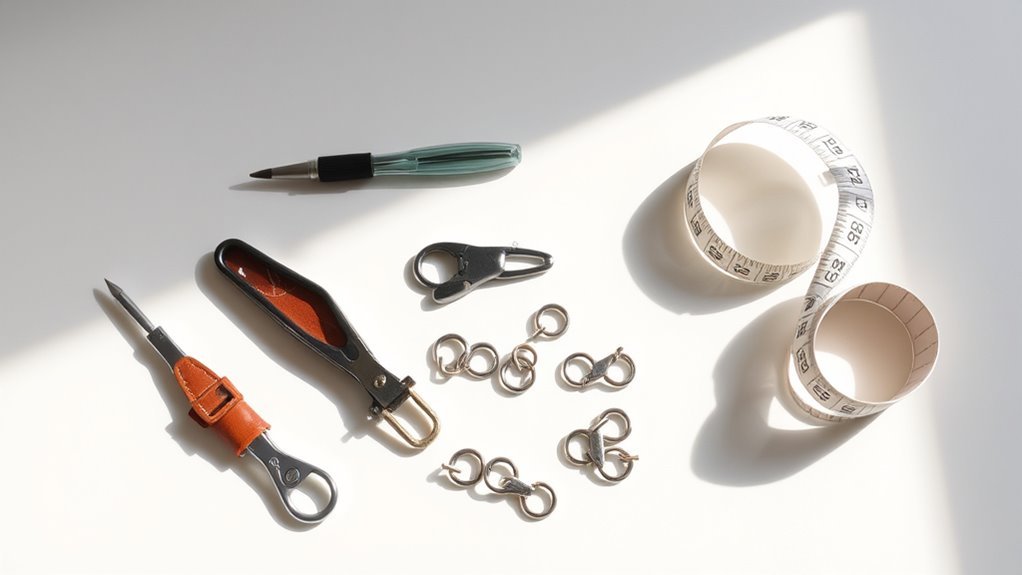
To replace a purse swivel clip cleanly, gather the right tools before you start. You’ll need pliers to break the original strap ring and free the old hardware with control. If the ring resists, keep bolt cutters ready for tougher materials.
For a cleaner cut, a Dremel tool gives you precision without excess force, which supports tool safety and preserves the strap edge. Measure the strap width before choosing a replacement clip, and use a measuring tape to match sizing exactly.
Keep a sewing kit nearby so you can reinforce any stressed stitching after the swap. Each tool helps you work efficiently, protect the purse, and choose hardware that improves clip durability.
When you prepare properly, you reduce guesswork, avoid damage, and keep the repair within your own hands.
Remove the Old Swivel Clip
Start by measuring the strap and noting the exact width so the replacement clip matches correctly.
Then free the old swivel clip with controlled force. Use pliers to break the original strap ring, gripping only the hardware so you don’t scar the strap. If the ring is stubborn, switch to a bolt cutter and cut cleanly through the metal for faster separation.
Use pliers to break the original strap ring, gripping only the hardware to avoid scarring the strap.
Next, detach any stitching that anchors the clip to the strap, slicing only the thread to preserve the material. Work methodically; these clip replacement techniques keep the strap intact and ready for the next step.
Once the clip comes off, inspect the exposed area for fraying, cracks, or stretched fibers. Those strap maintenance tips help you spot hidden damage before you install the new swivel clip.
Clear away loose threads and debris, then leave the opening smooth, open, and prepared for secure reattachment.
Measure the Strap and Clip Size
Measure the strap width at its narrowest and widest points if needed, because the replacement clip has to fit snugly without binding.
Compare that measurement to the clip’s inner diameter, which should typically be about 8.5 mm (0.334 inch) for a standard fit.
If the strap varies in thickness, check both ends so you don’t choose a clip that’s too tight or too loose.
Strap Width Measurement
Grab a measuring tape and note the strap width exactly, because the replacement clip’s inner diameter should match that measurement for a secure fit.
You’ll protect strap compatibility by checking the width at the point where the clip rides, not by guessing. Aim for a clip that grips firmly without forcing the strap or leaving slack; many bags use about 8.5 mm (0.334 inch).
Verify the clip’s length too, since some models run 45 mm (1-3/4 inch) and must suit the bag’s layout.
Choose clip materials that resist wear and still move smoothly, so you can attach and detach with ease.
Precision here keeps your strap secure and supports the free, functional carry you want.
Clip Inner Diameter
The clip’s inner diameter has to match your strap width, so check both dimensions before you buy a replacement. Use a measuring tape at the exact attachment point, then compare that number with the swivel clip specification.
A clip like the DraCra clasp, with an 8.5 mm inner diameter, only works if your strap fits cleanly inside without forcing it. If the clip’s too large, it can slip; if it’s too small, it can stress the strap and hardware.
Review clip types and clip materials, since shape and stiffness affect fit and wear. Match the measurements before you commit, and you’ll keep the strap secure, mobile, and free from unnecessary strain.
Choose the Right Replacement Clip
Start by matching the replacement clip to your purse strap width, which is usually measured in millimeters, so the fit stays secure.
Next, assess clip materials and style options with purpose. Stainless steel and zinc alloy give you stronger wear resistance and better protection against rust, which matters when you want gear that works as hard as you do.
Check the weight capacity before you buy; a lightweight clip won’t support a heavy tote or loaded crossbody. Choose a model rated for your bag’s load so you keep control and avoid failure.
Then look at the finish. Gold or bronze can add a polished edge without sacrificing function.
Finally, prefer clips with screws or snap hooks, since easy attachment mechanisms cut hassle and help you move quickly.
When you choose carefully, you protect your bag, your pace, and your independence.
Attach the New Swivel Clip
With the right clip chosen, line up its attachment point with the strap so the fit stays flush and the swivel can move freely without catching.
Check clip alignment against the strap width and material before you drive any fastener, because a matched fit gives you control and freedom from snagging.
Use the included screws and thread them in evenly, tightening them until the clip sits firm without shifting.
Follow these installation tips: keep the hardware centered, hold the strap steady, and stop when the clip no longer rocks.
After fastening, give the strap a gentle pull to confirm the connection holds under light tension.
If the stitching around the mount looks loose, reinforce it now so the attachment resists wear over time.
A precise install lets you move confidently, knowing the swivel will work as intended.
Secure the Strap End
Measure the strap width first so you can confirm it matches the new swivel clip before you secure the end.
Use pliers to remove any leftover stitching, rivets, or tabs at the strap end so the edge sits clean and flat. Align the strap with the clip body, then thread the provided screws through the holes and tighten them evenly.
Choose clip materials that resist bending, since firm hardware supports strap durability and keeps your bag functional.
If the design needs it, re-stitch the attached area with strong thread, following the original seam path to lock the connection without crowding the edge.
Keep your stitches tight, level, and compact so the strap can move freely while staying anchored. A precise finish gives you control, preserves the bag’s structure, and helps the strap hold up under daily use without relying on excess hardware or unnecessary bulk.
Test the Clip for Strength
Pull the strap firmly to confirm the swivel clip holds under load.
Then repeat with a small weight attached to simulate normal use.
Check that the clip doesn’t slip or disengage, and verify the connection stays secure under moderate pressure.
As you test, make sure the clip rotates smoothly without resistance, since that signals proper installation.
Pull Test
Give the newly attached swivel clip a gradual pull test to make sure it can handle the bag’s weight without slipping or detaching. Use testing techniques that begin with a light pull, then increase pressure in controlled steps. Watch the connection point closely for any shift, twist, or release. If your clip has a lock, confirm it engages and stays closed under tension. This quick check verifies clip durability before you reclaim your hands and move freely.
| Pull Level | Expected Result |
|---|---|
| Light | No movement |
| Moderate | Firm hold |
If the clip loosens, stop and reset it before testing again. Repeat the pull test after reattaching the clip so you can trust it in regular use without doubt.
Weight Check
Before you use the new swivel clip, check that its rated capacity matches or exceeds the weight of your bag and its contents.
Attach it to the strap, then load the bag gradually so you can verify strength under realistic conditions. Aim for a test load that’s 10-15% above expected use; that margin protects your freedom to move without sudden failure.
Watch the clip closely for bending, spreading, or other deformation, because those signs mean it can’t safely manage the load. Favor clip materials like zinc alloy or stainless steel, since they usually resist wear better and hold weight longer.
Also review weight distribution across the strap, then inspect the clip regularly after heavy use to keep your carry secure and reliable.
Rotate Smoothly
Twist the new swivel clip through a full 360 degrees to confirm it turns smoothly and isn’t catching on the hardware or strap. If you feel stiffness, realign the parts before you use the bag.
Next, pull the strap with gentle pressure to test the clip’s hold under normal load. You want solid resistance, not slip or wobble.
Check the joint between the clip and strap for excess play, because looseness speeds wear and can fail later. For true freedom from repair problems, include swivel clip maintenance in your routine.
Inspect zinc alloy clips for rust or corrosion, and replace damaged parts fast. Match the clip’s weight capacity to your bag’s contents so strap durability stays strong and your carry system stays secure.
Fix a Loose or Stiff Swivel Clip
If your swivel clip feels loose, check the attachment points and screws right away, because worn hardware can weaken the strap connection and compromise security. You deserve a strap that moves freely and holds fast.
Inspect the clip body for play, cracks, or bending, then tighten any loose screws with a screwdriver. If rotation feels stiff, add a small amount of lubricant to the joints and work the clip open and closed until it turns smoothly.
Use these clip maintenance tips to keep control:
- Match swivel clip types to your strap width.
- Confirm the weight capacity before you reuse it.
- Replace hardware that still binds after lubrication.
- Recheck screw tension after tightening.
- Swap in a new clip if wear persists.
Choose a replacement that fits your strap and load, so you keep your bag secure, mobile, and ready for daily use.
Care for Purse Strap Hardware
Keep your purse strap hardware clean and dry so it keeps working properly and resists rust. Wipe clips, rings, and swivel parts with a soft cloth after use to remove sweat, dust, and moisture.
Add a drop of light oil or a quick silicone spray to the swivel joint when it starts to feel stiff; that keeps rotation smooth and reduces wear. Check each clip and strap ring for cracks, bending, or thinning metal, and replace damaged parts right away for safe, independent use.
Store your bag in a cool, dry place, away from humidity that can tarnish or weaken metal. For extra protection, apply a metal-safe coating or spray to preserve the finish.
These hardware maintenance tips and corrosion prevention techniques help you keep your strap secure, functional, and ready without relying on costly repairs.
Frequently Asked Questions
Can a Leather Bag Strap Be Repaired?
Yes, you can repair a leather bag strap by re-stitching tears, replacing damaged clips, or using leather adhesive for minor damage. Good leather care improves strap durability, and severe wear may need a professional.
How to Make a Purse Strap Non-Slip?
You’ll make your purse strap non-slip by choosing textured purse strap materials like nylon or rubber, adding silicone pads, widening the strap, and applying strap adjustment techniques plus a non-slip coating for secure, liberated wear.
How to Add a Crossbody Strap to a Purse?
Why settle for limited carry? Choose purse strap types that fit your height, then use clip attachment methods with swivel clips or D-rings. If needed, add anchored D-rings, test load, and reclaim hands-free freedom.
Why Does My Purse Keep Falling off My Shoulder?
Your purse keeps falling because purse design, strap materials, or clip wear reduce grip and balance. You can check strap length, verify clip size, and replace damaged hardware to restore a secure, liberated carry.
Conclusion
Replacing a purse swivel clip is a small repair that can make your strap much safer and more reliable. A worn clip can fail without warning, so checking fit, strength, and movement matters. Since studies show that many bag and strap failures come from hardware wear, a careful replacement helps prevent damage and loss. When you test the new clip and maintain it regularly, you’ll keep your purse secure and usable longer.

