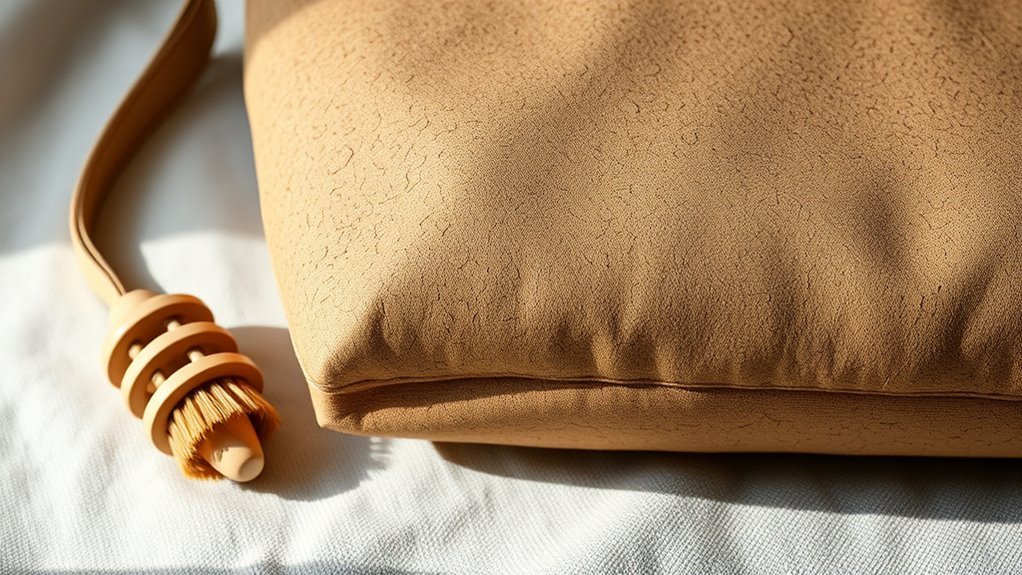
Cork handbag material is a thin sheet of natural cork bonded to a fabric backing. The cork gives the look, the soft feel and the water resistance. The backing gives strength. The result is light, flexible and free of animal products. To care for it, wipe it with a damp cloth and a little mild soap, never soak it, and let it air dry.
What Is Cork Handbag Material?
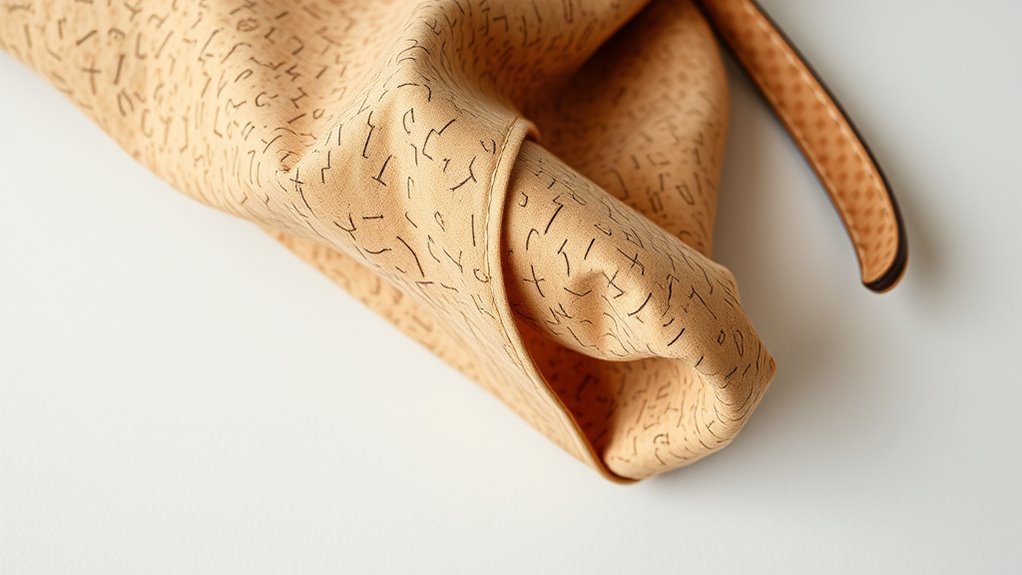
Cork handbag material is often called cork fabric or cork leather. It is made by gluing a very thin layer of cork to a textile backing. The finished sheet is usually about 1 mm thick or less, and it can be cut and sewn like fabric.
It feels soft and slightly warm, a little like suede or smooth leather. It contains no animal hide, so many people choose it as a leather alternative. It is light, flexible and resists water.
Every sheet has its own natural grain, so no two bags look quite the same. Cork is the bark of the cork oak. It is stripped by hand without cutting the tree down, and the bark grows back.
Cork does not absorb dust and resists mold, which is why it is often described as hypoallergenic. If you have sensitive skin, remember that the backing, glue and finish are part of the bag too.
How Is Cork Handbag Material Made?
Cork fabric starts with bark from the cork oak, a tree that grows mainly in Portugal, Spain and North Africa. The bark is stripped by hand and the tree stays standing.
The bark planks are dried, boiled and pressed flat. They are then sliced into very thin sheets.
Last, the cork sheets are glued to a fabric backing and sealed with a protective finish. The three parts below explain each stage.
Cork Bark Harvesting
Cork comes from the cork oak (Quercus suber). Workers strip only the outer bark, by hand, with a small axe. A tree is first harvested at about 25 years old, and then about every 9 years as the bark regrows.
The first two harvests give rough cork that is used for products such as flooring and insulation. Later harvests give the smoother cork used for stoppers and thin sheets. The basic steps are:
- Remove the mature outer bark by hand.
- Boil and flatten it to stabilize the sheets.
- Slice it into thin layers, often well under 1 mm.
- Preserve the tree, which lives about 200 years on average.
Harvesting is skilled seasonal work, and it gives rural regions a steady source of income. Cork oak woodlands are also home to many plant and animal species, including some that are threatened.
Fabric Backing Bonding
Once the cork has been sliced into thin sheets, makers glue it to a fabric backing. Common backings are cotton, polyester or a blend.
Cork alone would tear at this thickness. The backing takes the strain of stitching, folding and daily use, while the cork provides the surface.
The backing also changes how the material handles. A woven cotton backing gives a firmer sheet. A knit or thin synthetic backing gives a softer, more flexible one.
Because the cork layer is so thin, the finished fabric stays supple enough to sew on a home machine.
Check the product label if the backing matters to you. It affects weight, stretch and how the bag ages.
Finishing And Slicing
Slicing comes before bonding. Blocks of boiled, flattened cork are shaved into thin sheets, and smaller pieces are joined edge to edge to make wider rolls.
After bonding, most makers add a clear protective coating. It helps the surface resist water, stains and scuffs. Some cork is also dyed or printed. Cork cells are filled with air, which is why even a finished sheet feels so light.
- Boiled cork is flattened for consistency.
- Sheets are spliced to reduce waste.
- Thin slices create a supple surface.
- Coatings protect texture and color.
These steps keep the natural pattern of the bark visible, so each bag has its own look.
Why Does Cork Feel So Soft?
Cork feels soft because of its structure. It is made of tiny closed cells filled with air, a little like a honeycomb. The cells compress under your fingers and spring back. Sliced thin and backed with cloth, cork has a smooth, slightly cushioned feel. The table below sums it up:
| Feel | What You Notice | Why It Matters |
|---|---|---|
| Soft | Gentle touch | Comfort in daily use |
| Light | Easy to carry | Less strain, more flexibility |
| Unique | No two pieces match | A personal feel |
The same air-filled cells make cork light and help it resist water. They also explain why cork feels warm to the touch, since air is a poor conductor of heat.
How Does Cork Fabric Stay Water-Resistant and Durable?
Cork resists water naturally. Its cells contain a waxy substance called suberin, which repels moisture.
The fabric backing adds the strength that thin cork lacks, so the bag can handle daily wear.
Water-resistant does not mean waterproof, though. Seams, zippers and the backing can still let water in, so do not soak a cork bag.
Natural Water Resistance
Light rain and small spills bead on the surface of cork and wipe off easily. This is the same property that lets cork seal wine bottles.
The protective finish adds to this resistance and helps the surface stand up to rubbing. To keep it working, follow a few simple habits:
- Wipe spills with a damp cloth.
- Let the bag air dry fully.
- Avoid harsh cleaners that strip oils.
- Store it away from prolonged moisture.
Cork also resists mold and does not hold odors easily. It still needs to dry fully after it gets wet, because the backing and lining can stay damp longer than the cork.
Durable Backing Layer
The backing is what makes thin cork usable for bags. Without it, a cork sheet of this thickness would crack and tear. The table shows what each part adds:
| Feature | Benefit |
|---|---|
| Fabric backing | Adds strength |
| Thin cork layer | Keeps weight low |
| Water-resistant surface | Protects contents |
| Reinforced build | Resists wear |
| Texture variety | Gives unique style |
With a good backing, cork fabric handles bending and rubbing well. Its weak points are sharp objects and hard folds, which can crack or chip the cork layer. Corners and edges usually show wear first.
Is Cork Handbag Material Vegan and Cruelty-Free?
Yes. Cork comes from the bark of the cork oak, not from animals. Harvesting does not kill the tree, which goes on to regrow its bark.
The cork itself is plant-based. To be sure a whole bag is vegan, check the lining, glue, trims and handles, since some bags mix cork with leather. Some brands carry a third-party vegan certification, which makes this easier to confirm.
- Plant-based: cork replaces animal leather.
- Cruelty-free: harvesting leaves trees alive.
- Wildlife-friendly: cork forests shelter endangered species.
- Safe: cork needs no tanning, though glues and coatings vary by maker.
Cork also avoids the tanning process that leather needs.
It is not a perfect material. Many cork fabrics use synthetic backings, glues and coatings. Still, for buyers who want to avoid animal hide, it is one of the more natural options.
Why Does Cork Handbag Backing Matter?
The backing decides how a cork bag wears. It gives the bag structure and takes the stress at seams and handles, without adding much weight.
It also affects comfort. A soft backing lets the bag drape. A stiff one helps it hold a boxy shape.
You can sometimes see the backing at raw edges or inside unlined pockets. A neat, tightly bonded backing with no lifting at the edges is a sign of good quality.
If sustainability matters to you, ask what the backing is made of. Cotton and recycled polyester backings are both common.
When you shop, bend a corner of the bag gently. The cork should flex without cracking or peeling away from the cloth.
Which Bag Styles Work Best in Cork Fabric?
Cork fabric suits many bag styles. It works best in shapes with smooth panels and gentle curves, where the grain can show.
- Tote bags: Great for daily carry, work, or market runs.
- Crossbody bags: Ideal when you want hands-free movement and secure comfort.
- Clutch styles: Perfect for evenings when you want a polished, compact statement.
- Backpack designs: Smart for travel or busy days when you need balanced support.
Cork holds clean, simple shapes well. Sharp creases and tight gathers are harder on it, so heavily pleated designs are less common.
Because it resists light rain and wipes clean, cork is a practical choice for everyday bags.
How Do You Clean a Cork Handbag?
Cork is easy to clean. Regular wiping and a little care with dirt and weather keep it in good shape.
For a deeper clean, use a soft cloth dampened with water and a drop of mild soap. Test on a hidden spot first.
For seams, zippers and stitching, use a soft toothbrush or a cotton swab. Work gently so you do not scratch the cork.
Daily Care Tips
Daily care is mostly about keeping dirt and dye off the surface. Cork resists many stains, but dark clothing dye can rub off on pale cork. These habits help:
- Wash your hands before handling the bag.
- Keep hair salon products away from it.
- Store cosmetics in pouches to prevent spills.
- Avoid dirty surfaces and check the weather before you carry it.
If you notice dust or light marks, wipe the surface with a slightly damp cloth. Add a drop of mild soap for anything greasy.
Clean around buckles and zippers with a soft toothbrush or cotton swab.
Safe Cleaning Steps
When the whole bag needs cleaning, empty it first and shake out the lining.
Mix a little mild soap with water. Dampen a soft cloth, wring it out well and wipe the surface with light strokes. Do not soak the bag. Too much water can loosen the glue between the cork and its backing.
Rinse the cloth, wipe again to remove the soap and pat the bag with a dry towel. Let it air dry away from heaters and direct sun.
Do not put a cork bag in the washing machine or dryer unless the maker says it is safe.
Skip bleach, alcohol and solvent cleaners. They can strip the finish and dry out the cork.
Stain Removal Methods
For stubborn stains, test first on a hidden spot with a damp cloth and a little mild soap.
Then work on the stain itself, keeping the cloth damp, never wet. Follow these steps:
- Wipe with a damp towel and mild soap for fresh marks.
- Gently scrub stubborn areas with a soft toothbrush or cotton swabs.
- Finish with a separate dry towel to remove moisture.
Do not scrub hard. Strong rubbing can wear through the finish and lift the cork grain.
Oil and ink are the hardest stains to remove from cork. Blot them at once and do not spread them.
If a stain stays after two gentle attempts, stop. Ask the maker for advice before trying anything stronger.
How Do You Prevent Stains and Damage?
Most damage to cork bags is easy to prevent. Handle the bag with clean hands. Keep makeup in a pouch, and cap pens and lip gloss before they go inside.
Keep the bag away from hair spray, perfume, nail polish remover and other solvents. Set it on clean surfaces, not on wet floors or rough ground.
Avoid sharp objects and hard folds. Do not store the bag creased or crushed under other things, since a hard fold can crack the cork layer. Stuff it lightly with acid-free tissue and keep it in a breathable dust bag.
Keep cork out of long, direct sun, which can fade it over time. Store it in a cool, dry place.
Frequently Asked Questions
Is Cork a Durable Material?
Yes, for normal daily use. Cork resists water, mold and light scuffs, and the fabric backing adds strength. It can be cut by sharp objects and cracked by hard folds, so it needs a little care.
Why Is Cork Expensive?
Cork can only be harvested about every 9 years from each tree, and the work is done by hand. Most of it comes from a small region around the western Mediterranean. Making thin, even sheets and bonding them to fabric adds more cost.
How to Clean Cork Handbags?
Wipe it with a soft cloth dampened with water and a drop of mild soap. Use a soft toothbrush for seams. Pat it dry and let it air dry fully.
Is Cork Fabric Waterproof?
It is water-resistant, not waterproof. Rain and spills wipe off the surface, but seams, zippers and the backing can let water in. Dry the bag fully if it gets wet.
Conclusion
Cork handbag material is a thin layer of real cork on a fabric backing. It is light, soft, water-resistant and free of animal hide. Look for a tightly bonded backing when you buy. Clean the bag with a damp cloth and mild soap. Protect it from sharp objects, hard folds and solvents, and it should serve you well for years.
Sources: APCOR: cork transformation process; Amorim Cork Solutions: What is cork.

