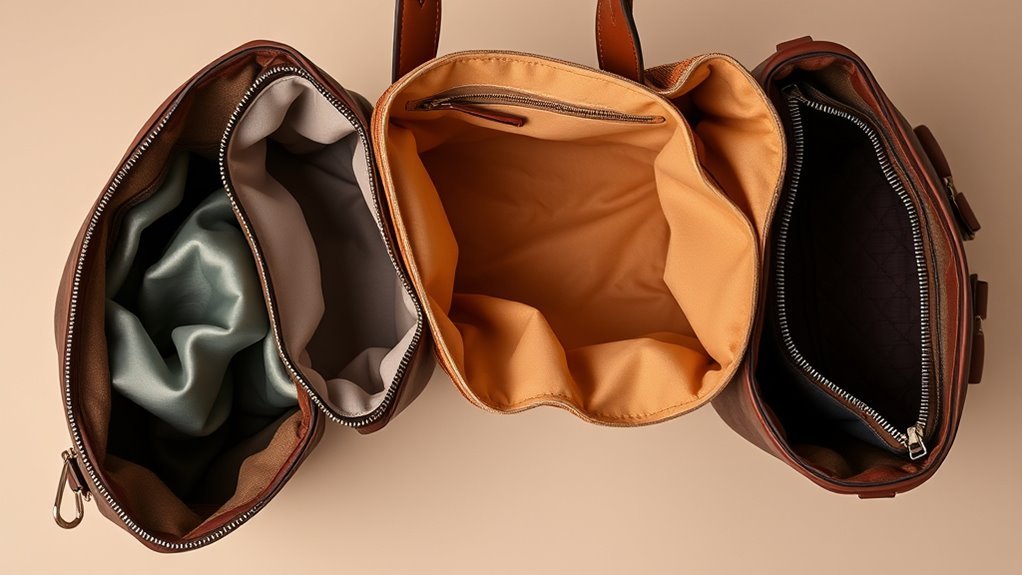
Handbag lining fabric affects how a bag feels, how well it keeps its shape and how long the inside lasts. Polyester and nylon linings are smooth, light and resist stains and wear. Cotton feels softer and more natural but absorbs spills. Satin and taffeta weaves let items slide in and out, while twill and canvas add grip and body. The best lining depends on how the bag will be used.
What Does Handbag Lining Do?
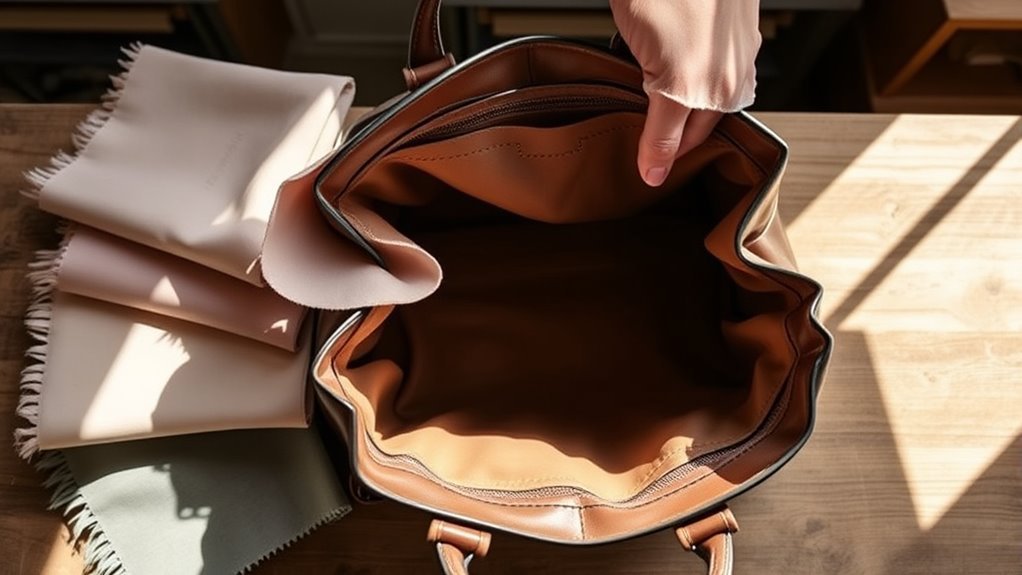
A lining is the fabric layer inside a bag. It hides the raw seams and the back of the outer material, so the inside looks clean and finished.
It also protects. The lining takes the scratches from keys, pens and zippers, so the outer material does not. It gives pockets and dividers something to be sewn to.
The lining affects daily use too. A smooth lining lets your hand and your things move freely. A light-colored lining makes it easier to find items in a deep bag.
A good lining adds a little structure and keeps small items from catching on seams. A poor one tears, stains or pills long before the outside wears out.
Which Handbag Lining Fabrics Feel Smoothest?
Smoothness depends more on the weave and finish than on the fiber. Satin and taffeta weaves feel the slickest, whether they are made of polyester, nylon or silk.
Satin has a glossy, slippery face. It feels luxurious and is common in evening bags. It snags more easily than plainer weaves, so it suits bags that are not used hard.
Leather and suede linings feel rich and last well, but they add weight and cost. Suede grips items instead of letting them slide.
Polyester microfiber, often called microsuede, has a soft, brushed feel like suede. It is gentle on glasses and phones and easy to wipe clean.
Nylon taffeta is crisp, thin and smooth. It adds almost no bulk, which is why it is used in light bags and travel pouches.
Cotton sateen is soft with a slight sheen, but it has more grip than satin or taffeta. Silk dupioni is crisp and textured with small slubs, so it looks elegant but is not especially slick.
For the easiest glide, choose a polyester or nylon satin or taffeta. For a soft, cushioned feel, choose microsuede or cotton.
Polyester vs Cotton vs Nylon Linings
Most handbag linings are polyester, cotton or nylon. Polyester is the all-round choice, with good durability at a low cost.
Cotton has a natural feel and takes prints well, but it absorbs moisture and stains. It should be washed before sewing so it does not shrink later.
Nylon is the strongest for its weight and the most resistant to abrasion. It suits bags that are used hard.
Polyester Durability Basics
Polyester lining holds up well to daily rubbing from keys, wallets and zippers. It keeps its color and does not shrink.
It absorbs very little moisture, so spills sit on the surface and wipe off more easily than on cotton. It also dries quickly.
Polyester comes in many weaves. Taffeta is thin and crisp, satin is glossy and twill is heavier and more matte. Some polyester linings have a water-resistant coating.
For most everyday handbags, polyester is the practical default. It costs little, lasts well and needs no special care.
Cotton Feel And Care
Cotton linings feel soft and natural and come in endless prints. The trade-off is care. Cotton absorbs liquids and holds stains more than synthetic linings do. Keep these points in mind:
- Choose cotton when you want a natural feel and washable construction.
- Pre-shrink the lining before assembly to reduce later distortion.
- Finish raw edges cleanly to limit fraying during use.
- Spot-clean quickly. Delayed stains set into fibers.
- Use gentle cotton care methods to preserve structure and print clarity.
Compared with polyester, cotton is more breathable and pleasant to touch, but it wears and stains faster. Quilting cotton is light, so it usually needs interfacing behind it.
Choose cotton for handmade bags, casual totes and designs where the print inside is part of the charm. Choose polyester when easy care matters more.
Nylon Strength And Weight
Nylon is stronger than polyester and cotton at the same weight. It resists tearing and abrasion very well, which is why it is used in luggage and sports bags.
Nylon is graded by denier, the weight in grams of 9,000 meters of yarn. A higher number means a thicker yarn. Linings are often 70D to 210D. Heavier fabrics such as 420D suit hard-use bags, and 1000D is normally used for outer shells, not linings.
Ripstop nylon has a grid of thicker threads that stops small tears from spreading. It is a good choice for light bags that need a tough lining.
Nylon has two small drawbacks. It absorbs a little more moisture than polyester, and it fades faster in strong sunlight. Inside a bag, neither matters much.
If the bag will carry heavy, sharp or sandy things, nylon is the most reliable lining.
How Lining Affects Bag Shape
The lining affects how a bag holds its shape. A firm lining supports the walls, while a thin one lets the bag collapse when empty.
Heavier fabrics give more body. A 10 oz cotton duck makes firmer walls than a 7 oz canvas, and both are much stiffer than taffeta. Most structure, though, comes from the interfacing between the lining and the outer fabric. In short:
- Stiffer linings preserve crisp edges
- Lightweight fabrics create softer, collapsible forms
- Interfacing boosts support without bulk
- Dense weaves improve load distribution
- Proper lining keeps contents aligned
Which Linings Handle Wear and Spills Best?
Linings face keys, pens, makeup and the odd leaking bottle. Some fabrics cope much better than others.
Polyester is a strong choice for everyday use. It resists abrasion and most stains, and it wipes clean with a damp cloth.
Nylon handles scuffing even better. A coated nylon lining also keeps small spills from soaking through to the outer material.
Cotton duck and canvas are sturdy, but untreated cotton soaks up liquid. Stains set quickly, so blot spills at once.
Leather and suede linings last for many years with care. They can mark from ink and oils, and dark linings can rub color onto light items.
Felt and other non-woven linings add cushioning. Cheap grades pill and flatten with use, so check the quality.
How to Choose a Handbag Lining Fabric
Start with how the bag will be used. A daily work bag needs a tough, easy-clean lining. An evening bag can have a delicate one.
Match the weight of the lining to the bag. A heavy lining in a small, soft bag adds bulk. A very thin lining in a large tote wears through at the corners.
Think about color as well. A light lining makes the contents easy to see, while a dark one hides marks. Check that the lining suits the outer material and can be cleaned the same way.
Fabric Performance Factors
Abrasion resistance matters most, since the lining rubs against everything you carry. Nylon and polyester lead here.
Moisture comes next. If you carry water bottles, makeup or lunch, choose a lining that does not absorb spills. Other points to check:
- Verify weight balance for structure
- Compare cleanability under routine wiping
- Look for water-resistant coatings
- Review colorfastness after washing
- Test shrinkage before final construction
Heavier canvas or twill adds support, while light taffeta suits soft, flexible bags.
If you are sewing the bag yourself, wash and dry a sample of the lining first to check for shrinkage and color loss.
Best Lining Materials
For everyday handbags, polyester and nylon give the best mix of durability, weight and easy care. A 210D nylon or a polyester twill suits most bags, and 420D nylon suits heavy use.
Choose cotton or a cotton blend for a softer feel and for printed interiors. Pre-wash it before cutting.
For luxury bags, leather, suede or microsuede linings give a rich feel. Real leather and suede need more careful cleaning.
If the lining feels too thin, add a light fusible interfacing behind it. It strengthens pockets and keeps the lining from wrinkling.
Then pick the color and pattern. The lining is a good place for a little personality, since only you will see it.
Frequently Asked Questions
What Is the Best Fabric for Lining Handbags?
For most handbags, polyester is the best all-round lining. It is durable, affordable and easy to clean. Nylon is better for hard use, and cotton or microsuede suits bags where feel matters more.
What Is the Most Durable Fabric for Bags?
For linings, nylon is the most durable, since it resists abrasion and tearing better than polyester or cotton. For outer fabrics, heavy nylon such as 1000D, heavy cotton canvas and good leather all last well.
What Type of Fabric Is Commonly Used for Bag Lining?
Polyester is the most common, followed by cotton and nylon. Higher-end bags may use microsuede, suede or leather.
How Do You Clean a Handbag Lining?
Empty the bag and pull the lining out if it is loose. Shake out crumbs or use a lint roller. Dab marks with a cloth dampened in mild soapy water, then with clean water. Do not soak the lining, and let it air dry fully with the bag open.
Conclusion
The lining is the part of a bag you touch most and see least. Polyester is the practical default, nylon is the toughest, and cotton is the softest but needs more care. Match the weight and weave to the bag, think about spills and color, and the inside of your bag will last as long as the outside.

