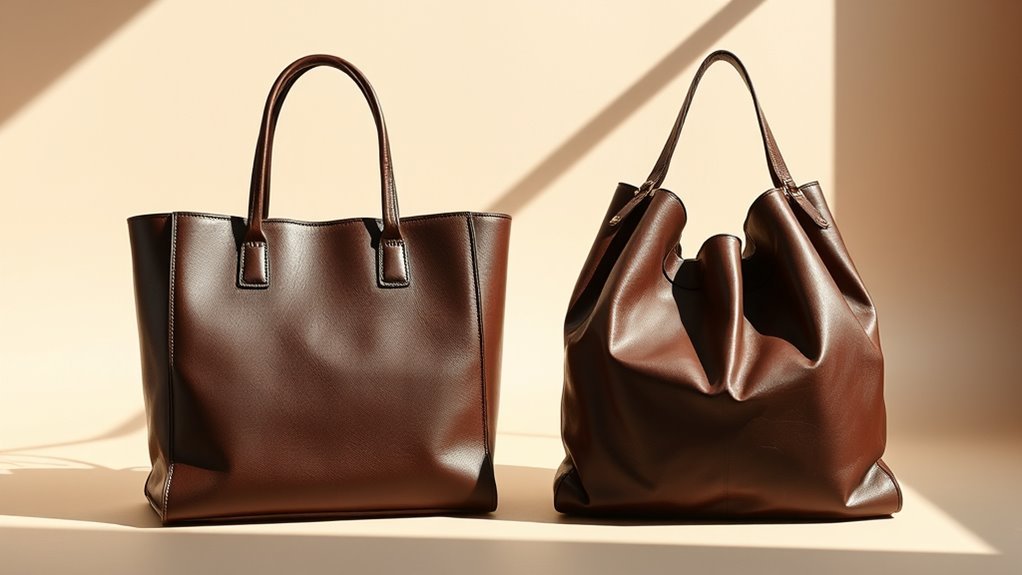
A structured handbag holds its shape when it is empty. An unstructured handbag collapses and takes the shape of what is inside. The difference comes from how each is built. Structured bags use firm leather, stiffeners between the layers, a rigid base and reinforced edges. Unstructured bags use soft materials with little or no reinforcement. Each has clear strengths, and the right choice depends on what you carry and where.
What Defines a Structured Handbag?
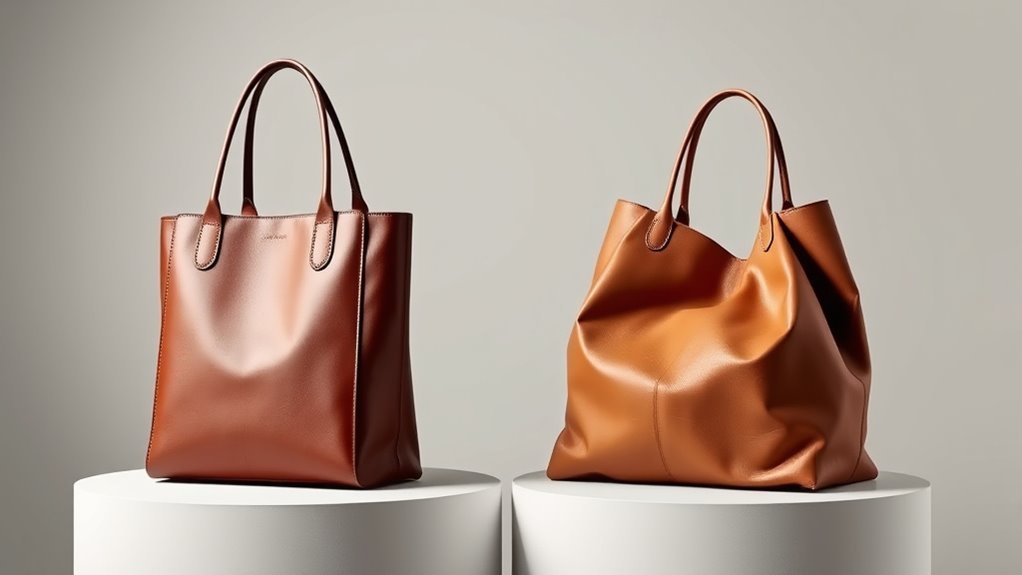
A structured handbag has a fixed outline. It stands upright by itself, its sides stay flat and its corners stay sharp, whether it is full or empty.
Common structured styles include top-handle bags, box bags, frame bags and many satchels and briefcases.
Inside, structured bags usually have fixed compartments and pockets. The rigid walls keep these in place, so items stay where you put them.
The trade-offs are weight and capacity. Stiffeners and hardware make structured bags heavier, and a rigid bag cannot stretch to fit one more thing.
Characteristics of Unstructured Handbags
An unstructured handbag has no built-in frame. It is soft, flexible and takes its shape from its contents and from how it hangs.
Hobo bags, slouchy totes, bucket bags and drawstring pouches are typical unstructured styles. They are usually made of soft leather, canvas, nylon or knit fabric, and they are light.
Most have one open compartment. That makes them easy to pack and roomy for their weight, but small items sink to the bottom.
They are comfortable to carry because they mold against the body. They give less protection to what is inside, and they can look shapeless when half empty.
Comparing the Key Features of Structured and Unstructured Handbags
The two types differ in three main ways: how they look, how they work and how they are made.
Structured bags look formal and keep things organized. They suit offices and dressy occasions.
Unstructured bags look relaxed and hold more for their weight. They suit casual days and travel.
Design and Aesthetic Appeal
Shape sets the tone of a bag before color or detail does.
Structured bags have straight edges, defined corners and smooth, flat panels. They read as tailored and pair naturally with suits, coats and dresses.
Unstructured bags have curves, folds and gathers. They read as easygoing and pair naturally with denim, knits and loose clothing.
Many bags sit in between. A semi-structured tote may have a firm base and soft sides, which gives some shape without the weight.
Neither look is better. A structured bag can sharpen a casual outfit, and a soft bag can relax a formal one.
Functionality and Practical Use
In use, structured bags are easier to keep tidy. They stand up when you set them down, they open wide and they protect laptops, glasses and papers from being crushed.
Unstructured bags are lighter and more forgiving. They squeeze under a seat, fold into a suitcase and expand for a sweater or groceries. The cost is less order inside, which a pouch or an organizer insert can fix.
Weight is worth checking. A structured leather bag can be heavy before you put anything in it. If you carry a lot, a lighter bag leaves more of the load for your things.
Material’s Impact on Handbag Shape and Function
Material is the first source of shape. Firm leathers, such as vegetable-tanned or embossed crosshatch leather, hold flat panels well. Thick coated canvas does the same.
Soft leathers such as lambskin, and fabrics such as canvas and nylon, drape and fold. A bag made from them will slouch unless something stiffer is added inside.
That hidden layer is the second source of shape. Makers place stiffeners between the outer material and the lining. Common ones are bonded leather board, fiberboard, foam and firm interfacing. A rigid board in the base keeps the bottom flat.
Edges and seams are the third. Piping, bound or painted edges and topstitching all add stiffness along the lines of the bag. Metal frames, feet and corner guards add more.
An unstructured bag simply leaves most of these out. It may have a light lining and reinforcement only at the handles.
The Influence of Design on Handbag Structure
The pattern of a bag also builds shape. Separate panels joined at sharp seams, with gussets at the sides and a set-in base, make a boxy form. One or two large pieces gathered or folded into soft seams make a slouchy one.
Here’s a quick comparison:
| Handbag Type | Features |
|---|---|
| Structured | Tailored, defined lines |
| Unstructured | Soft, slouchy bodies |
| Professional Use | Ideal for formal occasions |
| Casual Use | Great for everyday outfits |
| Aesthetic Impact | Sophistication vs. Relaxation |
Closures matter too. A frame, a rigid flap or a zip-top keeps the opening in shape. An open top or a drawstring lets it fall.
Why You Should Go for a Structured Handbag
Choose a structured bag if you want a polished look and an orderly interior. It keeps its shape for years if it is stored properly, and it protects fragile contents.
Fixed pockets and dividers make it easy to find keys, cards and a phone without digging.
It also moves easily from day to evening, since a clean outline suits most dress codes.
Structured bags need a little care. They can dent or crease if crushed, so store them upright and lightly stuffed, and do not pack them under heavy items.
Advantages of Choosing an Unstructured Handbag
Choose an unstructured bag if comfort, low weight and flexibility matter most.
It sits close to the body and does not dig in with hard corners. It also takes awkward shapes, such as a water bottle, a scarf or a pair of shoes.
Soft bags are easy to travel with. Many fold flat in a suitcase and return to shape when filled.
They tend to hide wear well. A soft leather that creases and softens with age often looks better for it.
Their weak point is sagging. A heavy load pulls a soft bag out of shape, so a base shaper or an organizer insert is a useful addition.
Store them lightly stuffed and lying flat or on a shelf, not hanging by the handles.
Styling Tips for Structured Handbags
A structured bag suits tailored clothes such as blazers, coats and fitted dresses. The clean lines of the bag repeat the lines of the outfit.
It also adds polish to casual clothes. A boxy top-handle bag with jeans and a sweater looks deliberate.
Neutral colors make a structured bag the most useful. A bold color works well when the rest of the outfit is simple.
Mind the proportions. A small, rigid bag looks neat on most frames, while a very large rigid bag can feel bulky against the body.
For evening, a small structured bag or box clutch looks dressier than a soft pouch.
When to Use Unstructured Handbags
Unstructured bags suit relaxed, active days. They are comfortable for errands, weekends and travel, when you want to carry things without fuss.
They also work for jobs with casual dress codes, especially large totes that hold a laptop sleeve and lunch.
Pair them with easy clothes such as jeans, knits, summer dresses and flat shoes. Their soft shape balances loose, flowing outfits.
How to Select the Ideal Handbag for Your Lifestyle
Start with your daily routine. If you carry a laptop, papers or anything fragile, a structured or semi-structured bag protects it better.
If you carry soft, bulky or changing loads, an unstructured bag adapts more easily.
Think about weight. Lift the empty bag in the shop. If it already feels heavy, it will be tiring once it is full.
Check how you will carry it. Structured bags are often hand-held or carried on the forearm. Soft bags usually hang from the shoulder or across the body.
Finally, look at your wardrobe. Mostly tailored clothes point to a structured bag, and mostly casual clothes to a soft one. Many people end up with one of each.
Frequently Asked Questions
Can You Make an Unstructured Bag Hold Its Shape?
Partly. A base shaper keeps the bottom flat, and a felt organizer insert supports the sides. Neither turns a slouchy bag into a rigid one, but both reduce sagging.
Are Structured Bags Heavier?
Usually, yes. Stiffeners, a rigid base, thicker leather and metal hardware all add weight. An unstructured bag of the same size is often noticeably lighter.
Do Structured Bags Last Longer?
Not necessarily. They keep their shape longer, but they can dent, crease or crack at the corners. Soft bags sag instead. Lifespan depends more on the quality of the materials and stitching than on the type.
What Does a Structured Bag Mean?
A structured bag keeps a fixed shape whether it is full or empty. It gets that shape from firm materials, hidden stiffeners and a rigid base.
Conclusion
Structured and unstructured handbags differ in how they are built, not just in how they look. Stiffeners, firm leather and a rigid base give one its sharp outline. Soft materials and minimal reinforcement give the other its drape. Choose structure for order, protection and polish. Choose softness for comfort, low weight and flexibility.

