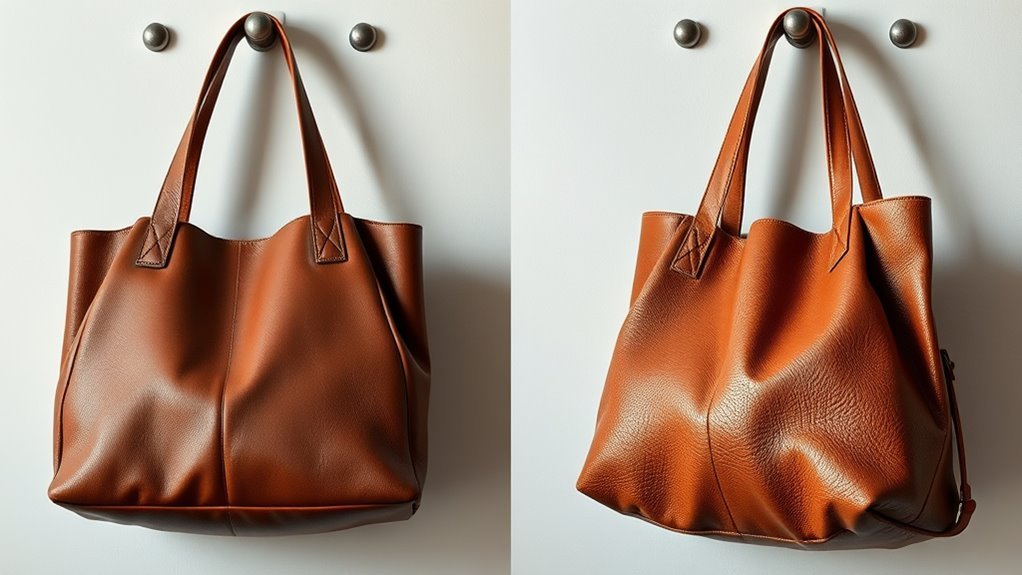
Yes, handbag leather can stretch. It happens slowly, when a bag carries more weight than it was built for or carries it unevenly. The base sags, the sides bulge and the handles grow longer. Thin, soft leathers stretch the most, and damp leather stretches faster. Most of the change is permanent, so prevention matters more than repair. Lighter loads, good storage and a base insert keep a bag in shape.
Why Handbag Leather Stretches
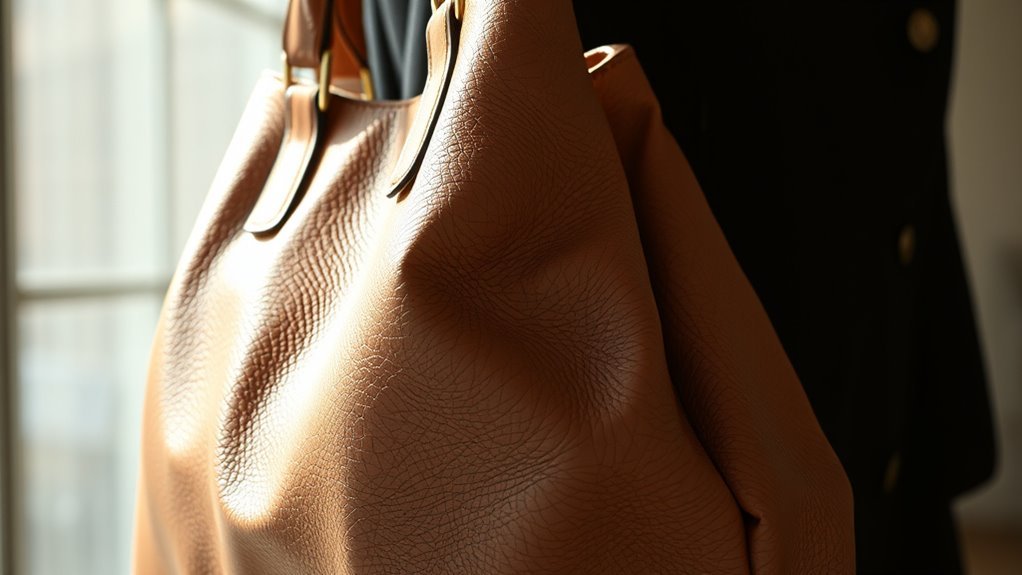
Leather is a mesh of natural fibers. Under a steady pull, the fibers slowly slide and straighten, and the leather becomes a little longer and thinner in that direction.
Unlike elastic, leather does not spring back fully. A short, light load leaves no mark. A heavy load carried every day leaves a stretch that stays.
Moisture speeds this up. Damp or humid leather is softer, and its fibers move more easily. A bag carried heavy in the rain can stretch more in a day than in weeks of dry use.
The hide itself varies. Leather cut from the belly of the animal is looser and stretches more than leather from the back. Good makers place the firmer parts where the bag takes the most strain.
Construction counts as well. Linings, reinforcement tape and stitched edges all limit stretch. An unlined bag in soft leather has nothing to hold it back.
How Weight Changes Bag Shape
Weight changes a bag in predictable places. The base sags first, because it carries everything. Then the sides bow outward and the top edge dips between the handles.
Uneven loads cause uneven stretch. A laptop or a water bottle always carried on one side makes that side drop. Sharp or hard items press bumps into soft leather.
Handles and straps stretch along their length. Over time a strap can grow noticeably longer, and the holes for buckles turn from round to oval. The leather around handle anchors can pull into creases.
To limit all of this, carry less and spread the weight. Put heavy items in the center of the base, and move a heavy laptop or books to a bag built for them.
Which Leathers Stretch the Most
Not all leather stretches equally. Thickness, softness and finish make the biggest difference.
Thin, soft leathers such as lambskin and suede give most easily. Thick, firm leathers such as vegetable-tanned cowhide give the least.
If you want a bag that holds its shape under load, look at how firm the leather feels and whether the bag is lined and reinforced.
Full-Grain Leather
Full-grain leather keeps the whole outer layer of the hide, where the fibers are densest. It is the strongest type and resists stretching better than split or corrected leathers of the same thickness. It can still stretch if it is thin, soft or overloaded.
How much it gives depends on thickness, tanning and load:
- Light loads keep the silhouette stable
- Heavy, repeated loads encourage expansion
- Heavy conditioning softens leather and makes it stretch more easily
Chrome-tanned leather, used for most handbags, is softer and stretches more than vegetable-tanned leather. Split leather and bonded leather are weaker and lose their shape sooner.
A coated or embossed finish adds a little stiffness. This is one reason crosshatch and pebbled leathers hold their shape well.
Soft Leathers
Lambskin, suede and nubuck are prized for their soft feel. That softness comes from thin, loose fibers, which also stretch easily.
A lambskin bag can dent or sag if you pack it heavily. Suede and nubuck stretch and can show shiny, flattened patches where the load presses.
Keep these bags for light loads. Stuff them lightly when they are not in use, and rotate them with other bags so the leather can rest.
Thick vs Thin Leather
Thicker leather stretches less, because there are more fibers to share the load.
Thin leather is lighter and drapes well, but it depends on lining and reinforcement to keep its shape. In brief:
- Thick leather keeps its shape better under daily use
- Thin leather adapts quickly, then may sag sooner
- Quality and finish change how each leather type responds
If shape matters most to you, choose a bag in firm leather with a lining and a stiffened base.
Thickness is not everything. A thick but loose, low-grade leather can sag sooner than a thinner, dense one. Press the leather between your fingers. Firm, tight leather that does not wrinkle loosely will hold its shape better.
Signs Your Bag Is Sagging
The first sign of stretching is usually a sagging base. The bottom bows downward, and the bag looks tired even when empty.
A bag that used to stand upright may start to lean or fold. One side may hang lower than the other.
Look for deep creases near the handle anchors, corners that bulge and straps that have grown longer. Oval buckle holes are another clue.
Check your bag empty every few weeks. Early stretching is easy to slow down, while late stretching is hard to undo.
How to Keep Handbag Leather From Stretching
Preventing stretch is mostly about load. Carry only what the bag was designed for, and empty it of extras each week.
A base shaper or a felt bag organizer spreads the weight across the whole bottom and supports the sides. Good storage helps too:
- Keep the bag upright in a dust bag.
- Stuff it with acid-free tissue or soft fabric.
- Condition it sparingly so it stays supple, not slack.
Keep the bag dry. If it gets wet, empty it, stuff it lightly and let it dry at room temperature before carrying weight in it again.
Do not hang a loaded bag by its handles or straps for long periods. Rest it on its base instead. Rotating between two or three bags gives each one time to recover.
How to Reshape a Stretched Leather Bag
A stretched bag cannot be shrunk back to new, but its shape can often be improved. Start by emptying it and wiping it with a soft, dry cloth.
Stuff the bag firmly with acid-free tissue or clean towels so it fills out to its original outline. Do not use newspaper, since the ink can transfer. Do not wet the leather to shrink it, because water can stain and stiffen it.
Shape the corners and base by hand, then leave the bag stuffed for several days in a cool, dry place. A light coat of conditioner helps relax creases.
For a sagging base, add a base shaper cut to size. For stretched handles or a badly misshapen body, a leather repair shop can shorten or replace the handles and add reinforcement.
Frequently Asked Questions
How to Soften a Stiff Leather Handbag?
Use it. Carrying and handling soften leather naturally. A thin coat of leather conditioner, worked in by hand, speeds this up. Avoid hair dryers and other heat, which dry and crack leather.
Will Real Leather Stretch?
Yes, a little. All real leather gives under load over time, and soft, thin leathers give the most. Normal use causes only slight change. Overloading causes visible sagging.
Does Wetting Leather Help It Stretch?
Wet leather does stretch more easily, which is why the method is used for shoes. It is not a good idea for handbags. Water can leave stains, stiffen the leather as it dries and damage the lining.
How to Fix Stretch Leather?
You cannot fully reverse it. Stuff the bag to its original shape and let it rest for several days, then condition it lightly. Add a base shaper for support. For stretched handles, see a repair shop.
Conclusion
Handbag leather does stretch, mostly because of heavy and uneven loads. Soft, thin leathers and damp conditions make it worse. The change is largely permanent, so the best fix is prevention: carry less, support the base, keep the bag dry and store it stuffed. If a bag has already sagged, reshaping and a base insert will improve it.

