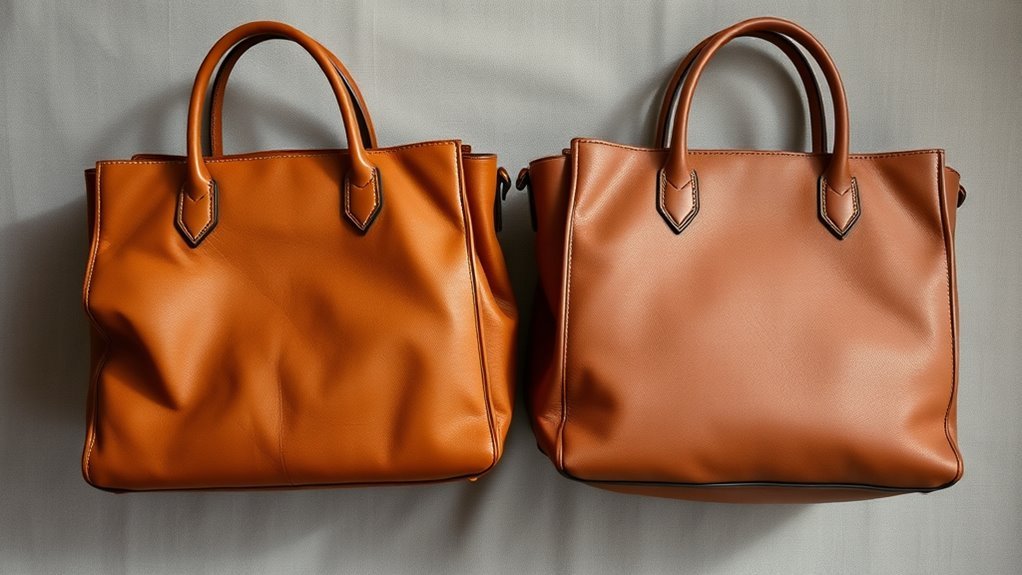
Leather and faux leather handbags can look alike when new, but they are different materials and they age differently. Real leather is animal hide. With care it lasts for many years, softens and develops a patina. Faux leather is a plastic coating on a fabric backing. It costs less and needs little care, but the coating tends to crack or peel after a few years of regular use. The better choice depends on your budget, your values and how long you want the bag to last.
What Makes Leather a Timeless Choice?
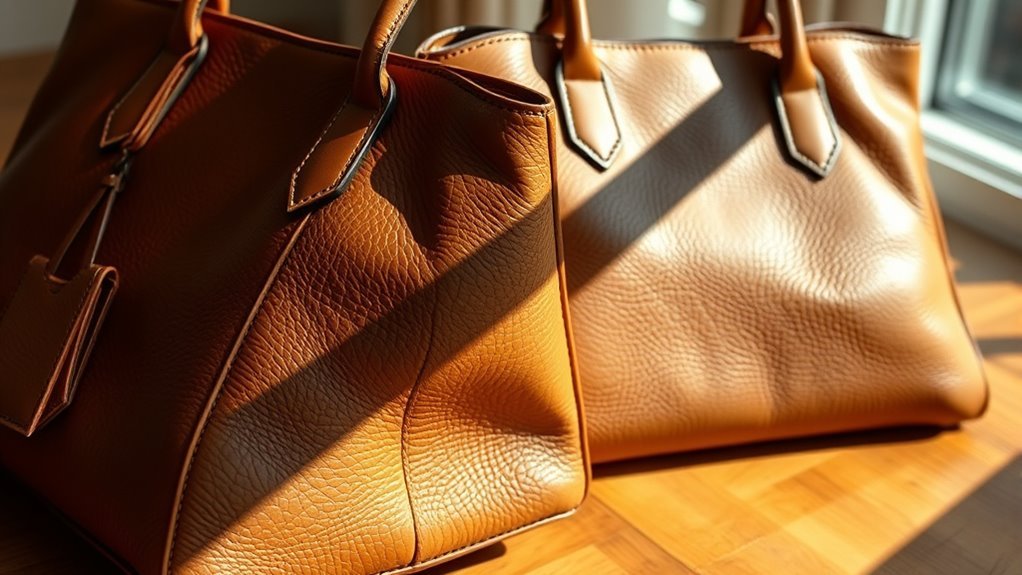
Leather is animal hide that has been tanned to make it durable and flexible. It is made of dense natural fibers, which is why it resists tearing and stretching so well.
A good leather bag changes with use instead of simply wearing out. The surface softens and darkens, and it picks up a gentle sheen called a patina. Many owners think it looks better after a few years than it did new.
Leather can also be maintained. It can be cleaned, conditioned, recolored and repaired, so scuffs and dryness are not the end of the bag.
It has drawbacks. Leather costs more, weighs more and marks from water and scratches. It also comes from animals, which matters to many buyers.
Faux Leather vs. Leather: Style and Cost Comparison
The two materials differ in what they are made of, how they look and what they cost over time.
Leather costs more at the start but usually lasts longer. Faux leather costs less and comes in more colors and finishes.
The sections below look at each difference in turn.
Material Quality Differences
The names can confuse. Faux leather is also sold as vegan leather, PU leather, pleather or leatherette. All of these are synthetic.
Most faux leather is a layer of polyurethane (PU) or polyvinyl chloride (PVC) on a woven or knit fabric backing. The surface is embossed with a grain pattern to look like hide. The plastic layer is thin, and when it wears through or cracks, the fabric shows.
Real leather varies as well. Full-grain and top-grain leather are the most durable. Bonded leather is made of leather scraps and fibers glued together with a plastic coating, and it behaves more like faux leather.
Quality varies within each type. A well-made faux leather bag can outlast a poorly made leather one, so look at the stitching, edges and hardware too.
Aesthetic Appeal Comparison
New, the two can be hard to tell apart. The differences show up close and over time.
Leather has an irregular grain, with small pores and marks that differ across the surface. It feels warm and has a distinct smell. With age it gains depth.
Faux leather has an even, repeating grain and a uniform color. It can be made in any shade, with glossy, metallic or textured finishes that are hard to achieve in leather.
Faux leather looks its best when new. It does not develop a patina. When it ages, the surface dulls, then cracks or peels.
Cost-Effectiveness Analysis
Faux leather bags cost much less than comparable leather ones, because the material is cheaper to produce.
Price alone can mislead. A fairer measure is cost per year of use. A leather bag that lasts ten years can cost less per year than a faux leather bag that is replaced every two or three.
That only holds if you would really use the bag for that long. For a trend color or a style you expect to tire of, faux leather is the cheaper choice.
Leather has small running costs, such as conditioner and the occasional repair. Faux leather needs only a damp cloth, but it usually cannot be repaired once it peels.
Resale differs too. Well-kept leather bags from known brands can be resold. Faux leather bags rarely have resale value.
Understanding the Aging Process of Real Leather
Real leather ages gradually and usually gracefully. Light, air, moisture and the oils from your hands slowly darken and soften it. The handles and corners change first, since they are touched the most. The table shows the main factors:
| Aging Factor | Effect on Leather | Maintenance Tips |
|---|---|---|
| Exposure to Light | Darkens and enriches hue | Store in a dark place |
| Moisture | Can stain or stiffen | Blot, dry slowly, then condition |
| Skin Oils | Enhances patina | Regularly clean and condition |
| Time | Unique character | Embrace the aging process |
Why Does Faux Leather Show Wear and Tear Faster?
Faux leather does not wear in. It wears out. The plastic coating slowly breaks down, even on a bag that is rarely used.
The main cause is chemical. Polyurethane reacts with moisture in the air over the years, which makes the coating brittle and sticky. Heat and humidity speed this up.
Flexing does the rest. Handles, corners and folds bend constantly, so the stiffened coating cracks there first and then flakes off the backing.
Material Composition Differences
The structure of the two materials explains the difference.
Leather is the same fibrous material all the way through. When the surface scuffs, there is more leather underneath, and it can be recolored.
Faux leather is a thin skin on cloth. Once that skin cracks, there is nothing under it but fabric, so the damage cannot be polished or conditioned away.
PVC is tougher and more water-resistant than PU, but stiffer. PU feels softer and more like leather, but it is the type most prone to peeling.
Newer faux leathers are improving, and some last well. Even so, peeling remains the most common reason these bags are thrown away.
Maintenance and Care Needs
Faux leather needs less care than leather, but it is less forgiving of heat and time. Keep it away from radiators, hot cars and direct sun, and store it in a cool, dry place.
Here’s a quick comparison:
| Care Aspect | Faux Leather | Genuine Leather |
|---|---|---|
| Durability | Lower; prone to wear | Higher; develops a patina |
| Cleaning Method | Gentle; avoid harsh chemicals | Conditioning enhances longevity |
| Heat and Moisture | Sensitive to elements | Resilient with proper care |
Do not use leather conditioner on faux leather. The plastic surface cannot absorb it, and the residue attracts dirt.
Maintenance Tips for Beautiful Leather Handbags
Leather repays a small amount of regular care. Three habits matter most:
1. Clean regularly: Wipe the bag with a soft, dry or slightly damp cloth to remove dust and dirt before they work into the grain.
2. Condition the leather: Every 3 to 6 months, apply a thin coat of leather conditioner to keep it supple and prevent cracking.
This also aids in color preservation.
3. Store it properly: Keep the bag in a breathable dust bag, lightly stuffed with acid-free tissue.
Keep it out of direct sunlight and away from heat, and never store it in plastic, which traps moisture.
Caring for Your Faux Leather Handbag
Faux leather is simple to clean. Wipe it with a soft cloth dampened with water and a drop of mild soap, then wipe again with clean water and dry it.
Keep it out of strong sunlight and heat, which fade and stiffen the coating. Store it in a cool, dry place in a dust bag, lightly stuffed so it does not crease.
Avoid alcohol, acetone, vinegar and harsh cleaners. They can strip the finish and speed up cracking. Test any new product on a hidden spot first.
Do not fold or crush a faux leather bag in storage. Creases become the first cracks. With gentle use and cool storage, it will stay presentable longer.
Environmental Impact of Leather vs. Faux Leather
Neither material is free of environmental cost, and the comparison is debated. Here are the main points:
1. Leather: Raising cattle uses land and water and produces greenhouse gases. Tanning uses chemicals that pollute if waste is not treated properly.
On the other hand, hides are largely a by-product of the meat industry, and a leather bag that lasts for decades is replaced less often.
2. Faux leather: It is made from fossil-fuel-based plastics and does not biodegrade. PVC raises the most concern, because of the chemicals used to make and soften it.
PU is generally seen as the less harmful of the two. The shorter life of faux leather means more bags are made and thrown away.
3. Newer materials: Plant-based alternatives use cork, pineapple leaf fiber, cactus or apple waste. Many still contain some plastic as a binder or coating, so check the details.
For any material, the most reliable way to lower the impact is to buy less and use each bag longer.
Buying second-hand is another option that works for both leather and faux leather.
Comparing Longevity and Value of Each Material
Longevity is where the two differ most. The table gives a quick comparison:
| Material | Characteristics |
|---|---|
| Genuine Leather | Can last many years with care and develops a patina. |
| Faux Leather | Often lasts a few years of regular use, then tends to peel or crack. |
A well-made leather bag can last for many years, and it can be repaired along the way. Faux leather usually has a shorter life, because the coating cannot be restored once it peels. Most bags of either kind lose value with use. Only a few leather bags from sought-after brands hold or gain value.
Choosing the Right Handbag Material for Your Lifestyle
The right material depends on what you value most.
Three questions help you decide:
1. Durability: If you want one bag to carry for many years, leather is the safer choice.
If you like to change styles often, the shorter life of faux leather matters less.
2. Maintenance: Leather needs conditioning and care with water.
Faux leather needs only a wipe, but it dislikes heat and cannot be repaired.
3. Budget and values: Faux leather costs less and uses no animal products. Leather costs more but is a natural material that lasts.
There is no single right answer. Many people own both, with leather for everyday classics and faux leather for trend pieces.
Frequently Asked Questions
Is Leather or Faux Leather Better?
Neither is better for everyone. Leather is more durable, ages well and can be repaired. Faux leather is cheaper, lighter on care and free of animal products, but it wears out sooner.
How Can You Tell if Leather Is Real?
Do not use a flame. It damages the bag and is a fire risk. Check the label first. Then look at a cut edge or the back of the material: real leather is fibrous all the way through, while faux leather has a fabric backing. Real leather also has an uneven grain and a natural smell.
Is Genuine Leather Ethical?
It depends on your values, and people disagree. Concerns include animal welfare, the impact of cattle farming and tanning chemicals. Others point out that hides are a by-product and that leather lasts a long time. Faux leather avoids animal products but is made from plastic.
How Long Does Faux Leather Last?
It varies with quality and use. Many faux leather bags start to crack or peel within a few years, especially at the handles and corners. Cool, dry storage and gentle use extend their life.
Conclusion
Leather and faux leather suit different needs. Leather costs more, needs some care and lasts, gaining character as it ages. Faux leather costs less and is easy to clean, but its coating eventually cracks or peels and cannot be restored. Decide how long you want the bag to last, how much care you will give it and what matters to you. Then choose with clear expectations.

