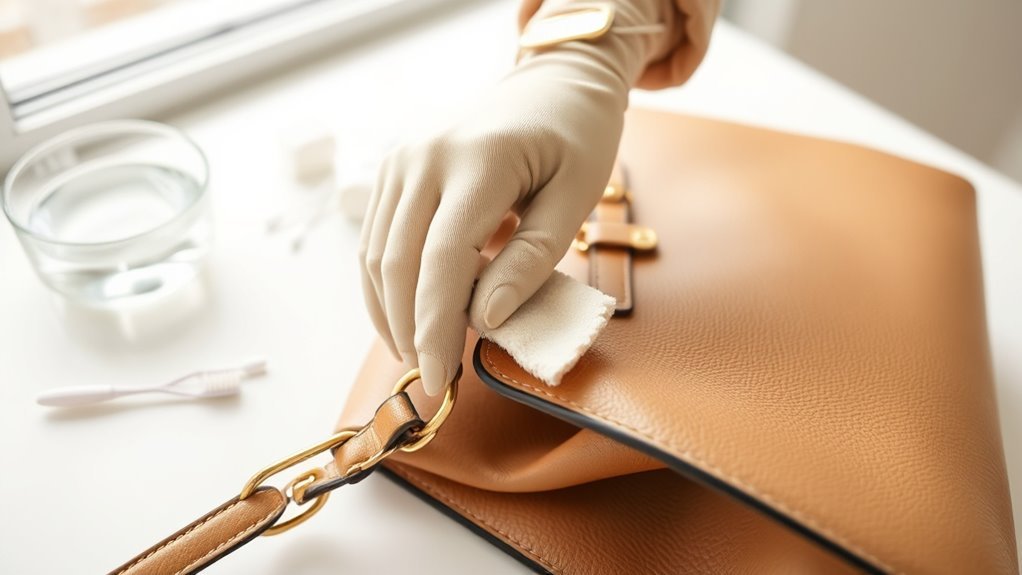
To clean handbag hardware without removing its plating, use the gentlest method that works. Wipe the metal with a soft, dry microfiber cloth after use. For fingerprints and grime, use a cloth barely dampened with mild soapy water, then wipe with plain water and dry at once. Do not use abrasive metal polish, vinegar, baking soda, or toothpaste. Plating is a very thin layer, and anything that scrubs or dissolves tarnish can take the plating with it.
How to Clean Handbag Hardware Effectively
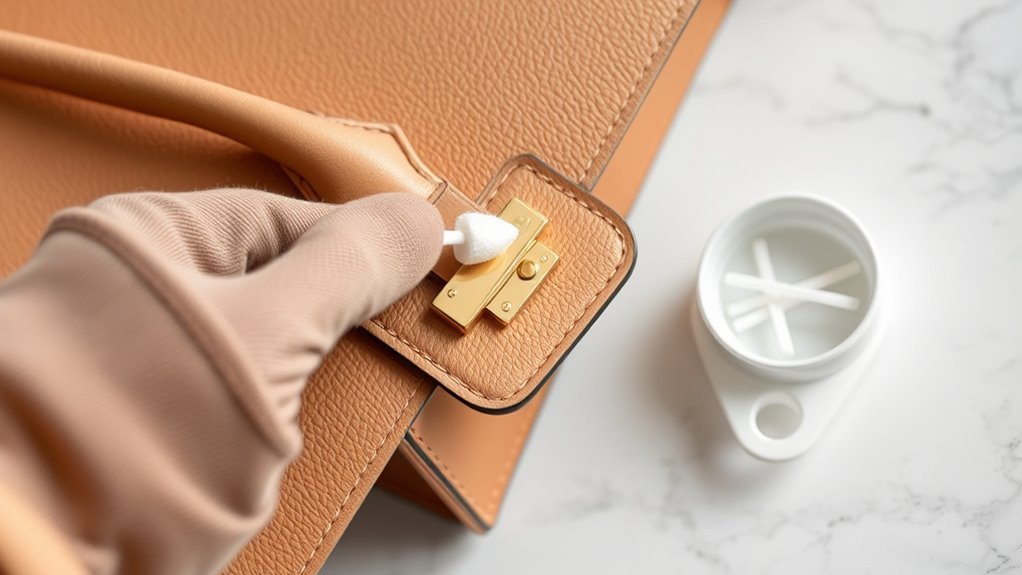
Most handbag hardware is brass or a zinc alloy with a thin coat of gold, nickel, or another metal on top. That top coat gives the color and shine. It is far thinner than a sheet of paper, so the goal is to remove dirt without wearing it down.
Start dry. A soft microfiber cloth lifts fingerprints, skin oils, and dust. If marks remain, add a drop of mild dish soap to a cup of water, dampen a corner of the cloth, and wipe gently. Follow with a cloth dampened in plain water, then dry the metal fully.
Avoid harsh chemicals and anything gritty. Standard metal polishes are made for solid metal. They work by removing a thin layer of the surface, which is exactly what plated hardware cannot spare.
Between uses, keep the bag in a dust bag, away from sunlight and damp air.
What Causes Tarnish on Handbag Metal?
Tarnish is a dull or dark film that forms when metal reacts with air and moisture.
Humidity, air pollution, and chemicals speed it up. Brass tarnishes easily. Gold itself does not, but thin gold plating has tiny pores and worn spots, and the base metal underneath can discolor through them.
Handling adds to it. Sweat, hand cream, perfume, and hand sanitizer all leave residue on clasps and zip pulls, and that residue can react with the metal.
That is why regular wiping matters more than any polish. It removes the residue before it has time to react.
Daily Cleaning Routine for Handbag Hardware Care
A simple routine does most of the work. When you put the bag away, give the clasp, zip pulls, feet, and strap rings a quick wipe with a soft, dry microfiber cloth. It takes under a minute. For stubborn fingerprints, dampen the cloth very slightly.
Keep the cloth with your bags so the habit sticks. Wash it now and then, because a dirty cloth carries grit that can scratch.
| Step | Action | Frequency |
|---|---|---|
| Wipe with cloth | Use a soft microfiber cloth | After each use |
| Damp clean | Lightly dampen for stubborn marks | As needed |
| Store properly | Keep in dust bag, away from elements | Always |
Safe Techniques for Cleaning Metal Parts With Soap and Water
Soap and water is the safest deeper clean for plated metal. Use a mild dish soap with no bleach, and lukewarm water.
Test first on a hidden piece of hardware, such as a ring inside the bag.
Dip a cotton swab or the corner of a cloth in the soapy water and squeeze it almost dry. Work it over the metal, and keep it off the leather or fabric around it. Then go over the metal with a swab dampened in plain water to remove the soap.
Dry the metal right away with a microfiber cloth. Water left in joints and engraved logos causes spots and tarnish.
Do this every few weeks on a bag you carry daily, or whenever the hardware looks dull.
Recommended Products for Gentle Metal Cleaning
You need very few products. A clean microfiber cloth and mild dish soap handle almost everything.
For light tarnish, a jewelry polishing cloth made for plated pieces can help. Use it with a light touch and only now and then, because even these cloths are mildly abrasive. Do not use liquid or paste metal polishes such as Brasso or Autosol on plated hardware. They are abrasive and can rub through the plating to the base metal.
Test any product on a hidden spot first, and keep it off leather, which it can stain.
If the label does not say it is safe for plated metal, do not use it.
Removing Light Tarnish: A Step-by-Step Guide
Light tarnish often comes off with patience and mild methods.
Wipe the metal with a dry microfiber cloth to remove dust and oils. Then clean it with a swab dampened in mild soapy water, keeping moisture off the leather.
If a dull film remains, rub lightly with a jewelry polishing cloth for a few seconds, and check the result. Stop as soon as the shine returns. If a different color starts to show through, such as pink, yellow, or gray, stop at once. That is the base metal, and the plating is already thin there.
Wipe off any residue with a barely damp cloth, and dry the hardware fully.
To keep tarnish from coming back:
- Use a microfiber cloth regularly
- Choose gentle cleaning solutions
- Store your handbag in a dry place
- Follow polishing techniques as needed
When to Call a Pro for Your Handbag?
Cleaning removes dirt and light tarnish. It cannot put plating back.
When the finish itself is damaged, a professional has options that you do not have at home.
Signs of Major Damage
Look for these signs that home cleaning will not be enough:
- Significant tarnish that persists after cleaning
- Deep scratches or discoloration on the surface
- Pitting or flaking of the plating
- Rust or corrosion that threatens the underlying metal
A handbag repair shop can replate hardware or replace it with matching parts. They can also fix broken clasps and zips at the same time.
Go sooner if you see green crust or rust. Corrosion spreads and can stain the leather next to it.
Complexity of Restoration Techniques
Replating means stripping the old finish, polishing the base metal, and applying a new metal layer with electric current. It needs special equipment, and the hardware often has to come off the bag. That is why it is not a home job.
| Restoration Issue | DIY Risks | Professional Techniques |
|---|---|---|
| Severe tarnish | May worsen the damage | Specialized cleaning methods |
| Deep scratches | Permanent loss of finish | Expert polishing techniques |
| Oxidation signs | Improper removal of luster | Restoration to original shine |
For a valuable bag, ask the brand or a specialist restorer first. Original hardware can affect resale value.
Best Practices for Storing Handbags to Protect Hardware
Storage does as much for hardware as cleaning.
Keep bags in breathable dust bags, out of direct sun, and in a room with moderate humidity of about 40 to 55 percent.
Optimal Storage Conditions
These habits protect the metal while the bag is stored:
- Use dust bags or original packaging to shield against dust and scratches.
- Keep your handbags in a cool, dry place, prioritizing humidity control to avoid oxidation.
- Avoid stacking heavy items on top to prevent deformation and damage.
- Use padded hangers or shelves to maintain shape and protect metal parts.
Wrap chains and large buckles in acid-free tissue, so they do not press into the leather or rub against each other. Check stored bags every month or two.
Use of Dust Bags
A dust bag keeps dust, light, and stray scratches off the hardware. Choose cotton or another breathable fabric, not plastic, so moisture does not get trapped against the metal. A silica gel packet inside the bag helps in humid weather.
| Dust Bag Benefits | Storage Techniques | Maintenance Tips |
|---|---|---|
| Shields from dust | Rotate bags regularly | Clean bags occasionally |
| Prevents moisture damage | Keep in a cool, dry place | Use breathable materials |
| Reduces scratches | Avoid direct sunlight | Store upright or filled |
Tips for Maintaining the Shine of Your Handbag’s Metal
A few habits keep the shine for longer:
- Wipe often: Use a soft microfiber cloth to remove fingerprints and oils, reducing tarnish notably.
- Mild cleaning: Opt for mild soap and water for light cleaning instead of harsh chemicals that can damage plating.
- Storage matters: Keep your handbag in a dust bag, away from direct sunlight and humidity, to prevent tarnishing.
- Protective coatings: Consider using protective sprays designed for metal. They create a barrier against moisture and pollutants while improving metal polishing.
Put on hand cream, perfume, and sanitizer before you pick up the bag, and let them dry. These products are a common cause of dull or worn plating on clasps and handles.
Try not to set the bag down on rough surfaces, which scratch feet and corners.
Frequently Asked Questions
How to Get Scratches Out of Purse Hardware?
You usually cannot. A scratch in plated hardware is a groove in a very thin layer, and polishing it removes more plating around it. Very fine marks may look better after a wipe with a jewelry cloth. Deep scratches need replating or new hardware.
How to Clean Tarnish Hardware?
Wipe with a dry microfiber cloth first. Then use a swab dampened in mild soapy water, wipe with plain water, and dry at once. For a remaining film, use a jewelry polishing cloth lightly. Avoid abrasive polish, vinegar, and baking soda on plated hardware.
How Do I Change the Color of Hardware on a Purse?
The lasting options are replating by a professional or swapping the hardware for parts in the color you want. Paint and nail polish chip quickly on parts that rub and flex, so they are a short-term fix at best.
Conclusion
Plated hardware stays bright with gentle, regular care. Wipe it dry after use, clean it with mild soapy water when needed, and dry it at once. Skip abrasive polishes and acids, store the bag in a dust bag, and leave worn plating to a professional.

